Category: Travel Essays

  • What Egypt Teaches the Impatient Traveler

    What Egypt Teaches the Impatient Traveler

    Some destinations are worth the wait

    When I was in 6th grade, I studied ancient Egypt, lucky to have a teacher who believed Egyptology wasn’t too grand a concept for such young minds. I became mesmerized by hieroglyphics—enchanted by a language made up of pictures rather than letters. Tales of jackal-headed gods, buried treasures, and linen-wrapped mummies crept into my dreams each night. I learned that the pyramids were built between 2589 and 2504 BC—a concept as unfathomable as infinity. Or black holes. Or trying to imagine my parents as kids.

    So when my dad and stepmother planned a trip to Egypt that very year, I begged them to take me along. Despite my tears, I was left behind, simmering in the kind of jealousy only a pre-teen girl can summon.

    Even then, I was impatient—a character trait that’s followed me from childhood into my mid-50s like a Labrador puppy.

    Jamie at the temples

    I touched down in dusty Cairo over four decades later—a micro-blip in time by Egyptian standards, but a lifetime for my impetuous self. Would Egypt live up to my imagination? Were my twelve-year-old expectations of King Tut, Ramses V, and the pyramids best left in the past?

    My takeaways from the Land of the Pharaohs were not what I anticipated. What I discovered in Egypt went beyond knowing the differences between Isis and Osiris, or that pyramids have four sides, not three. In Egypt, of all places, I learned how to slow down.

    Hotel Pool

    The next day, when our flight from Cairo to Luxor is delayed enough to upend our limited time sightseeing, I’m outvoted three to one in favor of bypassing Luxor Temple and heading directly to our hotel’s pool. I tamp down my disappointment with a scowl my kids can feel as much as see. My first battle with self-restraint. Egypt may have been an ancient monarchy, but our family is democratic through and through.

    While it pains me to admit it, heading to Al Moudira is a wise decision. After nearly 36 hours of travel, it’s a respite I didn’t know I needed. The hotel grounds are a honeycomb of courtyards surrounded by endless hectares of palm groves and exotic gardens, all with the feel of a grand country house hidden on the Nile’s West Bank. The camouflaged entrance, off a dirt road with overgrown flora, immediately eases any anxiety I have about missing our first sight. 

    I don’t expect anything in Egypt to be this tranquil. Al Moudira’s inner courtyards have gurgling fluted marble fountains. Fig and olive trees hover delicately over uneven terracotta tiled floors. Dusty green palm fronds contrast the flat and cloudless blue sky. Arched walkways lined with jewel-toned walls complete the sanctuary-like aura. I grab my journal, find a seat under a stained glass window, and start collecting my thoughts. 

    If our flight had been on time, we would have spent upwards of three to four hours racing around Luxor, ticking temples off our list, and ending up at the hotel with just enough time to shower before dinner. The delay allowed us to appreciate the inspiring setting, feed the resident camels, and watch the sun set like a ball of fire over the desert. 

    Queens temple

    The following morning, we set off for our first official sight—The Valley of the Kings. Inherently mystical and mystifying, the vast desert landscape ignites in me a toddler-like giddiness. Among these 60+ subterranean tombs, King Tutankhamun and Ramses V are buried. It’s here that Queen Hatshepsut built her perfectly symmetrical, design-forward funerary temple. And it’s here that I’ll finally lay eyes on the centuries-old sacred carvings of the afterlife—the hieroglyphics that long ago sparked my career in art. 

    Valley of the Kings

    While I knew that throngs of visitors would be joining us on this underground treasure hunt, I couldn’t have imagined how many wannabe models, insta-influencers, and selfie sticks I’d encounter. At each tomb entrance, my family joined the queue of pushy tourists descending towards the sarcophagus. Yet, instead of getting annoyed, my default emotion, I opted to go with the flow. This was unchartered territory for me, but it yielded worthwhile results. 

    Valley of the Kings

    I didn’t race through the tombs; I soaked up as many symbols, colors, and characters as I could. I stayed in the moment. Even as that moment sent me thousands of years into the past. I found stillness in the permanence of the hieroglyphics—following the symbols of the stories to tune out the frenzy around me.

    Edfu Temple

    After Luxor, we embark on our trip’s next phase: sailing up the River Nile. Aside from providing a contrast to the city chaos, sailing naturally forces us to slow down. The places we’ll be visiting, including Esna, Edfu, and Kom Ombo, are harder to get to and promise to be less crowded. 

    Meroe

    The Meroe is a dahabiya I discovered on Instagram—one of Nour El Nil’s iconic candy-cane-sailed fleet of traditional wooden boats. Over five days of sailing, we disembark along shallow riverbanks and walk to crumbling, sun-bleached temples and necropolises. We watch elderly fishermen in their rickety boats, with white egrets guarding the bow like sentinels. We pause idle chit chat as the call to prayer echoes above us. On the River Nile, serenity is an all-sensory experience.

    Necropolis

    There are 20 passengers on our boat, a mix of friends, couples, and families with young kids in tow. By day, the upper deck is our open-air living room where we sunbathe, read, sip mint tea, and play backgammon. By night, it’s our al fresco cocktail lounge and dining room. A place to sample Egyptian delights like koshari, a mix of pasta, rice, vermicelli, and lentils topped with chick peas and crispy fried onions.

    Life aboard the Meroe is wonderfully lazy. Photo ops are plentiful, whether that be a passing sailboat or a water buffalo cooling off in the shallows. When we stop at a quiet riverbank, a soccer ball materializes, and within minutes, the passengers and crew are enmeshed in a lively barefoot match. The spectators include common cuckoos, darting dragonflies, and braying donkeys.

    It doesn’t take long for the other passengers to recognize my bird obsession, though packing my own binoculars is a telling sign. They endure my bird chat and bird apps. A crew member gives me a laminated brochure of Egyptian species. I’m looking for the hoopoe, a bird I’d become fascinated with back when Sunday night Bird Bingo was a recurring family activity.

    Fisherman

    Hoopoes, with a distinctive crown of feathers that they can raise or lower at will, are widely found across northern Africa. But after days of searching, I’ve yet to see one. I try to keep my childish impatience in check. I’ve seen glorious birds along the Nile so far: Eurasian moorhen, purple herons, barn swallows, storks, egrets, gulls, and grebes. How can I complain? But the hoopoe eludes me. I’m determined to find one.

    On our final morning, a woman named Amira wonders if I can help identify a bird she’s just photographed. I’m secretly pleased she has the faith in me to ask. I’m even a touch smug. I glance down at her Nikon, and my smug look disappears faster than you can say BINGO.

    My coveted hoopoe. A lesson in humility, indeed.

    Hoopoe

    Egypt is the kind of destination whose scale deserves the level of focus I haven’t had since middle school. For perspective, the Great Pyramid is 4600 years old, predating Cleopatra by 2000 years. How is anyone meant to absorb thousands of years’ worth of history in twelve days? 

    Grand Egyptian Museum

    As it is, my family isn’t known for sustained levels of attention. So when we arrived at the newly opened Grand Egyptian Museum (GEM), it inevitably fell to me to inform our guide that we’d like the highlights reel. The museum’s collection includes 100,000 artifacts spread over roughly five million square feet. She’s just proudly recounted the story of a Canadian guest with whom she’d spent nine hours.

    I ask if we can do it in less than two. She winces. 

    Knowing our travel style and its limitations is another piece of knowledge gained. Were there things in Egypt left undone? Surfaces barely scratched? Yes. But I can live with that, because the price we would have paid to rush it was too costly.

    On a personal note, I vow to return and spend nine hours in the museum. If a Canadian can do it, so can I.

    Pyramids

    Egypt surpasses every expectation. The pyramids defy scale. King Tut’s 5,000 treasures render us speechless. The remnants of color in the temples and tombs remind me that, while we see Egypt in washed-out, faded tones, we can close our eyes and imagine the kaleidoscopic world it once was. 

    Upon reflection, I don’t think my twelve-year-old self would have appreciated Egypt. She wasn’t ready. Maybe the universe, and my parents, conspired to make her wait for a reason. Ahhh, Egypt had one final lesson in store: delayed gratification. 

    I know now that patience means letting go of control, accepting unpredictability, and allowing experiences to unfold in their own time. I can see now how my behavior back then was petulant, even irrational. 

    It turns out, my parents were right. It just took me 43 years to admit it.

  • Novel Destinations: The Remarkable Rise of Literary Tourism

    Novel Destinations: The Remarkable Rise of Literary Tourism

    Some of my earliest childhood memories are linked to the Nancy Drew Mystery series. I can even trace my love of reading to a specific book, The Hidden Staircase, by Carolyn Keene. In this captivating story, Nancy, a teenage detective with a knack for cracking cases, discovers a haunted mansion filled with dark passages, a hidden staircase, and plenty of riddles.

    These tantalizing tales kept me awake at night. I would crack my bedroom door open wide enough so the hall light would spill onto the pages. Then I could continue reading past my bedtime. I just couldn’t sleep until I knew the secret of the old clock or the password to Larkspur Lane. If I could have traveled to River Heights, Illinois, Nancy’s sleepy midwestern hometown, I’d have done so in a heartbeat. 

    Years later, my love of reading hasn’t waned. But the irony is that while I can now stay up as late as I want, I usually fall asleep by 9 pm. 

    Books are transportive. Whether a Scandi-thriller set in Stockholm or a historical fiction novel set in France. Books take us out of our everyday lives and into new worlds, both real and imagined. They rocket us into other galaxies. They sink us deep into the Amazonian jungle. Books expand our imagination, vocabulary, and minds.

    These days, books are also taking us to places physically. Literary tourism, also known as book tourism, is emerging as a distinct travel trend. In an era where travelers follow hashtags more often than traditional guidebooks, some of the most engaging travel inspiration now begins with a novel, not a map.

    So how can we take our love of plot, character development, and setting into our travel lives? I have a few ideas. Literary tourism is the travel trend that has given bookworms like me a reason to get off the couch. 

    Passport

    What exactly is Literary Tourism?

    Simply put, literary tourism is the practice of exploring destinations linked to books, characters, and authors. This practice can be executed in many ways. For instance, by visiting a brick-and-mortar bookstore in Nashville that your favorite author owns (Ann Patchett fans, you are my people). Or, wandering around the hometown of a historical figure. 

    Literary tourism can involve stepping into a famous library, attending a literary festival, or going to the real-life location that inspired a science fiction novel. It could also mean visiting a writer’s former home, grave site, or even following in the footsteps of a favorite protagonist.

    Literary tourism is where place and page intersect. It’s where travelers go not just to see, but to experience the destinations authors have so thoughtfully described. These cultural pilgrimages can take readers to places like Platform 9¾ at King’s Cross Station or Paddington’s deepest, darkest Peru. It’s a way for readers to step inside the minds of both authors and characters and to immerse themselves in the settings of books they adore. That kid with the lightning bolt scar is particularly popular.

    Kayakers

    Travel, By The Book

    I enjoy reading books set in remote, faraway locations. I call it escape reading—when books take me light-years away from my everyday life. One recent favorite includes Nathaniel Ian Miller’s Memoirs of Stockholm Sven, which takes place in Arctic Norway. Miller’s book prompted my expedition to the Arctic Circle last year, where I walked in Sven’s snowy footsteps while circumnavigating the Svalbard archipelago.

    During my years in Tokyo, I lived above a writer. I hardly ever saw her, and from what I could tell, she rarely left her apartment. Min Jin Lee embodied the quintessentially reclusive writer. Years later, after I’d moved back to the US, I was in a local bookstore. The beautifully illustrated cover of a novel called Pachinko caught my eye, written by none other than my old neighbor. Lee’s book not only became an instant bestseller and TV miniseries, but also inspired readers to visit Jeju, South Korea, and Osaka, Japan—two locations where the book was set.

    While George R.R. Martin’s Game of Thrones books were fictional, the TV series was filmed mainly in Croatia. This blockbuster hit was directly responsible for a surge in tourism to the walled city of Dubrovnik. When we visited Croatia a few years ago, we couldn’t walk ten feet without coming upon a Game of Thrones guided tour group, complete with White Walkers and Sansa Stark wannabees. For those who want to go back in time to the Seven Kingdoms, Croatia is the place to do it. Don’t forget to pack some Valyrian steel.

    Mountains and sheep

    The Great British Getaway

    Chances are, if you love a particular British book or series, you’re not alone. Enamored with Jane Austen, Charles Dickens, or Beatrix Potter? Take a guided literary journey through England’s Lake District with a company like Smithsonian Journeys. No country has a richer literary tradition than our composed neighbor across the pond. Amble through Ambleside and tour Beatrix Potter’s historic cottage or taste gingerbread in Grasmere, where Sarah Nelson’s original 1854 recipe will have you longing for simpler times.

    Maybe Shakespeare or Wordsworth is more your cup of tea? Attend a performance at the Royal Shakespeare Theater in Stratford-upon-Avon or wander the ancient cemetery at St. Oswald’s Church in Grasmere, where Wordsworth is buried. The fairy tale villages of the Lake District are transporting and timeless.

    Tombstone of William Wordsworth

    Furry Friends and Frenemies

    Perhaps you grew up enjoying Michael Bond’s A Bear Called Paddington? Or maybe your kids are bear obsessed? Some travel companies have replicated this loveable character’s journey from Peru to London, taking guests through the mystical Andes in the paw prints of Paddington. Hike part of the Inca Trail and shop in Lima’s bustling markets. Find a jar of marmalade to take home as a sweet memory.

    Even hotels have jumped on the book bandwagon, offering to guide clients through Elena Ferrante’s Italy in honor of her book “My Brilliant Friend.” The four novels in this series have become a literary phenomenon, inspiring travelers to experience the working-class neighborhoods where Lila and Elena met and came of age. Ferrante fans will revel in old-world Naples, wandering the streets and passing by fruit carts and cobblers that bring back the tense drama of their ill-fated friendship.

    All books

    Book Festivals Are The New Cultural Pilgrimage

    It’s not uncommon to travel to a music or food festival. But what about a literary festival? Lit-fests aren’t only for haughty, high-brow, grammar-correcting intellectuals. Literary festivals are for all book lovers. And they’re taking center stage with buzzy locations from Buenos Aires to Berlin. With author readings, panel discussions, and rows of illustrated tomes to peruse, bookworms will not only meet like-minded readers but also have the opportunity to craft an entire adventure around the festival’s destination.

    Some popular annual lit-fests include the Tucson Festival of Books, the Hay Festival in Wales, and the Jaipur Literature Festival in India. These festivals are true causes for celebration, set in locations where one can explore far beyond the page. In India, tack on a trip to Ranthambore National Park to spot Bengal tigers. Meander through Dolbadarn Castle in Wales, or walk among the massive saguaro in Arizona. 

    Book festivals—go for the festivities. Stay for the adventure.

    Lit-Fest at Sea: Just Don’t Call it a Cruise

    Cunard’s take on literary festivals may be the most unique, not to mention the most decadent, on the planet. Each year, Cunard’s Queen Mary 2 offers guests the chance to sail from New York to Southampton, England, aboard a ship filled with self-described bookworms. Not a cruise person? Me neither! Reframe it as a literary expedition—that’s what I did in Antarctica. 

    The Cunard website invites guests to “find themselves in literary heaven, surrounded by authors, journalists, historians, and fellow book lovers, on a seven-night sail dedicated to the power of the pen.” The idea of having seven nights to read, talk about reading, and listen to someone reading, all while floating across the Atlantic Ocean? Literary heaven sounds divine. Make PJs the dress code, and I’ll put down a deposit today.

    For those who are truly and deeply transfixed by books, this cruise, I mean expedition, is a dream. The journey is filled with thought-provoking conversations, Q&As, and celebrates writing in all its forms and genres. And with intimate workshops and a few special guests on board, who knows, you may find yourself enjoying high tea on the high seas with your favorite author. 

    Ann Patchett? Amor Towles? Abraham Verghese? Consider this an open invitation.

    El Ateno Books

    Destination Bookstores 

    I always seek out bookstores when I travel. And I don’t even mind if the titles are in Japanese, Spanish, or Swahili. I love getting lost among the tall, dusty shelves of a bookstore, admiring the beautifully designed covers, smelling the scent of paper and ink. I especially love it when, in a foreign country, I have the opportunity to focus on other parts of the bookshop that have nothing to do with printed pages.

    Bookstores have become popular travel destinations these days as much as hotels or museums. But even if you aren’t willing to travel for a bookstore, should you find yourself in one of the following places, take a detour. Many of them are architecturally noteworthy in their own right—not to mention Insta-worthy.

    Powells Books

    5 Bookstores Worth the Trip

    Portland, Oregon: Powell’s City of Books occupies four stories on a full city block; you will need a map to get around! Open since 1971, Powell’s is not only a famous landmark, but it’s also the world’s largest independent bookstore. Its mission is to be ‘the world’s best destination for readers, a place that fosters a culture of reading and connects people with books they’ll love.’ Mission accomplished, Powell!

    Buenos Aires, Argentina: El Ateno Grand Splendid is one of the world’s most spectacular book-worshipping destinations. It first opened as a theater in 1919 and was famous for its nightly tango performances. By 2000, it was converted into a bookstore. And today, over one million visitors pass through its opulent doors, readers and non-readers alike. The red velvet curtains and ornate balustrades remain, making it a worthy stop on any Buenos Aires itinerary.

    Paris, France: No literary lover should miss the opportunity to visit Shakespeare and Company while in Paris. An English-language bookshop opposite Notre-Dame, this famed boutique was opened in 1951 by American writer George Whitman. It quickly became a gathering place for the literary-minded to meet, discuss books, the arts, and the state of the world. I can only imagine the discussions going on these days. 

    Porto, Portugal: Livraria Lello is as renowned for its old-world architecture as it is for its extensive collection of books. Its undulating staircase, which may or may not have inspired the interior of Hogwarts, is jaw-dropping. Livraria Lello, often cited as one of the most beautiful book stores in the world, opened in 1906. It’s attracted creative minds ever since.

    Santorini, Greece: There may not be another book shop with views that compare to Santorini’s Atlantis Books. It was inspired by two American men, college undergrads, who visited Santorini in 2002. After running out of reading material, they realized the island had no bookshops and decided to open their own. Is anyone else impressed that these young men wanted to read while on vacation in Greece? Overlooking the Aegean Sea, and with an iconic white-washed exterior with stone accents, Atlantis is worth seeking out for more than its collection of books.

    Nancy Drew Book

    A New Chapter in Experiential Travel

    I think back to my Nancy Drew years—when reading was a solitary endeavor, something I did by a sliver of light on the floor of my bedroom. When I was a college intern, a book became my trusted companion as I commuted to and from NYC each day. When I moved to DC, a book was often my lunch date.

    But with the rise of literary tourism, readers like me can extend a love of books well beyond those final riveting pages. Whether that emerges as a trip to Jane Austen’s England, a soulful retreat to Bali in the vein of Elizabeth Gilbert’s Eat Pray Love, or experiencing magical realism in Gabriel Garcia Marquez’s native Colombia, the choices are endless.

    Traveling with novels as our guides enriches our experiences, deepens our connections to place, and makes our journeys even more immersive. Stories have always taken us places in our minds. Now they can take us places physically—long live literary tourism. 

    Now, I just need the strength to stay awake long enough to see how the story ends.


    Novels That Will Inspire You to See the World

    Island of Sea Women

    The Island of Sea Women, by Lisa See: See’s historical fiction novel takes place on Jeju, an island off the coast of Korea. Volcanic eruptions formed Jeju over millions of years, and See’s epic tale takes us through decades of its history, all the while painting the beauty of Jeju as if with a fine-tipped paintbrush. A story that is poignant and at times, very sad, it will educate readers on a period of time many of us know very little about. Jeju was designated a UNESCO World Natural Heritage Site in 2007.

    House of Doors

    House of Doors, by Tan Twan Eng: This brilliantly illustrative novel, set in 1910 Penang, follows a fictional interpretation of W. Somerset Maugham’s life, alongside other richly written characters. Eng’s description of Penang, its blend of Chinese, Malay, and Indian communities, is vivid and alive. Whether describing the fragrance of a frangipani or the terror of an oncoming monsoon, the book is transporting and gives readers a unique glimpse into British colonial Malaysia.

    Lonesome Dove

    Lonesome Dove, by Larry McMurtry: Very few books capture the raw and majestic beauty of the American West like Lonesome Dove. McMurtry’s Pulitzer Prize-winning novel is one of those books. It spans hundreds of miles, following two Rangers as they take a cattle drive from Texas to Montana, captivating readers with its sheer beauty. McMurtry somehow manages to turn the land into a distinct living character.

    Hungry Tide Book

    The Hungry Tide, by Amitav Ghosh: This novel, set in the little-known Sundarbans, is so intricate and intense that it seems otherworldly. The Sundarbans, a mangrove forest area in the Bay of Bengal, India, are renowned worldwide for their endangered species, including the Bengal tiger, Irrawaddy dolphin, and estuarine crocodile. It’s here that we meet a young Indian-American marine biologist and follow her unlikely relationship with a local fisherman and her translator. The setting is as captivating as the characters. And as an astonishing sidebar, according to the WWF, there are only 92 Irrawaddy dolphins left on the planet.


    This post contains affiliate links, which means I may receive a small commission if you buy something. I only promote items I strongly believe in!


  • How To Start A Travel Blog, I Mean, Website

    How To Start A Travel Blog, I Mean, Website

    Starting a travel blog turned out to be a bigger challenge than I thought. From learning the language of SEO and OptinMonster to overcoming fear of failure and embracing vulnerability. My travel website, I am Lost and Foundwas a true labor of love.

    If you ever wondered how I started a travel blog, I mean, website, you are in the right place.


    Thank you, Brené

    Thank you, Brené Brown, part-time TED-Talker, full-time mother, and all-time story collector, for introducing me to my vulnerabilities. Nice to meet you, imposter syndrome. Good morning, fear of failure. Please come out from under the rug; we have some things to discuss.

    For anyone who hasn’t listened to her 2010 TED Talk, The Power of Vulnerability, please stop reading and download it immediately. I’ll wait.

    Brene Brown

    The Power of Vulnerability is one of the most viewed TED Talks ever, and when you listen, you will understand why. Brené’s messages are clear and told with huge doses of dry humor and self-deprecation. She describes the link between courage and vulnerability in an immensely relatable way: “Having the courage to show up when you can’t control the outcome.” 

    In the podcast, Brené spoke to me directly, with her masterful storytelling style, darling Texas drawl, and utterly humble manner. She was irresistibly vulnerable. If she could put herself out there like that, I could, too.

    I had been looking to reinvent myself—to be productive in a way that didn’t involve my kids, my husband, or my dogs. I wanted to create something.

    Bramasole grounds
    Villa Laura, Cortona, Italy

    Just don’t call it a blog

    A few years ago, a friend suggested I start a travel blog. She reminded me of the joy I get from sharing my travel experiences—like recommending a villa under the Tuscan sun, or a family-friendly resort in St Lucia. An off-the-beaten-path restaurant in Buenos Aires, or a hidden beach bar on the Caribbean island of Anegada.

    She went on to explain how my combined loves of photography, books, and wine could live on my blog. Start a travel blog? That sounded interesting.

    Chicken lunch
    The Vines, Mendoza, Argentina

    My brain caught fire—I opened my journal and began writing.

    On a roll, I brainstormed names, content ideas, and imaginative, yet useful, menu links. I dreamed of media trips and bylines in Travel + Leisure magazine.

    Notes

    I refused to call it a travel ‘blog’, which rhymes with ‘blob’, and is totally unappealing, unrefined, and dull. “It’s a travel website!”, I declared, (and will continue to call it that, even though we all know it’s a blob, ummm, blog).

    Then, like every project I had ever started, I stalled, got intimidated, and overwhelmed. What seemed like a great idea a few days ago now feels daunting and unattainable. I was deflated and put my journal away. I did laundry.


    ✨ NEW ✨

    My 10-Step Guide to Starting a Travel Blog—Click Here to Download Now

    Everything you need to start your travel blog today, 28 full-color pages that walk you through the entire process from idea to published posts, without jargon, shortcuts, or guesswork. It’s designed for absolute beginners who want clarity, structure, and a calm, confident way to start.

    BlogCover

    WordPress, Bluehost, and other learning curves

    I can’t recall exactly when or why I reopened my journal. Or, what reignited the creative spark? But it was back, faintly, and I seized it. So, I googled, ‘starting blogs websites blogs’. 

    WP Dashboard

    I overcame three gigantic hurdles: WordPress, GoDaddy, and BlueHost. I spent countless hours writing and sifting through thousands of photos on my desktop. Next, I learned a new language that included words like search engine optimization, backlinks, plug-ins, and Yoast.

    When my WordPress theme glitched, I cried to tech support. I labored over the content, revising and editing, all the while wondering if my parents would be my only readers.

    March 16, 2015, I am Lost and Found went ‘live.’ I had officially put myself out there.

    Yikes.

    Scrapbook cover

    Born to Create

    I have always created things. Clues of the traveler I would become appeared in the form of handmade passports, baggage tags, and boarding-pass-filled scrapbooks. My infatuation with all things British developed early on. In high school, I made more scrapbooks—devoted to boyfriends which I would obsess over like, well, a teenage girl.

    Scrapbook
    Destined to travel, circa 1980

    In my early 20s, I started earning a living from my creativity. Cue my parents’ collective sigh of relief. Initially, I worked as a graphic designer for a strong-minded, bad-ass boss in her all-female firm. She was the first in a long line of smart and powerful women who would shape me and my 20-year career in New York City. 

    Matches

    Eventually, I went from creating corporate identities, direct mail packaging, print advertising, and TV commercials to overseeing creative teams. I was always in awe of creative talent, and to this day still get giddy over a well-designed logo or matchbook.

    Emoji cake

    Creative Parenting

    In my mid-30s, I became a parent and channeled my creativity in other ways. I baked elaborate cakes for my kids’ birthdays, scouring Pinterest for ideas (aka copying) and matching the icing to my favorite Pantone® color. 

    Fire cake

    At 15 and 17, my kids are probably aging out of my homemade cakes. Yet, I’ll keep baking until they demand I put down my spatula or get married—whichever comes first.

    In my late 40s, I discovered coloring—jumping into the adult coloring book craze with wild abandon. (Not to be confused with any other adult craze, mind you). Coloring allows my brain to be in use and checked out at the same time.

    My kaleidoscopic spectrum of fine-tipped markers fills the gaps between fine black lines and satisfies my need to organize. It’s something I can control on days when I feel completely untethered. In short, it keeps me sane.

    Coloring book designs

    If, at first, you don’t succeed

    I can’t count how many ideas I have had over the years that have fizzled out. Some dissipated within a week, while others died a slow death. My initial excitement was inevitably replaced by fear and inertia. 

    For example, I used to craft personalized shadow boxes from vintage printer’s type drawers, as gifts to nieces, nephews, or friends. The theme varied depending on the child’s interests, from a love of baseball or ballet to an obsession with dogs or dinosaurs. 

    I would painstakingly cut little squares of handmade and vintage papers to fit each little cubby. I miss seeing it come together like a puzzle, with colors and patterns forming something much larger. It was back-breaking work, sitting for hours on the floor with my Exact-O knife and straightedge.

    I don’t know why I stopped. One day, I put my tools and pretty papers away. I was done. Yet another hobby that no longer piqued my interest.

    Shadow box

    Semi-Empty Nest Syndrome

    Years ago, when we moved from Tokyo to DC, my kids were still young enough to need me. Cooking well-balanced dinners and making sure we had enough fruit in the house to counteract the size of our junk food drawer was a priority. Laundry was constant, as the kids were messy, and participated in sports that stained clothes in ways I never could eliminate.

    Potomac With Flowers
    Washington DC

    There wasn’t much time for creativity. I was too busy with the day-to-day: soccer car pools, school parents’ nights, and dentist appointments. I was happy. Ish. As happy as any once productive-outside-the-home woman could be. I was content. Until I wasn’t.

    As I neared 50, my kids’ needs didn’t take up as much daily bandwidth. Sure, I needed to go food shopping, get dinner on the table, and do laundry. But I had more time. The school day tacked on sports and games, and they often didn’t arrive home until well past 6pm. Suddenly, my days felt long. 

    The semi-empty nest syndrome I was feeling was not new; it was just new to me. I gave serious thought to what would fulfill me. A new search for meaning. What next? I felt lost.


    ✨ NEW ✨

    My 10-Step Guide to Starting a Travel Blog—Click Here to Download Now

    Everything you need to start your travel blog today, 28 full-color pages that walk you through the entire process from idea to published posts, without jargon, shortcuts, or guesswork. It’s designed for absolute beginners who want clarity, structure, and a calm, confident way to start.

    BlogCover

    Sparking, starting a website

    So I did what any newly-found rudderless person would do. Absolutely nothing. I pretended that it didn’t matter to me, that I was perfectly ok with it. I was fine.

    It was just around then that we booked a last-minute trip to the Caribbean for the New Year. We are not last-minute people, yet somehow always get caught off guard when it comes to the festive season. You’d think it didn’t happen each year at exactly the same time. I’m as baffled as you are.

    Beach views
    Turks and Caicos

    We scored what may have been the last villa in Turks and Caicos. With a pool and beachfront location, we were grateful we found it. There was more cloud coverage than one would want, and Daniel caught a parasite. But it was the year of the East Coast polar vortex, and we were on the beach. No complaints.

    On New Year’s Day, I sat on the beach and rediscovered my desire to start a travel website.

    New Logo

    Starting a Blog. What’s in a name?

    I spent hours thinking of a name, filling pages in my journal with hundreds of clichéd ideas. I googled any viable contenders. Taken.

    Lost and Found popped up like a cartoon thought bubble. It felt good—ethereal, not too specific, open-minded, aspirational. I got excited for the first time—until I googled it. Taken.

    GoDaddy suggested I buy the domain name lostandfound.com for $5,000. Thank you, but no, GoDaddy, I’ll pass. As per usual, when I’m annoyed or discouraged, I complain to my husband. Daniel’s immediate response was, “Call it, I am Lost and Found”.

    I was thrilled, then annoyed again. Why hadn’t I thought of that? I’m the creative one. But I loved it. It was even better than Lost and Found. It is a statement about me, my travels, mand y travel stories. It’s who I am, or more accurately, who I wanted to be.

    I googled it. Then, I bought it.

    In case I forgot to say it, Daniel, thank you.

    I am Lost and Found Website

    If you build it 

    I dug into my library of travel experiences, zeroed in on trips, selected photos, and started building a website. I wanted I am Lost and Found to be a cross-section of luxury and adventure travel. Anecdotal, first-person, and more than anything else, inspirational. As long as I can, I will stay on that path. 

    I am Lost and Found Website

    My family has had the opportunity to live abroad and to expose our kids to different cultures. I’ve visited 48 countries on six continents. For all of that, I am grateful. It is from these adventures and travels that I create content.

    I know that circumstances can change. To paraphrase the ancient adage, that is the only constant thing. Should that happen, I plan to find other ways to stay relevant. I can evolve, and my writing can, too.

    At a villa in Mexico a few years back, a friend suggested I might need to rename my site ‘I am Lost and Broke’ as many of my adventures lean towards the splurge side of travel. Perhaps one day, James, but not quite yet.

    reflecting pool

    Travel Goals

    I am often asked what my goal is for I am Lost and Found. For a while, I had no answer. I touted platitudes: ‘It’s a passion project!’, and ‘I’m just doing it for fun!’. While there is truth in both statements, I knew deep down that I wanted it to succeed and that I had to define what that success would look like.

    I realize my goal is exactly where I started—to inspire others to travel. Would I like to make money by inspiring travel? Yes. Would I like more exposure, more followers, and more subscribers? Yes, yes, yes. Do I want to be sent on media trips to fabulous hotels and get a byline in Travel+Leisure magazine? Yes!

    Swimming with dogs

    Overcoming vulnerability

    Starting a travel website has given me a different sense of purpose, as well as an outlet for creativity. Some of my favorite posts are the ones with a more personal narrative. Like ‘Traveling Around The Room’, written on the cusp of the pandemic. Or, ‘The Best Of Stowe: 10 of Life’s Littlest Luxuries’, my home away from home.

    Cheetah in Botswana
    Botswana

    ‘Botswana is the Magic Kingdom’ was my very first post. Since then, my style and voice have changed (hopefully for the better), yet it might be the post that I am most proud of—the one that put my vulnerabilities out there for anyone to see.

    Brené Brown once said, “Vulnerability is the birthplace of innovation, creativity, and change.” Keep talking, Brené, I’m listening.

    Me with camera in Utah

    60, and counting

    This is my 60th post—sixty posts in six years. I still get anxious when I press ‘Publish’ on WordPress, and never more so than when I pressed it today. But it doesn’t rule me. I started this website with the support of friends, family, and my always-available tech guru, Grant. It was, and is, a constant labor of love. 

    Just don’t call it a blog.


    ✨ NEW ✨

    My 10-Step Guide to Starting a Travel Blog—Click Here to Download Now

    Everything you need to start your travel blog today, 28 full-color pages that walk you through the entire process from idea to published posts, without jargon, shortcuts, or guesswork. It’s designed for absolute beginners who want clarity, structure, and a calm, confident way to start.

    BlogCover

  • 100 (Amazing) Places To Go

    100 (Amazing) Places To Go

    When my kids were little, the 100th day of school was a very big deal. In the days leading up to the 100th day, the excitement was exponential. There were 100th-day projects, 100th-day activities, and 100th-day surprises—all culminating in a 100th-day celebration with a guest appearance by Zero the Hero (a masked superhero played by their teacher’s fiancé). 

    I never questioned why the 100th day of school was such a big deal. I was knee-deep in 100 Honey Nut Cheerios, 100 LifeSavers, and 100 cotton balls—all glued to neon construction paper courtesy of Elmer. Elementary school was a blur of sticky little fingers wreaking havoc on our black labs and white sofas.

    The 100th day of school. For teachers—a way to nurture a love of math. For parents—a categorical mess.

    This is my 100th post. I’m as excited by this number as any 1st-grader about to meet their first superhero. To mark the occasion, I won’t abuse processed oats or hard candy. I won’t use glue. Instead, I’ll list 100 places I want to go.

    As a point of clarification, these are not 100 places to visit before you die, not the top 100 places to visit in 2025, and definitely not 100 places to see after you die (wow, sometimes Google suggestions are entirely off the mark).

    Just 100 (amazing) places.

    Google list

    Lists of lists

    My travel wish list has lived in my phone’s Notes App for years, quietly snowballing with conversations overheard in coffee shops, inspiring Instagram posts, friend recommendations, and sidebars in Travel + Leisure magazines. I’ve grouped them into a few broad categories to add structure. But that’s about it. A random, cobbled assortment of (amazing) places to go. 100 places to inspire your next trip. 100 places to add to your travel wish list.

    Do you have a travel wish list? 

    It’s time to create one.

    Basil's Bar
    Mustique

    Counting to 100

    Listing these 100 places was an interesting exercise—sort of like time travel. I thought back to how, years ago, my list was filled with fancy beach hotels in Mexico—places with kids’ clubs so I could have lunch with my husband without cutting quesadillas into poquito pieces. Back then, Caribbean resorts mesmerized me with miles of pristine coastline where my kids would argue over one square foot of sand.

    Later, my list included glamorous city hotels so Daniel and I could dine at Michelin-starred restaurants and sit for hours at sidewalk cafés. The kids were the ideal ages to stay with grandparents. Grandparents who thought sno-cones for lunch was perfectly acceptable. 

    Kids overlooking hotel/village
    Montenegro (even from behind, Ella looks completely unimpressed)

    As the kids got older, we found places with activities we could do as a family—adventurous spots that didn’t solely revolve around the beach or pool. Our kids will deny it, but they hated hiking from the ages of 8-18. Daniel and I selfishly marched them up mountains, forcing them to admire views in places like Montenegro, Mallorca, and Montana. The only times our kids got along was when they were lagging fifty feet behind, complaining about these (their words) god-awful, miserable hikes. They cried child abuse. We hiked faster.

    Now, they act like they invented hiking. Jimmy Chin is Ella’s idol. Chase races us to the summit. Parenting is a thankless job.

    100 (Amazing) Places To Go 

    It’s worth mentioning this list is aspirational. If you hope to find budget-friendly and easy-to-get-to destinations, you’re reading the wrong blog. But—if you’re hoping to get inspired and find a few splurge-worthy vacation spots, read on—100 very expensive ideas await!

    And lastly, those marked ( * ) are currently at the tippy top of my list.
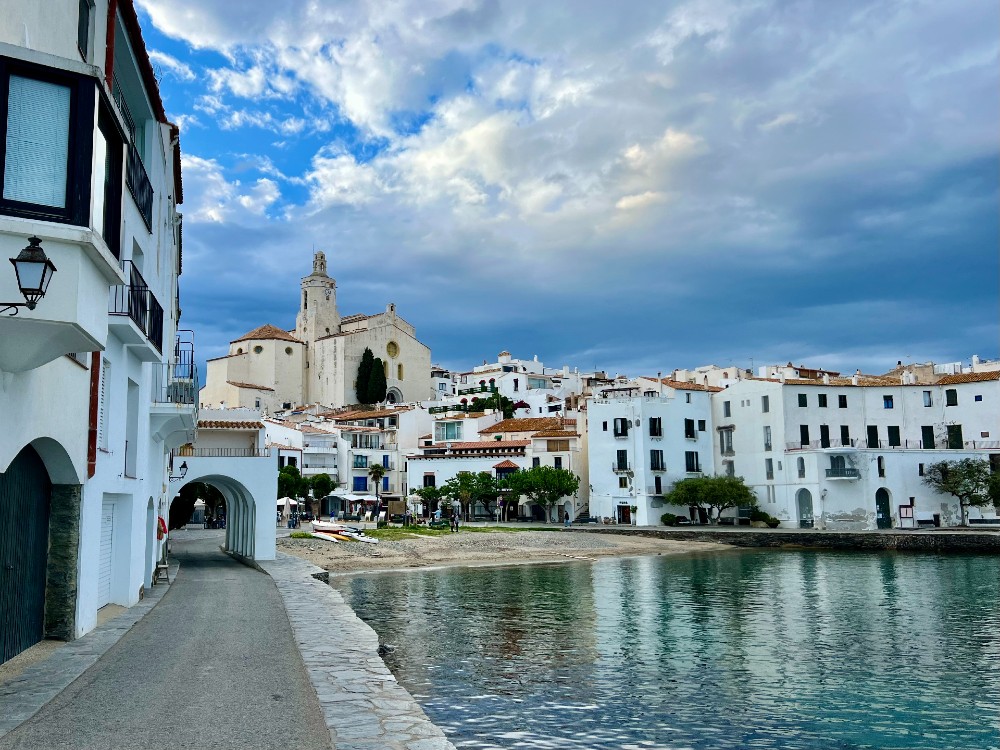
    Pikaia Lodge exterior
    Pikaia Lodge, Ecuador

    Resorts

    *Pikaia Lodge, Ecuador

    Six Senses Duoro Valley, Portugal

    Our Habitas Atacama, Chile

    *Isla Secas, Panama

    Amangalla, Sri Lanka

    Passalacqua, Lake Como, Italy

    *Rosewood Kona Village, Hawaii

    Susafa, Italy

    Six Senses Zighy Bay, Oman

    Kachi Lodge, Bolivia

    *Chablé Yucatan, Mexico

    NIHI Sumba, Indonesia

    Hotel Esencia, Mexico

    Paradero Todos Santos, Mexico

    Sublime Comporta, Portugal

    Eteréo, Mexico

    Rosewood Vienna, Austria

    Room view Forestis
    Forestis Dolomites

    Adventure Hotels and Lodges

    *Forestis Dolomites, Italy

    Tordrillo Mountain Lodge, Alaska

    The Three Chimneys, Isle of Skye

    *Eriro, Austria

    Highland Base, Iceland

    Nekupe, Nicaragua

    Puquio, Peru

    Wilderness Mombo Camp, Botswana

    Rosewood Cape Kidnappers, New Zealand

    Kisawa Sanctuary, Mozambique

    Ilmanaq Lodge, Iceland

    Maroma, A Belmond Hotel, Riviera Maya, Mexico

    *Shinta Mani Mustang, Nepal

    Cheetah Plains Private Game Reserve, South Africa

    *Awasi Patagonia, Chile

    Taylor River Lodge, Colorado, USA

    Shangri La Muscat Canyon Wadi Rum, Jordan

    Tierra Patagonia, Chile

    Jack’s Camp, Botswana

    Hotel Foroyar, Faroe Islands

    Fogo Island Inn, Newfoundland

    The Omnia, Zermatt, Switzerland

    One&Only Gorilla’s Nest, Rwanda

    Al Maha, Dubai

    Moudira suite
    Al Moudira, Egypt

    Boutique Hotels

    *Al Moudira, Egypt

    Farmhouse Inn, CA

    The Ned Hotel, London

    Borgo Santo Pietro, Tuscany, Italy

    Son Blanc Farmhouse, Menorca, Spain

    Ellerman House, CapeTown

    Venice Venice Hotel, Italy

    Single Thread Farm, CA

    *Ett Hem, Sweden

    Aman Rosa Alpina, Dolomites, Italy

    Piaule Catskill, NY

    The Ned NoMad, NY

    The Tokyo EDITION, Tokyo

    Hasbrouck House, NY

    La Samanna, A Belmond Hotel, St. Martin

    Dawn Ranch, CA

    Silversands Beach House, Grenada

    Casa Polanco, Mexico City

    Bishop’s Lodge, Auberge Resorts Collection, Santa Fe, NM

    Hotel Sanders, Copenhagen

    Post Ranch Inn, CA

    The Rooster Antiparos, Greece

    *Eleven Rio Palena Lodge, Chile

    TRUNK, Tokyo

    Palazzo Margherita, Italy

    Lime Wood, UK

    Splendido, A Belmond Hotel, Portofino, Italy

    White Barn Inn, Auberge Resorts Collection, Kennebunk, Maine

    Goaty's
    Petit St Vincent, Caribbean

    Private Islands

    *Petit St Vincent, Caribbean

    Miavana, Madagascar

    Bawah Reserve, Indonesia

    *Naoshima, Japan

    Kokomo Private Island Resort, Fiji

    Kudadoo Maldives Private Island

    Bears at Katmai
    Alaska

    Destinations

    *Alaska

    Sardinia, Italy

    *Svalbard, Norway

    Namibia

    Galapagos Islands

    Gstaad, Switzerland

    Nepal

    Jordan

    Malta

    *Faroe Islands

    Aselund, Norway

    Kerala, India

    South Georgia Island

    Saxony, Germany

    *Oaxaca, Mexico

    Bemond Orient Express
    Orient Express

    Alternative Travel

    *The Venice-Simplon Orient Express, A Belmond Train

    Nour El Nil, The Nile River Boat, Egypt

    Koks exterior

    Koks, Faroe Islands

    Restaurants

    *Koks, Faroe Islands

    Den, Tokyo

    Quince, San Francisco

    Cosme, New York City

    Alinea, Chicago

    *Single Thread, CA

    Florilége, Tokyo

    Funke, Los Angeles

    *The top of my wish list (subject to change)

    Website

    100, and counting

    I started this blog, (I mean, website), in 2018 with a handful of subscribers and even fewer Instagram followers. Today, I’ve reached my 100th post, have several thousand subscribers, and over 10K Instagram followers. No one is more surprised by these stats than me—and probably my daughter. 

    I love this blog website blog. It’s given me a creative outlet beyond helping my kids find 100-round things to glue to construction paper. It’s taken my travels to new levels, as I’m constantly thinking about how to best describe what I’m seeing and experiencing, which, in turn, helps me see and experience things differently. 100 posts (often with suspect grammar and incorrect punctuation) about travel.

    What’s the point?

    I think about this list. What’s the point? I won’t get through 10% of it in my lifetime. But that’s precisely the point. The list will change as I change. Some places will fall off my radar as others replace them. Some will make no sense—did I really want to go to Easter Island??? Others will attempt to recapture those years when my kids waddled along the beach in saggy, swimmy diapers. 

    I’ll never finish my list. I’ll never win. The hard-core list makers of the world might have trouble with this concept. I know I do. Or, I did. Until I realized that’s the best part: adding, subtracting, and multiplying (the math metaphors are neverending!) destinations. It’s ok to lose.

    My kids are adults now. They stopped believing in Zero the Hero around the same time they found out about the tooth fairy. But I thank the teachers, especially Mrs. Haese and her long-suffering husband Derek (aka Zero the Hero), for doing their job. My kids can count. And because they can count, they have lists of their own. Lists that will expand and change as their lives expand and change. 

    Those elementary school years are a sticky, messy blur. My clearest memories are from our family vacations. So, I’ll keep adding.

    Will my list look completely different in ten years? Or even five?

    I’m counting on it.

  • Blue Mind Theory: The Science Behind Why You Feel Better at the Beach

    Blue Mind Theory: The Science Behind Why You Feel Better at the Beach

    Do you know what Blue Mind Theory is? You might not know the scientific definition, but if you’ve ever felt happiness and peace while standing at the ocean’s edge, you’re more informed than you realize. Curious about the viral travel trend everyone seems to be talking about? Read on.


    My back is on fire. I curse myself for not applying sunscreen as I inadvertently step on a sharp shell. This is ironic, as searching for shells is why I’m out here in the first place. I crouch down to pull the spiny sliver of calcium carbonate from my big toe and clumsily fall backward. Sand is now in places sand should never be. I stand up, my blood pressure rising along with me.

    Then I look ahead. The Caribbean Sea fills my view—miles and miles of white caps and blue waves. Within seconds, I’m relaxed. I sit back down. There’s just something about the sea. 

    The human body is made up of about 60% water. So says the U.S. Geological Survey website. I keep scrolling, unconvinced, expecting to be told the other 40% is made up of peanut butter and jelly. Still doubting the source, I pose the question to Google, ChatGPT, and my dad. Asking my dad is a critical error—thirty-six minutes I’ll never get back.

    If our bodies are composed of 60% water, it’s not hard to understand our reliance on and attraction to it. While most of us know we need water for sustenance and nourishment, how many of us know how water affects our minds?

    Es Vedra View

    Blue Mind Theory, Theoretically

    I first learn about Blue Mind Theory via Instagram, my primary news source since November 12th. Don’t judge; my stress level is currently the same as a mini Goldendoodle. Biologist Dr. Wallace J. Nicols describes this theory in his national bestselling book, Blue Mind. Nicols contends that being in or near water induces a semi-meditative state that positively affects our minds and bodies. I concur, my burnt back and speared toe notwithstanding.

    A decade later, propelled by influencers floating in the Aegean or bikini-clad under tropical waterfalls, Blue Mind Theory has a social life of its own. The travel industry is embracing it as a new wellness trend despite the fact there’s nothing all that new about it. 

    Hot springs in Iceland are calming and restorative? Ocean views from the top of St Lucia’s Pitons make me feel reflective and meditative? Not new news. But when I dig deeper into Nicols’ theory, I realize these semi-naked Tik-Tokers are on to something. 

    Is Blue Mind Theory just a repackaged product hotels and resorts want us to buy? What does Blue Mind Theory have to do with our next vacation? Is Green Mind Theory next? If you’re curious about how being near water can affect your quality of life, lower stress levels, and promote happiness (theoretically), this post is for you.

    Blue Lagoon

    Finding the Source

    How often have I been in or around water without recognizing its inherent qualities? I’ve taken for granted how water affects my well-being. Now that I think about it, many of my favorite travel memories revolve around water. When I plan vacations, it almost always revolves around a water feature. 

    Being near water quiets the noise in my mind. And that’s not only because the sound of waves is so soothing. Water helps me unwind, whether that be in a pool, a lake, an ocean, or a bathtub. 

    The moments I’ve felt most relaxed on vacation float to the surface of my mind: sinking into a milky white geothermal pool at the Blue Lagoon, beside a mirror-flat sea at sunset in Nicaragua, before a deafening waterfall in Costa Rica. The list goes on.

    Water is the common thread. Contentment and joy are the common outcomes.

    TikTok and Blue Mind Theory

    I watch @ronjaedsmo’s TikTok video on repeat. Who’s Ronja Edsmo? Until I started researching this article, I hadn’t had a clue. Gentle, melodic guitar strings pluck away in the background while swoon-worthy beach scenes fill the screen. Itty bitty san serf type asks the viewer, “Have you ever wondered why you seem to feel better when you are near the ocean?” 

    Lots of people are wondering. Ronja’s video has 1.8 million views. 

    Sunset in Ibiza

    Water’s Significance, Culturally

    Ronja’s video makes me feel—to use a technical term—good. Now I’m wondering, too. Why do we feel better when we are near the ocean? I do some research, and several reasons back up the theory. For one, water is a symbol of restoration. Many cultures and religions use water in rituals to signify cleansing, renewal, and peace and to offer psychological comfort and joy.

    Hinduism has sacred rivers, like the Ganges, that cleanse sins and provide a spiritual rebirth. In Buddhism, temple water offerings symbolize clarity and the intention to nurture a peaceful mind. In Japan, misogi is a Shinto purification ritual where people wash their hands, mouths, or entire bodies in a natural water source, like a river or waterfall, to clear impurities.

    Water is aesthetically pleasing. There’s a psychological reason behind those doctor’s office aquariums and gurgling hotel fountains. Water features improve our mood and reduce anxiety. Ask any parent waiting for a doctor with a sick toddler in tow. Watching tropical fish glide around fake coral and seaweed is the best medicine—or at least the best distraction.

    Lastly, water-based activities like surfing, kayaking, or snorkeling promote physical fitness and boost our satisfaction in life. Beaches, lakes, and swimming pools unite families and foster a sense of belonging and happiness. A deep, oversized hotel bathtub with suds, bubbles, and salts is all I need to feel content after a long travel day.

    Surfers on beach

    Where to Find A Blue Mind

    The travel gods are constantly recycling trends. With dreamy Instagram reels, they drum up excitement for us to pack our bags and go. This imaginative reinvention is welcome. I don’t mind elevating camping to glamping. I can accept that the hottest vacations these days are coolcations. Call it whatever you want, Travel + Leisure, I’m ready.

    As wellness and health-focused destinations gain traction, hotels and resorts are reframing their offerings to keep up. At one time, a typical spa covered saunas, steam, massages, and facials—maybe even a yoga class in the most woo-woo destinations. 

    Today, wellness is far more niche. At some Arctic resorts in Finnish Lapland, rooms come with private saunas. Other hotels have bedding and robe menus to accompany their water menus. (I’m a tap water girl, myself). Many of these wellness programs overlap in one specific area. An area that takes up nearly 60% of our bodies. Water. 

    The planet is big and blue. Finding places to cultivate a blue mind isn’t hard. Maybe your blue mind is whale-watching in Mexico or on a sailboat in Croatia? Perhaps your brand of blue is a water-based wellness spa in Costa Rica or an adrenaline-filled polar expedition to Antarctica? Since learning about Blue Mind Theory, I’ve curated a list of my most memorable water-based destinations. The places I’ve felt the most energized, most restored, and most importantly, the most in sync with the world.

    Add blue to your travel wish list with these five water-centric destinations. All will inspire you to develop a blue mind.

    5 Mind-Blowing Blue Mind Destinations

    The well at hacienda altagracia

    1 / THE WELL, Hacienda AltaGracia, Costa Rica

    Costa Rica’s luxury wellness property, Hacienda AltaGracia, features THE WELL—a spa that nurtures whole-person healing, combining Eastern and Western practices, meditation, body, and holistic treatments. 

    Located at the top of the property’s 180 lush, tropical acres, THE WELL encompasses over 20,000 square feet of naturally lit, jaw-dropping space. Architecturally, the setting exudes calm and serenity. It intentionally brings the outdoors in. Three oversized windowed walls surround an oversized tranquility pool that mirrors the sky. Two symmetrical square hot tubs flank the pool. The combination of cobalt blue pools and the endless blue sky is ‘pura vida’ at its finest. 

    If that’s not enough to activate a blue mind, Hacienda AltaGracia’s other unique selling point is its on-property river bath. In this immersive wellness experience, the chorus of nature is the only soundtrack. With a riverside meditation and a 60-minute herbal bath, the river bath was designed to lower stress levels and enter a meditative state—naturally. No wonder THE WELL is one of the world’s leading wellness centers.

    Gulet Perla

    2 / Privately Chartered Gulet in Croatia

    Gulets are traditional Turkish wooden sailing vessels. While once humble fishing boats, today, gulets have been creatively repurposed for tourism. Especially popular in countries like Croatia, Turkey, and Greece, watching the world go by from a privately chartered gulet is unlike any traditional water-based holiday. 

    It’s easy to develop a blue mind when sailing simply because there’s no escaping the sea. On a gulet, life revolves around it. The water is only absent when I shut my eyes at night. But even then, it always finds its way into my dreams.

    Gulets come with a staff, including a captain, chef, and other deckhands, to cater to guests’ every whim. The captain and crew help guests create itineraries to weave around islands and find hidden bays and coves only accessible by boat.

    Whether watching dolphins at sunrise or sitting with an Aperol Spritz at dusk, nearly every spot on a gulet induces a peaceful state. And as most gulets come stocked with water toys, like stand-up paddles, snorkeling equipment, and kayaks, being in the sea is as therapeutic as looking at it.

    Cocina del Mar views

    3 / Esperanza, An Auberge Resort, Cabo San Lucas

    Waves crash against the jagged cliffs, sending bursts of salty spray into the air. From this high perch, I admire the Sea of Cortez, dazzling in deep blue hues. The Punta Ballena coast, named for its whale’s tail shape, looks barren. The water is serene. Yet, below the surface, marine life thrives. Over ten species of whales live here, including sperm, blue, and humpback—the namesakes of this magical Mexican coastline. However, the sea, the coast, and whales are only a part of what makes this Cabo resort so captivating for blue-mind-seeking travelers. 

    Esperanza is one of three Auberge properties in Mexico. That Esperanza has upped the ante on water-based wellness is clear. Their Sabiduria ritual explores ancestral connection through water. Los Elementos balances well-being through natural elements: water, fire, air, and Earth. Pasaje de Agua is a 30-minute hydrotherapy circuit that uses heated lava rocks in a steam house to purify and cleanse. 

    These water-based experiences are designed to help travelers achieve harmony within their bodies and souls. Although I think the post-treatment options are equally nurturing, like napping under a shaggy thatched umbrella on the beach. 

    Iceberg with zodiac

    4 / Antarctic Expedition

    Not all blue mind trips involve sun-drenched beaches and thatched umbrellas. Suspend your disbelief for a moment and consider the poles. The big white continent to our south has much to offer a traveler seeking a meditative state. While not the first vacation that comes to mind for wellness, Antarctica’s utter remoteness is other-worldly. Gazing upon iceberg-dotted waters of the Southern Ocean while crossing the Drake Passage can humble even the strongest minds. 

    Whether witnessing this unique part of the world by boat or plane, the vastness of Antarctica can’t be underestimated. Endless blue seas are offset by icebergs, glaciers, and snow-covered landscapes as far as the eye can see, making it nearly impossible to compute the landscape mentally.

    My expedition on the Ultramarine, Quark’s purpose-built Arctic vessel, was one of my most life-changing trips. Twice-daily Zodiac boat rides, helicopter experiences, and sea kayaking excursions ignited an unexplainable sense of happiness within me. It’s difficult to feel stress when surrounded by such overwhelming beauty. Blue Mind Theory, at work.

    Swimming with dogs

    5 / Ponds of Vermont

    Vermont has been a part of my life for decades. When I think about Stowe, I don’t conjure up double black diamonds or red and yellow maple leaves. I think about ponds. I’m not alone; as many Vermonters can attest, pond life goes hand in hand with Vermont life. 

    My parents live on a pond in Stowe. It mirrors watercolor swatches of the sky at sunset. It’s the primary residence of dozens of croaking frogs. The pond sometimes freezes over in the winter, daring me to walk across it. I never do. This small, cattail-lined pond holds memories of my childhood. It also holds memories of my kids’ childhoods. My blue mind started at this pond—long before Blue Mind Theory went viral.

    Of course, you don’t have to live in Vermont to embrace pond life. When visiting Stowe, consider staying at the Green Mountain Inn, renting a bike, and looping over the bridges that dot the Rec Path. Head to Moss Glen Falls, where an easy wildflower-filled walk will lead you to an enchanting waterfall. Or, simply go pond-hunting. There are thousands to be found. Jump in, but be warned, the water is cold.

    Caribbean Sea

    Are You a Blue Mind?

    If you’ve ever felt stress and anxiety melt away because of your proximity to a body of water, you’ve experienced a form of Blue Mind Theory. If sitting near glacier-fed lakes and towering waterfalls induces a magical, meditative state, you’ve ignited your blue mind.

    Does it really matter that this concept isn’t new? Not to me. What’s important is that I recognize it. I don’t need Ronja’s video to spell it out. But sometimes, I need a reminder. And in case you’ve wondered, Green Mind Theory is a thing, too. But that’s a subject for another post.

    I rise again, shaking off the sand, along with my foul mood. My back isn’t so red, and the shell that pierced my toe is a keeper—a Lace Murex, one of my favorites. Yes, our bodies are made up of almost 60% water—no wonder the pull is so strong. Time to dive in.


    Want to learn more? Get Wallace J. Nicols’ book, Blue Mind here


    More Blue Mind Destinations for your wish list: Click to get my FREE hot sheet


  • Another Riveting Day in the Life of a Travel Blogger

    Another Riveting Day in the Life of a Travel Blogger

    I’m on the couch. Three hundred ultra fine-tipped markers are strewn across the coffee table. With more care than the task warrants, I select my palette. Forest green, mint green, pistachio, powder blue, sapphire blue, and crimson. I choose these colors as if it’s the most important decision I’ll make this morning. It might be.

    Looking out the window, I notice the colors I’ve picked mirror the colors in my view. Evergreen trees, bright blue skies, a cardinal. I start with pistachio, staying in the lines like I always do. There’s something indescribably satisfying about filling in the lines with vivid color. I think there’s a life metaphor in there somewhere, but I can’t find it.

    I’m a travel blogger. But most of my days revolve around mundane chores. Food shopping, dog walks, laundry. I sprinkle in creative moments, like coloring (adult coloring!), writing, meditating, and painting. Why I don’t prioritize my creative side more often baffles me. It’s where I find my strength. It reroutes my day. It lifts my spirits. It makes me more productive.

    When I started my blog, I was paralyzed with fear whenever I published an article. It was a healthy fear, I told myself. But even all these years later, I have the same fear. Is that healthy? My fear is always double-edged. It can propel my creativity or sink it like a stone. 

    On my Instagram feed, I post the good stuff. Dramatic coastlines, snow-covered mountains, shiny, happy people. I tilt my camera to crop out crowds. I delete photos of foggy, gray summits. If it rained nine days out of ten in St. Lucia, I’ll post pics from that one day the sun shined. 

    I play the game. Photos of rough seas and gloomy skies inspire exactly no one to visit the Caribbean.

    My website is inspirational. Its tagline is ‘Inspiring Travel.’ Does it look like I’m on vacation nine months of the year? Does my feed convey a sense of luxury and adventure that sometimes feels unattainable? It’s designed that way. I designed it that way. 

    Instagram versus reality is a complex issue for travel bloggers. It’s a complex issue, in general, fraught with opinions. Why shouldn’t we share the pretty and perfect parts of our travels, of our lives? But why don’t we also own up to the unpretty and imperfect parts of our travels, of our lives?

    I play the social media game and assume most people I follow do, too. I accept this as reality. I know it rains on vacation, but I don’t expect anyone to post photos to prove it.

    I’m at Safeway. Stocking up on the frozen DiGiorno pepperoni pizzas my teenage son has defined as the 6th food group. This is not clean eating. I pause in the produce aisle. Withered crowns of broccoli stare up at me. What will I make for dinner tonight? Who am I kidding? My husband does most all of the cooking these days. I sometimes get to be the sous chef. I always get to be the busboy. In my defense, I was the family chef from 2002-2022. I’m okay with the demotion. Cooking, put a fork in me. I’m done.

    After lunch, I labor over an Instagram reel. I hate reels. But don’t tell Meta; it will affect my algorithm. They’ve already made it nearly impossible to gain followers. It took me eight long years to (organically!) reach 10K. That’s 5,026 hours I’ll never get back. Why do I care? Did the 10K milestone make @iamlostandfound_ legit? Did it give me a sense of validation, however misguided? Ummm, kind of. As I type these words, I realize how superficial they sound.

    Should I post clips of Manshausen Island… again? Does this reel feel more Noah Kahan or Dua Lipa? Should I ask my daughter for advice? No, that’s a can of worms I’ll never be able to shut. My last reel took two hours to create and tanked. Do I take a chance this one will go viral? This is not the best use of my time. I hate reels.

    It was easy to take chances in my teens and 20s. Fear—that primal, protective, biochemical response, wasn’t fully formed. I thought nothing of driving 300 miles home from college through a blizzard or hailing a taxi from the Lower East Side at 2am. Back then, I laughed at fear. Well, most fear. Like not the kind of fear that sets in after a midnight showing of The Blair Witch Project. That fear was no joke.

    What happened? Life happened. Kids happened. I got scared. I took less chances.

    I’m at the dog park. One of my black labs is running around like it’s the first time she’s seen grass. The other is immobile, glaring at me like I’ve condemned her to purgatory. How many times have I been to this park? I channel my inner Mensa and come up with 4,200. That’s a lie. I used a calculator. 300 days a year x 14 years = 4,200. Am I embarrassed by my weak math skills? Actually, no, not really.

    If I’m walking my dogs roughly 300 days a year, then I’m definitely not on vacation as often as I appear to be on Instagram. I don’t even want to be on vacation as much as I appear to be on Instagram. I like being home. My running joke is that I’m either 3,000 miles away or within one square mile of my house. I guess that’s not a joke. According to my family, I’m decidedly not funny.

    All those pretty little squares create an image meant to boost my website. Gain a following. Grow a brand. Does fear sometimes set in when I post? It does, even from behind the anonymity of a generic username and a camera. No one likes to be trolled. Comments like “I’d have to sell my firstborn son to afford that hotel.” How do I respond to that? Do I respond?

    I’m folding laundry. Part of me is sad my son is leaving home for three months. The other part is jumping for joy at all the found time I’ll have not turning heaps of socks, sweatpants, and underwear right side in. Or inside out. Yes, my 18-year-old is capable of doing his own laundry. I’m an enabler! Sue me.

    The truth is, I find folding clothes comforting. I love the warm fabric, the artificial spring scent, and the pure coziness of clean clothes. My toasty red flannel PJs beg me to put them on. It’s nearly 7pm. I see no reason to deny them.

    Laundry is a mindless activity. It’s not often I get to be mindless, so I take full advantage of it. My mind always wanders. Sometimes, I think about our last family vacation. Or, I think about planning our next family vacation. Then, I think about creating my next post, story, or reel. Never a reel. I think about my dogs.

    What kind of self-described travel blogger covets laundry, picking produce, takes thousands of dog walks in the same park, and thinks a night spent coloring is a night well spent? This one does. I would never appreciate my travels if I were traveling all the time. I’m not a 20-something influencer trying to snag a free hotel room in the Maldives. Most of the year, I’m a middle-aged mom working my way through life’s big decisions. 

    The rest of the year, I not only get to travel, I get to inspire travel. I accomplish this through pictures and words.

    What does it say about what we put out there for the world to see and read? Is it deceptive to only post the good stuff? Generally, I don’t write about places I didn’t enjoy or had a negative experience. I don’t write bad reviews. Bad reviews aren’t inspiring. Sometimes, I’ll highlight an aspect of a place that didn’t meet my expectations. But even then, I’m a soft touch. If it’s a place I wouldn’t return to, it doesn’t get a post. 

    I note how I feel when I see other bloggers’ feeds. The ones who visited Mongolia, Montana, and Mozambique all in the month of January. That’s not possible. Wait, is it possible? Sometimes, I feel envious. Sometimes, I don’t believe them so that I don’t feel envious. Then I remember. I’m playing the same game. I can unfollow or accept it. I accept it.

    Coloring book

    I finish coloring. The colors meld together just the way I’d hoped. I take a picture to send to my one friend who appreciates adult coloring. Not all the colors are within the lines, but that’s ok. Maybe I found the metaphor. Feeling content even when life goes outside the lines? That’s a reach. I’m overthinking it.

    I’m not on a mountaintop in Nepal. I’m not on a beach in Fiji. I’m not in an airport lounge with a glass of champagne dangling from my hand. Despite what my feed implies, I’m home. Mostly. 

    This is where I am. Meet me here.

  • It’s Her or Me

    It’s Her or Me

    “Your room isn’t ready quite yet,” says the man at the front desk. His crisp, white, short-sleeved shirt offsets his muscular, coffee-colored arms. The resort logo is centered on his matcha green tie, which is slightly askew. His nametag is perfectly level; ‘Hello, I’m Ajay!’ it reads.

    “Okay,” I reply, “About how much longer.” My question comes out as a command, a New York habit I’m keen to break. Ajay begins punching computer keys with his long, elegant fingers. Like he’s playing the piano. My gaze lifts and I look through the picture window behind him. A faint horizontal line separates one shade of blue from the other—the sea from the sky.

    “About 45 minutes,” Ajay says with a wide grin. “An hour tops.” On the desk, the saddest Christmas tree in the Caribbean shimmers with tinsel and gaudy red baubles. I’m suddenly overheated. My head-to-toe black ensemble was appropriate when we were wheels up this morning at Kennedy. Here, it’s stifling. I’m ready to relax. While my husband’s British citizenship expedited his entry, the rest of Passport Control was on island time.

    Ajay reads my mind. “You can grab your bathing suits and hang out by the pool. I’ll come find you when the room is ready.” We dig into our bag. A bathing suit, cover-up, and sandals for me. Trunks, flip-flops, swimming cap, and goggles for Daniel. Ajay points us toward the spa. “I’m going for a swim,” Daniel says. “I’ll see you in a bit.”

    In the changing room, I trade my black sweater for a black bikini. It’s tighter than I’d like. I feel uncomfortable. And vulnerable. I wrap a sarong around me. It’s baby blue and has little gold beads that click against each other when I walk. Click, click, click. The sound is weirdly satisfying.

    Outside, the sun blinds me. I put on my sunglasses and take in the scene. The pool deck is a zoo. Kids of all ages run amok. Parents ignore them behind issues of People and Vanity Fair. The music is a few decibels louder than necessary—steel drums. The rapid fire of rolling notes attacks my senses rather than soothe them.

    I see an empty umbrella-covered lounger in a far corner and walk over to secure it. Click, click, click. The canvas gives more than I anticipate. I sink into it like a stuffed turkey at Christmas.

    Whenever Daniel swims, I sit on the beach. I like to watch his arms and legs glide effortlessly through the water. I like to keep track of him by the constant splash in his wake. He’s easy to spot—his bright yellow swim cap acts like a beacon. Daniel is a competent swimmer. More than competent. I’m convinced he was a fish in his last life. 

    I need to watch Daniel swim because his swimming scares me. I blame generations of worried women in my family for this irrational fear of water. I’m anxious. But just this once, I put my anxiety aside and I wait by the pool like Ajay asked. Settling in, I open up my book.

    “Sooooo? How far along are we?” says a voice with a singsongy lilt. I turn to my left and see a man with a toothy smile staring at my stomach. He’s older than me, but not by much. His fire-engine-red hair matches his arms and chest. Two swatches of opaque, white zinc are smeared beneath his mint-green eyes. His bathing suit is expensive—with stencils of multicolored sea turtles frantically paddling in all directions. It’s marine mayhem. He’s just come out of the pool, and water is puddling beneath his chair.

    Normally, I enjoy polite chit-chat with strangers. On ski lifts, at the supermarket, at the coffee shop. But I’m in no mood to chit-chat today. I’m roomless. In vacation limbo. Unsettled. My too-tight bikini is digging into my hips. This stranger’s question, while well-meaning, feels violating. My hormones are in such a rage that I’m sure he can see them. I want to tell him to mind his own business.

    I take off my glasses. “Six and half months,” I say dryly. “I’m due in May.”

    I re-open my book, the universal sign for ‘leave me alone.’ But, he keeps talking. “Kids,” he says shaking his head as if we’re old friends, “You spend the first two years of their lives getting them to walk and talk. Then the next twenty telling them to sit down and shut up.” He chuckles at his joke, clearly practiced, and waits for me to do the same.

    “Yup,” I say curtly and put my glasses on. His smile fades. Redhead gets the hint.

    Tonight is New Year’s Eve, the night the resort pairs an extravagant buffet dinner with a cringey late-night show. Sushi stations, pasta stations, seafood towers, and fondue towers are followed by reggae bands covering ‘Don’t Stop Believing’ and ‘Wonderwall.’ I notice a photo booth set up on the veranda. A crate beside it is filled with oversized, plastic party glasses, neon feather boas, and sequined top hats. All the trimmings for the kind of spectacle that makes people question why they ever leave home for the holidays. Forced fun. No matter how nice a hotel is, on New Year’s Eve, it’s part of the package. 

    Daniel and I have already opted for a quiet night at the hotel’s smaller, more expensive restaurant. It’s a calculated move. We assume that big families with small kids won’t want an expensive dinner and that party-ers won’t want a quiet one. I’m already looking forward to a king-sized bed with soft sheets and piles of mushy pillows. A bed that I won’t have to make in the morning. If I’m awake at midnight, it’ll be a miracle.

    Thirty minutes have passed and I’ve managed less than five pages. If Harry Potter and the Goblet of Fire can’t hold my attention, I’m doomed. Plus, it’s just so noisy: the clamor of a thousand city kids wreaking havoc on the resort. Drowned maraschino cherries lay at the bottom of half-drunk, overpriced, mango smoothies. Naked toddlers with floaties wrapped around their pudgy, little arms whine as sunscreen is reapplied. ‘Marco’ and ‘Polo’ are hollered ad nauseam. 

    I should be on the beach.

    Wallowing in my annoyance and intolerance, I don’t hear the panicked voices right away. But, I sense them. I look up. Guests are walking with purpose. Moms are scanning the pool for their kids. The energy in the air has shifted and there’s not a ‘Marco’ or ‘Polo’ to be heard. I overhear someone saying, “There’s been an accident at the beach.”

    A long pause follows. Then, “It’s bad.”

    My brain dives underwater—taking its sweet time processing what it’s just heard. Every cell in my body tightens as I stand up, which is challenging because of the sunlounger’s unfortunate elasticity issue. Guests are flocking to the beach as if pulled by the undercurrent of a strong wave. I wobble, physically and mentally. All 6 ½ months of my future son are an obstacle as I make my way across the hot sand toward the shore.

    A crowd is gathering on the sand squinting at the sea. Foamy white waves lap their toes. Seaweed tangles around their feet. I catch low murmurs, “It was a speedboat,” “outside the channel markers,” “freak accident.”

    People who say, ‘My whole life flashed before my eyes,’ always struck me as irritatingly melodramatic. To everyone I once judged, take this as a formal apology. The minutes ahead would send me into a dizzying range of emotions. Petrified to calm. Immobile to frantic. In those minutes I assume the worst, as is my nature. How will I raise my kids without a father? Will I have to give birth alone? How will I get home?

    I look to my right. A woman—a mom—a wife is sitting on the sand cradling her head in her hands. Somehow, I know. It’s her or me. It’s her husband or mine. It’s her life that will forever change, or it’s mine that will. Our eyes lock, and in them, my fear is mirrored. It’s unbearable—I’m wishing it were her. She’s wishing it were me.

    I race down the beach—all the while searching for a tiny patch of yellow in the water. Is that a white cap or a swimmer? Is that a swim cap or the sun’s glare? I’m distraught. A man appears beside me. Maybe he thinks I’m going into labor. I stammer, “My husband—swimming—I can’t find him.” Gently, he takes my arm to help me find a needle in a haystack. 

    Twenty minutes have passed since I left the pool.

    Twenty minutes have passed since the accident.

    Twenty minutes of imagining the unimaginable.

    Twenty never-ending minutes.

    The stranger points out in the distance. “Is that him?” he asks. We see a speck. Is it yellow? We wave our arms desperately, not yet knowing if it’s a human, a bird, or a buoy. After what feels like another lifetime, the speck stops moving. It changes course and quickly moves towards the shore. It’s not until he takes off his cap and goggles that I allow myself to believe it’s my husband. 

    I sink into the sand and sob.

    A hush falls over the resort. A wave of silence out of respect for the bereaved. We overhear snippets of conversations, “British,” “dad,” “elite swimmer,” “tragic.”

    Daniel later tells me he had no idea what was happening on the other end of the beach. When he saw me waving, his immediate thought was, ‘Shark!’ 

    Perhaps my brain wasn’t capable of registering details in the face of such overwhelming fear, because I have no memory of the kind man who spotted Daniel. I don’t know what color his hair was, or if he even had hair at all. That I remember the shade of the redhead’s green eyes with such clarity is a mystery I’ll never solve. 

    I don’t see the woman again. But the resort has a ceremony for her husband on the beach the next day. New Year’s Day. I watch from our balcony. Flowers. A bonfire. An intimate huddle of grievers. I feel like an intruder. I feel guilty, too. 

    Since then, not a New Year goes by without me thinking about that moment our eyes locked. The details of her face may be a distant memory, but the energy that moved between us is palpable still. Seventeen years have passed. My son is graduating from high school this June. Generations of worried women aside, I’ve learned a lot about managing fear. I have ‘tools’ in my ‘toolbox’. I cope.

    Once I stop sobbing, Daniel and I head back to the pool. The sun has shifted, and long, dark shadows are cast across the deck. The redhead is gone—all that’s left of his existence is leftover french fries swimming in a puddle of ketchup. 

    As if on cue, Ajay appears. His nametag is lop-sided but his tie is now straight. “Mrs. Edwards?” he says softly. “Your room is ready.” I gather my book, my sandals, and my sunglasses. I put on my sarong and follow Ajay into the lobby. Click, click, click. It’s time to check in.

  • Who Needs A Travel Advisor? It Turns Out I Do.

    Who Needs A Travel Advisor? It Turns Out I Do.

    As much as I love traveling, there are just some parts of travel I’d rather not plan. My travel advisor has often been a lifeline, saving me time, money, and my sanity more times than I can count. I’ve overheard people question why anyone would use a travel advisor when it’s so easy to book everything themselves. I’ll admit, I used to question it, too. I don’t anymore. Here’s why.


    Back in March 2020, my family made the unpopular decision to carry on with our spring break plans despite the warnings from friends and family who were afraid we’d end up trapped in Mexico. “We packed lots of Theraflu and hand sanitizer,” I told my mom. “We can drive home if the flights get canceled,” I told my dad. Worst case, we’d live in Mexico for a few weeks, we told ourselves. 

    I think you know where this is headed.

    Over our week at Esperanza, in Cabo San Lucas, the hotel guest count dwindled. By day six, we were 4 of 15 guests left on a property that could accommodate well over one hundred. Bright, cloudless, azul-colored skies belied the state of the world. We were in Mexico to escape the news cycle for two weeks. I’d be damned if I was going to let a microscopic virus ruin our family holiday.

    Arch of San Cabos
    Mexico

    Rising panic

    That morning, we’d spent a few hours whale-watching on the Sea of Cortez. The whales were a calming, if enormous, presence—oblivious to the rising panic on the other side of the water. I felt small, humbled, and totally at peace. It’s a moment I’ll always remember. One I’ll always associate with the start of the end of the world as we knew it.

    While we were motoring back to shore, a text popped up on my phone from my college BFF. Amy wrote, “The borders might close. It’s time to come home. Let me help.” 

    Amy works for CIRE Travel. And, while I’d never used a travel advisor in the past, I knew I needed one now. Within the hour Amy and her team had us on a flight departing the next day—a task that would’ve had me on hold with United Airlines for hours on end. Unsurprisingly, we were not the only family high-tailing it home before the borders closed. 

    Getting out of Mexico on the cusp of a worldwide pandemic may have been the reason I started using a travel advisor, but there are multiple reasons I continue to do so. I’m often asked why I use one. So often, that I’m going to explain it here, debunk a few myths, and forward it whenever I need to. Clever me.


    Click here for my FREE Wish List Destination Hot Sheet


    Long beach Island
    Jersey Shore

    Isn’t a travel agent and a travel advisor the same thing?

    I’m a proud Jersey girl. No mall in my home state was complete without a Liberty Travel storefront—its messy collage of travel inspiration plastered to the window. A peek inside showed travel agents cradling a (gasp!) rotary phone to their ear, furiously typing on their IBM computers, circa 1985.

    In those ancient, pre-internet days, travel agents acted more like brokers between hotels, airlines, and travelers. Travelers often relied on agents because they had fewer options to book for themselves.

    Today we have travel advisors—the most evolved form of travel agents. Modern-day travel advisors are curators and problem solvers. Their relationships with a hotel’s executive team facilitate the experience (even elevate it) with perks only they receive. Let’s face it, resorts would rather reward a travel advisor who has the opportunity to send them dozens of guests than the traveler who books only once.

    Some post-pandemic stats back me up. Travelagentcentral.com’s website states, ‘After the pandemic, nearly half of travelers (44%) say they are more likely to use a travel advisor. Not surprisingly, nearly all travelers (94%) who always/often use a travel advisor before the pandemic are likely to use one after the pandemic.’

    Pool view from il sereno
    Lake Como

    Travel Advisors are expensive

    It’s a common myth travel advisors make a trip more expensive. Most travel advisors have a reasonable fee structure that’s determined by the complexity of the trip. Like any resource, they do hours of legwork for their clients. Typically, the resort or hotel pays a referral fee to the advisor which in no way impacts the pricing for the client. In fact, most travel advisors can request room upgrades, provide spa or meal vouchers, and early check-in, among other perks for their guests. They often find clients better offers and prices than they would find themselves.

    By definition, an advisor is ‘A person who gives advice in a particular field’. We pay our tax advisors and financial advisors without blinking an eye—their research and expertise in an area we are less comfortable handling ourselves is invaluable. The same can be said for travel advisors. We pay for a travel advisor’s time, experience, and trusted contacts.

    While I love (nearly) everything travel-related, there are many things I don’t have access to or don’t have the bandwidth to do myself. I’d rather be researching the hotel room with the best view of Lake Como than researching the best airfare. Others might love the hunt for the least expensive airfare but get overwhelmed researching hotels. A travel advisor can do any and all of the above for their clients.

    Seattle Public Market Sign
    Seattle

    What are the perks of using a travel advisor?

    Post-pandemic air travel is chaos. Remember the summer of lost luggage? Remember when an hour or so was enough for pre-flight arrival? Now we need to build in even more time (and at least another 30 minutes for a cappuccino at DCA’s Starbucks). These days, delayed and canceled flights are as common as Mini Goldendoodle therapy dogs. 

    Things go wrong with travel. When you book with a travel advisor, they take care of the problem. Sometimes, they take care of the problem before you even know there’s a problem in the first place.

    A few years ago my daughter and I were due to travel to Seattle. The night before the flight, I received a call from my travel advisor. “Your flight has been canceled.”, she said. “But don’t worry, I’ve already rebooked you.” Even a professional worrier like me couldn’t find a reason to worry. I didn’t even know the flight was canceled. 

    Jumping from boat
    Corsica

    Are there other benefits of using a travel advisor?

    Travel advisors leverage their perks at hotels and resorts around the world. Their knowledge of having sent guests to endless destinations makes them the ideal choice to plan an itinerary to suit one’s needs. They can help coordinate guides, transportation, private charters, cooking classes, and wine tastings, as examples.

    Everyone’s needs are different and a travel advisor can help with as much or as little as you’d like. But should anything go awry, they are standing by, usually with 24/7 emergency phone numbers. This is especially critical if something goes wrong while you are in a different time zone or over the weekend.

    Croatia island
    Croatia

    Is it really worth investing time with a travel advisor?

    Like any relationship, the one between a travel advisor and a client needs open communication. An up-front conversation about needs and expectations is a given. Allow them to explain their fee structure and how they work to make sure it aligns with your philosophy. The sooner the travel advisors know your travel style, the more seamless it will be.

    For instance, CIRE knows my husband prefers an aisle seat and that I prefer the window. They know I like to do hotel research but avoid flight research like the bubonic plague. Our likes and dislikes are clear, which makes each subsequent trip we book simpler and more streamlined.

    A few summers ago, I was looking into flights to Europe for our family. Four coach seats for $16,000 made me strongly consider vacationing in Cape May instead of Croatia. I quickly sent my dates and destinations to CIRE. Within the hour they’d come back with a solution. “Would you be willing to use a different airline for your connection?” they asked. “Changing from United Airlines to Swiss Airlines will save you $6,000.” The answer was a resounding ‘Yes!’

    Exterior view of Baumaniere
    France

    Travel advisors are just for luxury trips

    Another myth worth debunking is that travel advisors only book luxury trips. This is not the case. Although my travel advisor has booked my trips to France and Finland, as an established client, they’ve also booked my North Carolina hotel for camp drop-off and an overnight in Seattle for a college visit. Each booking was treated with care and respect. If that isn’t the kind of service you’re getting from your travel advisor, it may be time to find a new one.

    Beach view
    Mexico

    Advisors give the best advice

    In the end, having a travel advisor is a personal decision. For me, it not only comes down to convenience but also trust. Robert, my stylist, advises me on my ever-graying hair. My daughter advises me on my clothes. My dad advises me (unsolicited, mind you) on just about everything else. I trust the team I work with to get me from point A to point B safely using their expertise and knowledge. The times they’ve saved me (money, time, my sanity) have been invaluable. 

    If I didn’t say it earlier Amy, thank you for getting us out of Mexico when you did. You’re not only one of my BFFs, you’re part of a team that always has my back. On reflection, we definitely didn’t pack enough hand sanitizer anyway.


    If you’d like to get in touch with the CIRE team, click here or call them at 888.715.4518. My endless gratitude to anyone who tells them I am Lost and Found sent them.


    Click here for my FREE Wish List Destination Hot Sheet


  • I wouldn’t go there if I were you (Why where we choose to travel matters)

    I wouldn’t go there if I were you (Why where we choose to travel matters)

    The landline rings. I immediately know it’s my mother calling. From the way she says ‘hello’ I know something else—that I’m not going to like the conversation. I’m tempted to feign a poor connection and hang up. 

    ‘A woman was kidnapped in Uganda’, my mother says, her voice measured, with frantic undertones. ‘At gunpoint’, she continues, ‘alone, while on safari.’

    ‘I’m not going to Uganda for four months, Mom’, I say, my voice measured, with annoyed undertones.

    ‘And, I’m 49 years old. I’m a grown-up.’

    ‘She was 35’, my mom replies.

    I hang up.

    The phone rings again. It’s my dad.


    I’m measured by nature. So much so that my baking skills are flawless. You can’t improvise a chocolate soufflé no matter what The Great British Bake Off would have us believe. I’m a recipe follower. A rule follower. I color inside the lines. 

    So while it’s true the unfortunate kidnapping in Uganda happened only a few months before I’m due to go. And also true I’m traveling solo to Queen Elizabeth National Park, the very park she was kidnapped from, I do what I do best—I measure.

    As departure day looms, I research as if my life depends upon it. Ultimately, I deem Uganda safe. Safer, I’ll add, than my current hometown. I tell my parents that lightning never strikes the same place twice.

    They don’t buy that, either.

    Landscape

    Where we choose to travel matters. Some of us choose to cage dive with sharks off the coast of South Africa for a high-adrenaline thrill. Others choose to restore coral reefs in Australia in order to help save the planet’s fragile ecosystems.

    Our adventure mindsets are decidedly different and have individual arcs—from dangerous to safe, worthless to worthwhile. I think of the center of this arc as my comfort zone. The times I step out of my comfort zone are rewarding beyond measure. Uganda is one such time. But there are others.


    GET MY TOP FIVE WISH LIST DESTINATION HOT SHEET FREE. JUST CLICK.


    Preconceptions aside

    Checking in with my good friend Merriam-Webster, I note the synonyms for ‘preconceived’. They include biased, bigoted, influenced, prejudiced, and opinionated. Preconception sure does come with a lot of heavy baggage.

    Over the years, I’ve been ‘encouraged’ to rethink travel plans. That encouragement may have been due to a particular country’s current state of civil unrest. Or, because the terrain is considered treacherous. Or, simply because it just doesn’t seem fun. Most of the time it’s due to preconceived notions about our destination. Notions that I’m keen to dispel.

    The unsolicited advice is well-intended, I know. Yet, in the end, we are masters of our own domains. Or in this case, travel itineraries. Sorry, mom.

    Scenery with woman

    You’ll get kidnapped in Uganda

    I possess a healthy fear of traveling to Uganda. I rarely travel solo. The last time I traveled alone was in 1994 when my then-boyfriend and I broke up and I booked a spontaneous flight to St. Thomas to cry. 

    My salty tears drip into plastic goblets of overpriced, oaky, California chardonnay. A few days later, two friends track me down to save me from myself (and to suggest a cold Carib, instead).

    Any fears I carry with me from DC to Uganda dissipate upon arrival. Reality versus preconception. The gap is deep and wide.

    I’m due to meet up with a friend in Bwindi National Park later on, which leaves me solo in the southern Ishasha sector of Queen Elizabeth National Park. I spend three nights at a remote tent camp alongside the Ntungwe river, where the sounds of wildlife begin to fill the warm African air just as I am heading to bed. 

    The savannah after dark is a universe unto its own. It is one of the only place I would rather be awake while everyone else is asleep. One night, I hear an elephant’s enormous body graze the side of my canvas tent. I note the natural tempo of his slow-paced, padded steps.

    My heart thumps so loudly that I’m sure he can hear it. In the dead of night, the chorus of animal life is nearly spiritual. Not much later, I feel the roar of a lion as much as I hear it. I try my best to stay awake, not wanting to miss a growl.

    tree climbing lions

    The famous tree-climbing lions are part of the reason I choose to visit Uganda. The Ishasha sector of Queen Elizabeth National Park is the only place in the world to see them. Lions that climb acacia trees to find shelter from the heat, take a well-earned nap, or spy on helpless prey. Another reason is to observe the Silverback gorillas, a species that can’t be found in any zoos or game parks.

    Ugandan kids

    Finding Gold, in Africa

    Yet, there are reasons beyond wildlife that make this trip remarkable. It’s the people. Not only the people who live and work in the destinations we are traveling to (bartenders, guides, trackers, and school kids) but the other adventure-seekers we meet along the way. 

    Whether that be the women I meet in seats 2B and 2C en route to Ishasha, the birders with whom I cross the Mabamba Swamp, or the digital nomad punching keys on the bar stool beside me. It’s all about the animals, in Uganda. But, it’s also all about the people.

    Wetlands of Mabamba

    The bush plane I take from Ishasha to Kihihi seats four people. Across the aisle sits a tall, elegant man with inquisitive eyes and an endearing smile. We chit-chat (an activity I love) while waiting for wheels-up. My husband is not a chit-chatter, so when I’m alone I chit-chat like there’s no tomorrow.

    I learn that although he currently lives in Milan, he’s originally from the small African nation of Burundi. I ask him about Burundi and why he is visiting Uganda. We exchange stories of our game drives and animal sightings. We compare kills in detail and count ourselves lucky for having seen one. He tells me about his twins and that he works for Nike.

    “Have you been to the United States?”, I ask.

    “Once”, he responds, “to Atlanta, back in 1996.”

    I feel creaky, rusty cogs turn slowly in my mind. My Trivial Pursuit general knowledge resurfaces and I imagine inserting a red wedge into a little, plastic wheel. 

    “Wait. Did you go to the Olympics?”

    Bashfully, he tells me he was in fact, in the Olympics. My jaw hits the tray table. I’m about to ask more but just then the engine sputters to life at a decibel level that renders speech useless. Stray zebras clear the runway. We’re off.

    Later, when I’m reunited with Wi-Fi, I google my humble seatmate, (you wouldn’t?). His name is Vénuste Niyongabo. I learned he trained to compete in the 1500-meter race for the ’96 Olympics. He was considered the clear favorite, but at the last minute forfeited his space to a teammate who hadn’t been able to compete in ’88 or ’92. Vénuste entered the 5000-meter race instead, one he hadn’t trained for. In his final lap, Vénuste went on to win an unexpected Olympic gold. 

    The only Olympic gold medal winner for Burundi. Ever.

    Silverbacks

    Where I choose to travel matters. I choose Uganda and expect to observe climbing lions and track Silverbacks. I don’t expect a chance encounter with an Olympic Gold medalist on a four-seater Cessna. As valuable a memory as any other I collect while in Uganda. Maybe the most valuable. Human connection trumps all.

    Oh, and no one gets kidnapped in Uganda that week. I check.


    GET MY TOP FIVE WISH LIST DESTINATION HOT SHEET FREE. JUST CLICK.


    Plaza life

    Drugs are everywhere in Colombia

    You’re going to Colombia? Haven’t you seen Narcos? Ahhh, if I had a peso for every time I heard that one. To those stuck in the Netflix version of Colombia, circa 1980, I ask you to join me in the present day.

    I visit Cartagena because I’d like to be dazzled by a Spanish colonial city in a Gabriel García Márquez kind of way. Magical Realism is a part of Colombia’s allure, at least in the literary sense. My expectations are unreasonably high. I picture men levitating in the streets and musical notes dancing in mid-air. I conjure up the aroma of deep-fried yucca from street vendors and imagine the echo of clomping horse hooves on cobbled streets.

    I read One Hundred Years of Solitude for the third time, in anticipation.

    Street vendors

    Many things are sold on the electrically-charged street corners of Cartagena, but as far as I see, none of them are drugs. The street corners I pass sell pineapples, papayas, and wedges of juicy watermelon. Messy perhaps, but not illegal, merchandise.

    The palenqueras are the glorious fruit sellers of Cartagena. Their bright clothing and broad smiles are colorfully woven into the fabric of the city. At one time, these iconic women carried baskets of fruit upon their heads from their Palanque village to the city center. Today, they find a shady patch of the street or plaza to offer their bounty of produce to tourists. 

    colombian men

    The World Cup: USA v. Colombia

    One day we walk to Getsemaní, a neighborhood just beyond the fortified walls of the old city. It’s gritty, raw, and all about street life. We stumble upon the chipped mustard-yellow walls of the Town Hall on Plaza de la Trinidad. The colors of Cartagena are kaleidoscopic—a harmonious match to the zeal of the city.

    We see young Colombian kids playing a game of pick-up soccer. They run as fast and effortlessly in torn flip-flops and battered Crocs as most American kids can in Nike Airs. Premier League jerseys hang loosely off their lanky frames. A group of men is stooping nearby, their faces weathered and grooved like an old LP. I take a mental photo. I still have it.

    My son is nine years old. Without warning, he dives headfirst into the game. My husband, daughter, and I sit on a bench nearby—front-row seats to an impromptu World Cup match. 

    Local pick up soccer game

    The kids don’t bat an eye at the American newcomer and absorb him into the game like an old friend. They don’t have language in common, but somehow figure out who is playing which position and who is on which team. Sport has a language all its own. 

    Goalposts are marked with soda cans. Yet, the game matters in ways beyond scoring. My son takes a shot on goal and misses. The game resets. A lesson in Latin American football, my husband muses on the sidelines. A lesson in a lot of things, I can’t help but think.

    Trees in the light

    Finnish Lapland doesn’t sound like fun

    “You do realize there are only a few hours of daylight in Finland during winter?”, chirps a nosy woman seated on my left. She is way too close to my screen, I think, as I scoot further down the banquette at my local coffee shop.

    Yes, I discover that little factoid while researching our post-Christmas trip to Finnish Lapland. A holiday of near-perpetual darkness isn’t for everyone. I’m hoping it’s for us.

    I want to tell her “if we all traveled to the same place, the Dominican Republic would sink to the bottom of the sea. So, while I appreciate your concern that we might not have fun in Finland, let me say one thing—I’m a grown-up. I can go where I want.”

    I don’t say any of that. But I want to.

    Finland turns out to be one of the funnest vacations we have as a family. I use ‘funnest’ deliberately here. I know it isn’t a real word—I have Grammarly.

    Northern Lights

    The main reason I want to go to Finland is to see the Northern Lights, which I hear is all but guaranteed in Finnish Lapland. Naturally, I don’t tell my family this. Instead, I google all the ways to have fun in the Arctic Circle in December. There are 35,800,000 results. Phew.

    I get the guaranteed aurora borealis on our first night in Lapland. Ticking that box early means I can fully embrace the other 35,799,000 fun things I’ve promised my family we can do. Among many fun activities, the funnest (again, for emphasis) takes the form of 17 yelping huskies pulling us on small metal sleds at breakneck speed at dusk (aka noon). 

    Toni, the dog whisperer of Finland, is our guide. He has an ease and lightness about him that belies his 20-something years. Before departing into the wilderness, Toni gives us vital instructions on how to maneuver the dogs. None of which I can hear. The dogs are barking so loudly they shake the snow off the trees.

    Once the dogs get mushing, the landscape deafens. It’s like someone muted Finland by remote control. The beauty of the landscape is enhanced by the centuries-old silence of dogsledding. 

    Dog sledding at noon

    Toni guides us over frozen lakes and under tall pines. The sky renders shades of lavender and pink. Then almost imperceptibly, those colors transform into magenta and orange. A setting from a fairy tale, the low-angled winter sun casts long shadows on the snow, which is far from snow white. It is purple-white, pink-white, and blue-white. Benjamin Moore could learn a thing or two about color in Finland.

    Night-filled days are fun, but tiring. After seven nights in the Arctic, I’m excited to get home for some vitamin D and to watch White Fang. The memory of Toni and his unwavering command over our pack of huskies will be hard to forget.


    GET MY TOP FIVE WISH LIST DESTINATION HOT SHEET FREE. JUST CLICK.


    Do you know about that terrifying runway in Bhutan?

    By the numbers, Paro, Bhutan’s only international airport, has incredible stats. Only 17 pilots are qualified to land there. The runway is a skimpy 6500 feet long and surrounded by steep 18,000-foot snow-covered Himalayan peaks. Airplanes need to carve a 45-degree angle around these dramatic peaks moments before touchdown. Oh, and flights are only allowed to land during the day, in good weather conditions, and when a full moon is rising.

    The full moon part is a joke. The rest is no joke.

    We go to Bhutan to celebrate my 40th birthday, despite the statistics people have kindly sent us regarding plane crashes. ‘Bhutan is the happiest place on earth!’, I read. If I have to turn 40, then I’m going to do it in the happiest place on earth, dammit.

    Tigers Nest

    Leopards, tigers, and dragons. Oh my.

    The Kingdom of Bhutan is known as the ‘Land of the Thunder Dragon’. One of its most famous sights is called The Tiger’s Nest. The Himalayan foothills are home to the elusive clouded leopard. Leopards, tigers, and dragons? Whoa. Bhutan is setting a high bar.

    The crowned jewel of Bhutan is the Tiger’s Nest (Paro Taktsang), an ancient monastery that hangs precariously off of a 10,000-foot cliff. The Tiger’s Nest is a sacred space built on a cave site where Indian gurus meditated in the 8th century. The cluster of temples that are perched there now was built in 1692. The Tiger’s Nest is why I choose to visit Bhutan—to absorb a small part of its immense spirituality. To get there, I will push myself physically and mentally.

    Pema, our Bhutanese guide, personifies the happiness index I have heard so much about. His dimpled smile radiates as he tells us the history of his country. He talks about his favorite Bhutanese dishes, his wife, and his kids. I again remember why I travel is as much about the people as it is about the destination.

    Prayer Flags

    The hike is rigorous, which we expect. Red, yellow, and blue prayer flags flap—primary colors fraying from years of wind and rain. An enormous prayer wheel meets us along the way and I attempt to channel the surrounding aura. Mountain peaks, craggy rocks, and cloudless, bright blue skies. I am looking for a sign—a way to connect, however unrealistic that is.

    From a physical point of view, I’m well within my comfort zone—the center of my personal arc. The terrain is tough to climb, but not impossible. Yet, from a spiritual viewpoint, I’m out of my depths. I’m eager to embrace it, but it’s a challenge. 

    Eventually, we enter a clearing—a break from the blue pine forest. I see the Tiger’s Nest directly across the valley, hanging onto a sheer rock face exactly where I expect it to be. I imagine the tigress in her lair as well as the generations of people who have trekked here before me. We have 700 steps to descend and another 250 to ascend before we reach our goal. Slightly out of breath, I stop to look up.

    Above me, I see a fully-formed 360-degree rainbow circling the sun. I’ll say that one more time for impact—a rainbow circling the sun.

    This phenomenon, I later discover, is a sun halo. It occurs when sunlight refracts millions of hexagonal ice crystals. Those crystals then become suspended in the atmosphere to cause an otherworldly ring around the sun. 

    I didn’t even know sun halos existed. I have yet to see one since. Maybe this is the goal? A sun halo—my forever connection to Bhutan. Who doesn’t believe in signs?

    Sun Halo

    Travel matters

    In Cartagena, I expect to be immersed in a magical, yet real, world of art, culture, and food. I don’t expect to watch an impromptu pick-up soccer game on a gritty Colombian plaza.

    In Finland, I expect to glimpse electric green brushstrokes of charged particles crossing a black sky—not to be immersed in the age-old sport of dogsledding within a world of white.

    In Bhutan, the Tiger’s Nest is my intended goal. Yet, it’s overshadowed, quite literally, by an ethereal atmospheric phenomenon.

    And in Uganda? In Uganda, I track mighty Silverbacks and see rare climbing lions. So-called ‘once-in-a-lifetime experiences.’ But, then I meet Vénuste Niyongabo—a man who brings home gold to the poorest country in the world.

    Why do I travel?

    One of my favorite authors says it best:

    “After all, we travel for the same reason we read: to remind ourselves of the existence, and also the inexplicability, of other lives, to recognize ourselves within that which is foreign to us. We are one person when we begin a trip, or a book or an article; we are another person when we conclude it. Another person, but also the same-we take the journey to see ourselves.” —Hanya Yanagihara

    Where I choose to travel matters. I take the journey to see myself. Although what I discover isn’t always what I expect, I wouldn’t have it any other way. The risks of my choices are mine to bear. I’ll take those risks because I value the rewards that accompany them.

    And also, because I’m a grown-up, dammit.


    GET MY TOP FIVE WISH LIST DESTINATION HOT SHEET FREE. JUST CLICK.


  • A Passport’s Life (and 10 places to go next)

    A Passport’s Life (and 10 places to go next)

    Is your passport ready? Lately, I’ve thought much about where I have already been and more about where I would like to go next. I have taken a hard look at my soon-to-expire passport. What kind of life will my future passport lead? I have ten ideas, or so.


    I am an obsessive collector. At ten, I started collecting postage stamps, fascinated by the colorful, miniature designs and illustrations. By twelve, I was also collecting stickers; Hello Kitty, Miffy, scratch ‘n’ sniff, sparkly, and those satisfyingly tactile, puffy ones.

    When I moved to NYC in my early 20s, I began to collect matchbooks, which held the same fascination as those long-ago stamps. I marveled at the tiny advertisements for the restaurants they represented. I collected the annual NYC Zagat dining guides and enthusiastically ticked off the places where I had eaten. I gained weight. 

    Matchbooks

    A decade later, I moved to Japan, where I started to collect meishi, (business cards). The intricate kanji, katakana, and hiragana strokes were, in themselves, individual works of art. Typography that complimented the Japanese design aesthetic.

    Lonely Planet

    Over subsequent years of travel, I found more to collect; such as shells, ceramics, and Lonely Planet guidebooks, from the countries that we visited. Now, these collections transport me to different periods of my life and act as visual reminders of fabulous holidays.

    Bowls Shells

    The Passport: the ultimate collection

    The one collection to which I never gave much thought, has been sitting in a drawer, untouched, unused, and unloved, for the past ten months. My passport. A collection of ink on paper, a sometimes round, rectangular, or oval mark, that designates a country ‘visited’. 

    Last week, I dug up my neglected passport, as we are planning a trip for the holidays. The travel industry lovingly calls it ‘Festive Season’. I’ll bet I’m not the only one who needs a season to be festive. 

    My passport is about to expire. I am weirdly emotional about giving up this little blue booklet that has given me such joy over the past decade. Ten years—the life of a passport. 

    Quotes on paper

    I have carried this living, breathing, essential document through airports around the world, largely unaware of its weight in my hand. Had I really considered the access and power it provides? As I look more closely, each page holds much interest beyond the dried ink—beyond the colorful stamps.

    Passport

    Thirteen quotes from past presidents, poets, activists, and writers, line the top of each spread. One quote, by prominent scholar and author, Anna Julia Cooper, seemed especially fitting. “The cause of freedom is not the cause of a race, a party or a class—it is the cause of humankind, the very birthright of humanity.” As I write, the United States is on the cusp of a new presidency, and still deep in the throes of a pandemic. 

    Patriotic scenes and American icons live behind the mess of overlapping stamps. The Statue of Liberty, a bald eagle, and Mount Rushmore, as examples. American landscapes are reproduced in the backgrounds; cacti of the southwest, wide, open plains of the midwest, and tropical palms of the Hawaiian islands. 

    My travel history

    What will be a surprise to nobody who has read up to this point, is that I have saved all of my old passports. I have saved my husband’s old passports, as well as my kid’s old passports (both the US and UK versions). Something about these documents, the ones that literally enable us to ‘pass’ through the ‘ports’ of the world, seem too valuable to casually discard. They unlock history—our travel history, so to speak.

    Passport grid

    No doubt, the passport system will one day be completely automated. There may be no physical record in which to refer. The stamp will be retired in the name of technology. I’ll miss those stamps and the little blue booklet. I’ll miss certain rituals of the process. I won’t miss the lines or the intimidating passport control workers. 

    Passport tales: India

    The passport that I am about to give up has had a life of its own. I opened up to a page, at random.

    India tuk tuk

    The full-page visa that allowed me entry to India in 2011 stared up at me, and stories from that trip started to materialize in my mind. I remembered being ‘encouraged’ to ride a camel to our lakeside dinner near Amanbaugh, the resort where we stayed just outside of Ranthambore National Park. Afterward, I said, ‘I will never ride a camel again, not ever. Not even for a free trip anywhere in the world. Never’. I still haven’t. And I won’t.

    Later that week, I was verbally assaulted and nearly arrested after taking a photo of a monkey on a leash. Sweat dripped from my forehead as I tried to prove to the monkey’s owner that I had deleted the image from my camera, as promised. Note to self: always ask permission when photographing people, or tethered primates, especially people with tethered primates. 

    Passport Tales: Portugal

    I flipped ahead a few pages to the stamp marked ‘Portugal’, where our VRBO’s pool turned a putrid, neon, green over the course of the week. Ear infections all around! Obrigado, Portugal!

    Portugal castle

    En route to a Moorish castle later that week, we headed down one of the many death-defyingly steep, narrow, roads that we had come to anticipate in hilly Sintra. Suddenly, a light on the dashboard angrily glared and flashed hot red type. Not fluent in Portuguese, I googled the phrase, assuming that it was something benign, like an overdue oil change. 

    “Atenção! Falha de freio!” translated to: “Warning! Brake failure!” Was this a joke? Were we being punked in Portugal? I froze in panic, closed my eyes, and prayed to the Portuguese auto gods. As is evidently clear, we lived to tell the tale. What might be less clear, is that to this day, Portugal remains one of our favorite holidays. Oftentimes, the craziest experiences make for the best stories.

    Cheetah in Botswana

    Passport Tales: Africa

    Turning a few more pages, I found the ‘Botswana’ stamp, and I immediately remembered the cheetah we spotted on our first game drive, just 60 seconds after leaving the lodge. I remembered falling in love with our all-knowing guide, Foster, whose soothing and calming manner made our trip even more extraordinary. I thought back to the safari nighttime chorus of sounds, and how I never wanted to fall asleep for fear of missing it.

    Glimpses of other past travel resurfaced. A levitating man in magically realistic Cartagena.The Christmas market in blizzardy Budapest. The harrowing pre-dawn horseback ride in Argentina, when I thought my daughter would file for emancipation papers upon returning home.

    I thought of those trips that reminded me of my friendships and relationships. We celebrated my husband’s 40th birthday in Punta Mita, Mexico, gathered six families for an ex-pat reunion in Cortona, Italy, and took a couples getaway to St Barth’s, in the Caribbean. Stories are unlocked, and retold, through the stamps.

    Buckets and lists

    As a travel writer, this year has presented some clear challenges. I have tried to find creative ways to bridge this less-traveled gap in time. I have dreamt up future travels. I have kept a ‘Travel Lust’ list on my phone—an ongoing and hopefully never-ending inventory of places to see, stay and go, one day.

    Travel lust list

    Where did I most want to go, I thought? I referenced my trusty list—compiled from random sources, over years of reading and research. From Instagram posts and conversations overheard at restaurants. From Travel + Leisure, Condé Nast, and Afar magazines. From the currently-on-hiatus ‘Travel’ section of the Sunday New York Times. (Hear my cry, Mr. Sulzberger, please bring it back.) Gold lists, Hot Lists, bucket lists, and luxury travel blogs. 

    In no particular order, here are my current top ten:

    Katmai National Park, Alaska

    Single Thread Farm, Healdsburg, California

    Six Senses Zighy Bay, Oman

    The Faroe Islands

    Lofoten Islands, Norway

    Taylor River Lodge, Crested Butte, Colorado

    The Uyuni Salt Flats, Bolivia

    Amanzoe, Greece

    Torres Del Paine National Park, Chile

    Snowdonia, North Wales

    Dolomites, Italy

    Antarctica

    For anyone counting, that was twelve. I’m not bad at math, I just couldn’t stop. I have more but am holding back in case I need more material for my next post.

    New beginnings

    Starting a new passport now might be a good omen. Another way to start fresh, wipe the slate clean, and (literally) fill up a blank canvas. What do the next ten years, the life of my next passport, have in store?

    Passports messy

    Find your passport. Give it some love, even if you aren’t yet ready to plan a trip. Be content with a trip through your stamps, for now. There are good stories in there, awful stories, and hilarious ones, too. Our passports hold so much more than the faded impressions we have amassed over the years. What kind of life has your passport led so far? Where will it take you next?

    Imagine it. I know I am.

    Find out what’s hot first

    Click here. Be the first to discover the new hot spots your passport can take you this year.

    Where will you find yourself next? Just click.

    Pack light and go far. Botswana is unchartered territory.

    Plan a travel comeback with these five socially distant ideas.

    Maybe just getting to a fabulous restaurant is enough to suit your wanderlust? How to get in.