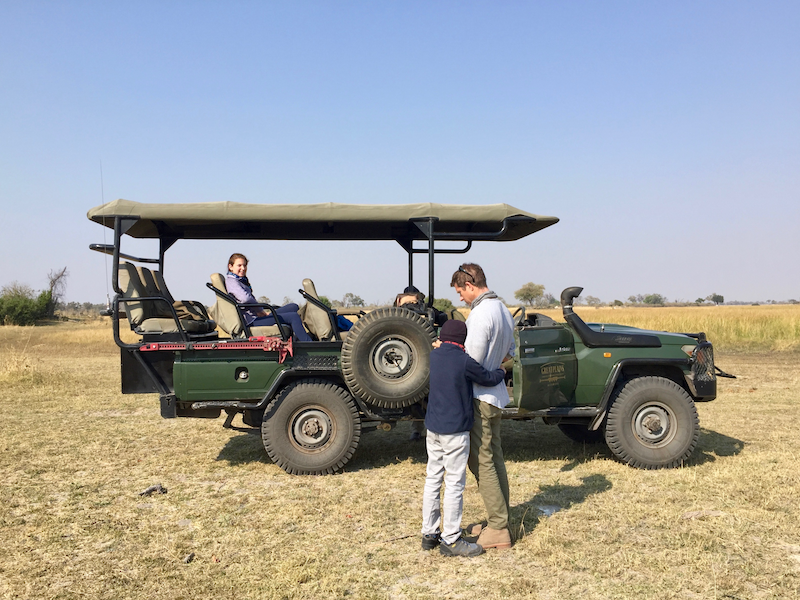
Are you heading on safari for the first time? An African safari is an adventurer’s travel trifecta—a combination of breathtaking wildlife, stunning terrain, and unparalleled lodging and hospitality. With over 20+ game drives across four countries, I’ve learned a thing or two about how to simplify the preparation for this exciting experience. My packing lists follow—organized into four simple categories. You can also download my ‘Ultimate Safari Packing List’ to have them all in one easy-to-access place.
And while it’s not necessary to travel with only a carry-on—if you can manage it, you won’t regret it.

The first time I went on an African safari was in 2002. It was my honeymoon. My soon-to-be husband had kept it a surprise until check-in at JFK—a gesture that felt romantic then, but would feel utterly controlling now. That’s twenty years of marriage for you.
A few weeks before departure, Daniel gave me a gift—an overnight bag from Coach. I loved its cherry red canvas exterior, wide shoulder strap, and soft leather details. But as I’d come to expect from many of Daniel’s gifts, it came with a catch.
“It’s for our honeymoon!” Daniel chirped excitedly. “Oh, how cool! You mean it’s my carry-on bag?” I questioned, although I already knew the answer.

Being Prepared Is Isn’t Everything
How I packed for a three-week trip to an unknown destination in a bag designed for a weekend getaway is baffling. As my faded disposable camera photos show, I packed the wrong clothes, the wrong gear, and way too many shoes. Yet, I can’t recall needing a single thing as we journeyed across Tanzania that June. That’s young love for you.
Despite my anecdotal story of unpreparedness, I vowed to be ready when we took our kids on safari years later. I googled safari clothing, what to wear on safari, safari must-haves, and safari packing lists. This time, I’d be prepared. This ain’t no honeymoon.
If a similar Google search got you here, congratulations—you have a safari on the horizon. It’s one of the world’s most intense, immersive, engaging, and magical experiences. I’ve been on safari in Tanzania, Botswana, South Africa, and Uganda. With each trip, I fine-tuned my packing skills, filing away tips for my future safari-bound self and my safari-bound friends and relatives. I figured out how to consolidate. And found my safari style without entirely forgoing fashion. I made peace with layers and colorless clothes.

Safari Style 101
Safaris are considered once-in-a-lifetime experiences due to their high costs and far-flung locations. It’s painful to shell out even more money for clothing you may never wear again.
Thankfully, safari clothing need not be expensive. The best way to dress for a safari is modestly and with a neutral color palette. Take advantage of a high/low buying strategy. This means spending more on certain pieces (like a good fleece or puffer) to balance items (like underlayers) where you can safely compromise fashion and durability.

In Africa, It’s All About Layers
Safari game drives typically occur around sunrise and sundown. You don’t need David Attenborough to tell you these are the times of day when wildlife is most active. Unfortunately, these coincide with the times of day I am least active. But safari is well worth going outside of your comfort zone! Be suspicious of an outfitter that advertises a noon game drive. The leopards and lions will be enjoying a midday siesta. You should consider one, too. Game drives are tiring.
As for safari clothing, it’s all about layering. Think about a tank top base layer, a lightweight, long-sleeved mid-layer, and a fleece and puffer outer layer. The thin mid-layer will be your new BFF, as it will protect your skin from the sun and pesky tsetse flies. Lightweight, long pants are better than shorts despite the temperature for the same reason. Invest in a good fleece and puffer, as you will wear them daily and likely beyond Africa.

And it’s all about the Sun
Mornings in Africa are typically cool. You’ll be awake before the sun. Sunrises and sunsets are another reason why we go to Africa. The muted layers of the terrain will morph and change as the day breaks, adding another level of awe to an already awe-inspired morning. Sunsets are equally mesmerizing—with no air pollution or city lights to spoil them.
As the temperatures rise, slowly peel off your layers. Settle into the sounds of the savannah. Get your camera ready and listen to your all-knowing guides. The fun is about to begin.

Safari Clothing Packing List:
2 x base layers (tank or short-sleeved shirts)
2 x mid-layers (lightweight and long-sleeved, neutral colors)
* 1 x fleece (neutral color)
* 1 x lightweight puffer (I like this one from Patagonia because it folds down to the size of a paperback)
1-2 linen shirts and/or shorts or, for women, a wrinkle-free dress (for evenings around the firepit comparing wildlife sightings, also doubles as a nice outfit for layover city days)
2 x lightweight pants (zip-off ones are popular; I don’t know why)
Buff (for dust, flies, and keeping hair off your face—the uses of a good buff are endless)
2 x sports bras
7 x underwear (many lodges have complimentary laundry)
7 x socks (at least two thicker and longer pairs to go over pants if on a walking safari or a trek in Uganda. Otherwise, prepare to meet the local fire ant community.)
Hat (wide-brimmed to protect your neck and, yes, neutral)
* Hiking shoes (broken in, in advance)
Closed-toe shoes or sneakers
Flip flops (for hanging around the pool)
1 x bathing suit (it’s tempting to take more—don’t. This isn’t Cabo.)
* Splurge-worthy item
Click here for my free ‘Ultimate Africa Safari Packing Lists’

Gearing Up
The right gear is integral to a safari experience, especially for wannabe wildlife photographers, bird nerds, and travel bloggers. But gear is cumbersome. Choose what to pack with care. Unless you’re applying for a job at Nat Geo, an iPhone may suffice—they take beautiful photos. My go-to is a combo—an iPhone (hanging from a lanyard around my neck at all times) and a Canon Rebel SL2, which is lightweight, user-friendly, and has WI-FI capabilities so I can post to Instagram in real-time.
Safari Gear Packing List:
* Luggage (Eagle Creek is my go-to choice; this is my pick)
Packing cubes (Eagle Creek packing cubes have endless uses: toiletries for plastic-free countries, dirty laundry, souvenirs)
iPhone and charger
iPhone lanyard (Somewhat dorky, yes—but you’ll thank me when baboons don’t steal your phone)
* Camera and lenses (one good zoom will do—they’re expensive, consider renting one)
Extra battery and/or SD card
* Binoculars (sometimes provided, but having your own is worthwhile—these are the ones I use)
Sunglasses
Day pack (for your gear)
Universal Travel Adapter (this is the one I have)
* Splurge-worthy item

Little Things Count
Don’t let the length of the following list scare you. In total, these self-care items take up less space than that extra pair of shoes you won’t wear. But little things count—especially things that protect our bodies and minds in one of the most unforgiving places on Earth.
Safari Self-Care Packing List:
Sunscreen (transferred into CVS travel-sized containers you can dispose of as you go)
Lip balm with SPF
Insect repellent (The National Capital Poison Center recommends a concentration of DEET no higher than 30%)
Eye mask (this one is my go-to)
Ear plugs (although the nightly chorus of wildlife is a highlight of safari)
Prescription meds (cute pillboxes are all the rage)
Small medical kit (a nod to my paramedic husband, who doesn’t go to Safeway without one)
Feminine products (because there’s no CVS in the Okavango Delta)

Less is Less
It’s human nature to be overprepared, especially in a place as foreign and remote as Africa. If you’ve chosen a reputable safari outfitter with your travel advisor, then you need not worry. Anything critical you may have forgotten will be taken care of. Strive to pack less. Make a carry-on bag a goal. Feeling unencumbered on a trip with so many moving pieces is liberating.
But no matter what you pack in, some things don’t belong on a safari in Africa.
What Not to Pack Packing List:
Perfume (or creams/moisturizers with a strong scent that will attract or repel wildlife)
Fine jewelry (the rhinos don’t care how many David Yurman bangles you have)
Plastic bags (some countries, like Rwanda, are polythene-free)
Dressy clothes and shoes (safari is decidedly casual)
Drones (restricted in many African countries)
Hair dryers (most lodges will have them)
Anything you haven’t worn in the last 12 months (you think you’ll wear it in Africa—we all know you won’t)
Click here for my free ‘Ultimate Africa Safari Packing Lists’

Prepare to see the Unexpected
One of the best things about an African safari is that anything can happen. One day, you might come across a pride of lions feasting on a wildebeest. On another, an elephant might stroll through your camp during lunch. At night, you may hear a pack of wild dogs on the hunt or discover a bush baby running circles around the inside of your tent.
These moments define the experience—the moments you’ll retell at the firepit at night. Safari is fueled by adrenaline. Those who choose to go on safari are a self-selecting group of adventure seekers. Where the unexpected is expected, even sought out. Otherwise, we’d just go to the zoo.
And while surprises are part of the thrill, some aren’t welcome. A few tips follow, most of which I learned from experience.

Safari Travel Tips
Luggage tip: Space in a carry-on bag is limited. So wear your heaviest items on the plane when possible. This includes hiking shoes and your fleece or puffer. You can read more about how I pack and my general packing tips here.
Safari Planning Tip: Using a travel advisor to plan a safari makes it a stress-free experience. They work with the most well-known and reputable outfitters and can access perks and surprises you won’t get if you book it yourself. I use CIRE for all of my travel bookings. To learn more about why I use a travel advisor, read my post, “Who Needs a Travel Advisor? It Turns Out I Do.”
Visa, vaccine, and passport tips: Travel advisors will be on top of the visa and vaccine requirements, but checking in advance is helpful. While you’re at it, make sure you have at least six months and one or more free spreads of passport space from the departure date of your trip.
Clothing tip: As mentioned earlier, wearing neutrals is vital. But why? Colors to avoid wearing include red, yellow, orange, black, dark blue, and camo. Each of these colors has its own set of issues. In many African countries, camouflage is strictly reserved for the military. Dark colors attract tsetse flies, while bright colors make you look like prey. (Looking back at my color choices in 2002, it’s remarkable I’m alive.)

Laundry tip: Many luxury lodges and tent camps include daily laundry. This removes the need for more clothes (and too many pairs of underwear). Get over the fact that you may wear the same pants five times. At least they will be clean. And nobody but you will notice anyway.
Gear tip: Bring a small daypack in the Land Rover each morning. It’s a safe place to keep all those layers tidy and dust-free for future use.
Tipping tip: If tipping makes you uncomfortable and anxious, consider choosing an outfitter that includes all gratuities. While the embedded tipping costs most certainly increase the cost of the trip, there are no awkward moments or need to fumble with local currency.
Insurance tip: A must. Don’t leave home without it.

What is the Purpose of this Day?
We wake up at the crack of dawn. It’s still dark. The only sounds I hear are buzzing insects and the rustle of leaves in the breeze. Without speaking, the four of us trudge to the jeep, where our guide, Foster, waits with a wide smile. He looks at my 13-year-old daughter, who’s radiating snarky, salty tween vibes. She’s not smiling.
“What is the purpose of this day?” Foster says to her in a slow, enchanting baritone. With sleep in her eyes, Ella looks up. I look up, too. Ella doesn’t know. I don’t know. Who thinks about things like that? Foster does.
But I want to know. I’m guessing Ella does, too, based on how quickly she hops in the jeep. Foster revs the engine, and we set out to find the purpose of this day. It’s somewhere out in the Okavango Delta. The best journeys answer questions you never knew to ask. Keep asking, Foster. We’re all listening.
Click here for my free ‘Ultimate Africa Safari Packing Lists’
(Please note some affiliate links above. I may receive a small referral fee should a product be bought through my site, but rest assured, I only highlight products I own and would buy for myself.)


