Tag: Food

  • The Best Food in Oaxaca—From Market Stalls to Michelin Stars

    The Best Food in Oaxaca—From Market Stalls to Michelin Stars

    Oaxaca is widely considered Mexico’s culinary capital thanks to its deep food traditions, vibrant markets, and complex regional dishes. From its seven varieties of mole and handmade corn tortillas to traditional drinks, and from its thriving restaurant scene that spans street stalls to Michelin-starred kitchens, the best food in Oaxaca reflects centuries of culture, craft, and pride.

    How Oaxaca has eluded me for so long is a mystery. Follow along and discover the culinary treasures of this vibrant city.


    It’s about 7pm. The sun has set, but the glow of a few well-placed street lamps guides us along a narrow, curved back street. The stucco-painted walls reveal the colors of the rainbow, despite near darkness. As we stroll, pint-sized dogs with outsized personalities yip, yelp, and howl from behind the bars of gated houses. 

    We round a corner, and I glance past a scuffed, black metal door plastered with flyers and a satin rainbow flag above it. I continue on.

    “Too bad it’s closed tonight,” my friend says.

    I look around. “What’s closed?” I ask.

    “That restaurant… Adamá,” Amy replies. “It’s supposed to be very good.”

    Adama door

    I turn back towards the battered door. Hanging discreetly beside the flag is a small red plaque. The unmistakable badge of culinary achievement: Michelin 2025.

    I’ve been in Oaxaca for less than two hours and have already stumbled upon one of the city’s epicurean treasures. With 23 Michelin-recognized restaurants, including six Bib Gourmands and two with a star, I wonder if five nights in Oaxaca will be more than my digestive system can bear.

    Challenge accepted. Bring on the stars.

    Chocolates

    Why wah-HAH-kah?

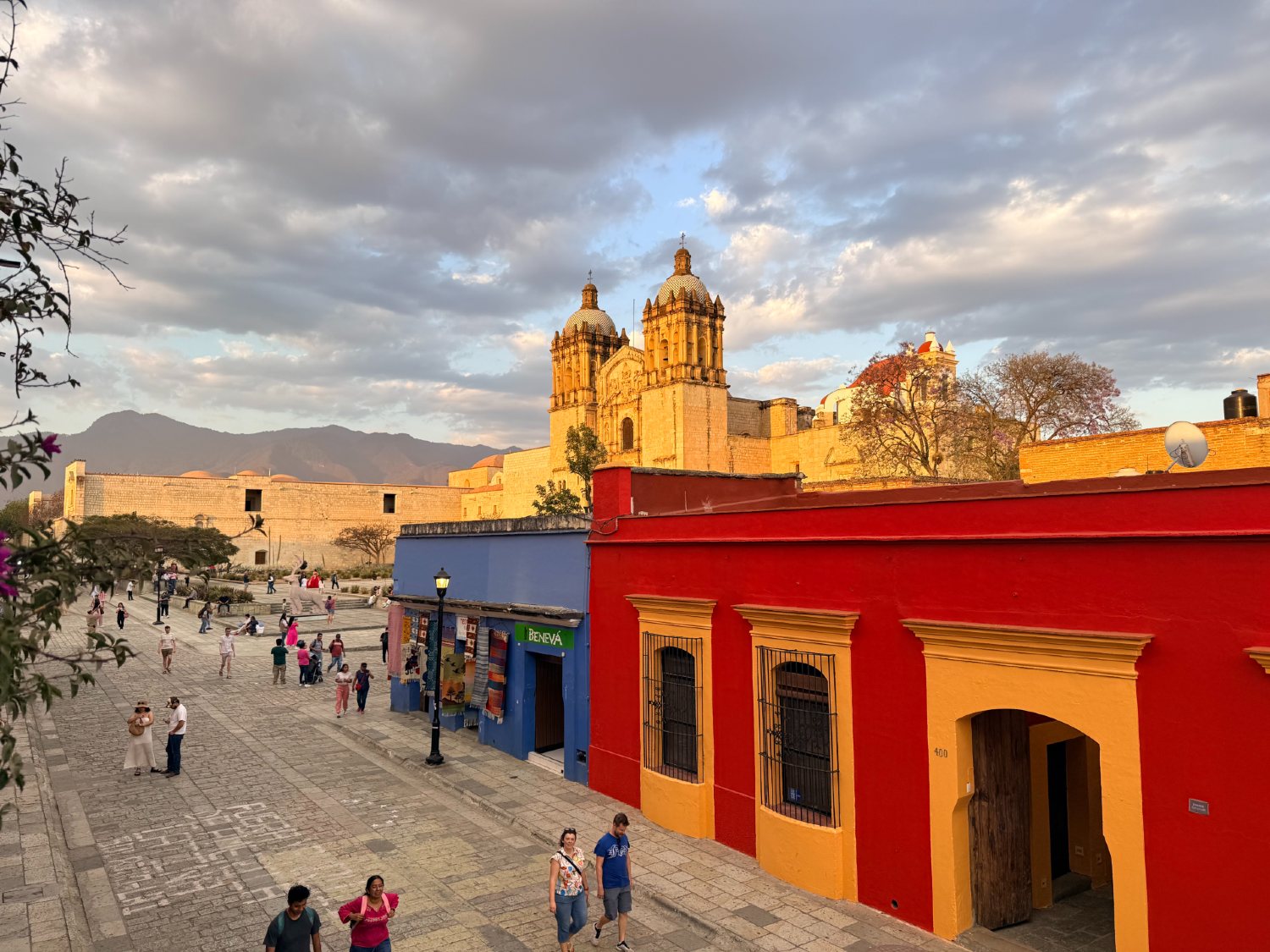
    Oaxaca feels like a city built on color. At sunset, the skies remind me of bottles of colored sand I’d fill on the Jersey boardwalk, with layers of blues, purples, and pinks. Vibrant displays of pottery, embroidered fabrics, ceramics, and wood block prints fill storefront windows. Even the chocolates are prismatic—each morsel wrapped like a shimmery, glittering gift.

    I’ve come to Oaxaca to visit a college friend and her husband. Each year, they choose a new destination to live and work remotely for six weeks. The last place I joined them was Mérida, a city I knew nothing about, but left completely enchanted by. So when Amy extended the invitation to Oaxaca, a destination I could barely pronounce, I didn’t hesitate. 

    Typically, I plan my visit about 2-3 weeks into their stay, a strategic way to tap into their favorite bakeries, coffee shops, boutiques, and restaurants. This time is no different. As she’s done in the past, Amy maps out a five-day tour of Oaxaca that would put Rick Steves to shame.

    For once, I get to be led rather than lead. 

    Wedding at church

    ¿Dónde está Oaxaca?

    Oaxaca, one of Mexico’s 32 states, is located in the southeastern part of the country. Covering more than 36,000 square miles, it has 300 miles of Pacific coastline, archaeological ruins, colonial architecture, mountains, and valleys. 

    Oaxaca City, officially Oaxaca de Juárez, is the state’s largest city and is confusingly referred to as just ‘Oaxaca.’ I learn this nuance quickly—much faster than I overcome other linguistic challenges. Why I say ‘Merci’ instead of ‘Gracias’ every time I’m served a drink is baffling. I don’t even speak French.

    Memelitas

    In Oaxaca, it’s all about the food

    Oaxaca may be known for its tropical climate, colorful buildings, captivating murals, and UNESCO World Heritage Site status, but one could argue these are all overshadowed by its cuisine. Nicknamed the Land of Seven Moles (and I don’t mean tiny subterranean mammals), Oaxaca is defined by seven regions, each with its own interpretation of this rich, complex, spicy sauce. 

    Mole is an acquired taste—one I acquire multiple times in Oaxaca. Like learning to identify the different notes in a red wine, I start to pinpoint characteristics of each style, which are a combination of chili peppers, spices, nuts, seeds, and occasionally chocolate or fruit. 

    A family will spend years perfecting their mole, guarding the recipe, then passing it on to the next generation like a precious heirloom. When we visit the markets, I see pride in grandmothers’ eyes as they offer us tastings. It’s their family’s past, present, and future wrapped up in a single bite.

    Mercado

    Oaxaca Food Tour: Party of Two

    John and Amy take a food tour of the city the week before I arrive. By the time I land in Oaxaca, Amy has narrowed down the tour highlights so that we can sample the city at our own pace. I tell my stomach, “You’ve got this,” and we start walking.

    I start my day with two things: coffee and The New York Times puzzles. No matter where in the world I wake up, these are constants. For any fellow puzzlers, my Wordle streak is 565 days strong. 

    Oaxaca coffee exceeds my expectations, and I enjoy the vibe and grounds at Café El Volador so much that I refuse to go anywhere else. Each morning, an elementary school class plays games on the plaza beside it, which only adds to my adoration of this lovable corner café. Cappuccinos in hand, we head outside and soak up the morning sun.

    Cafe el Volador

    Beyond Tacos and Tortillas—Take a food tour of Oaxaca! Click here.


    Tamales Cande

    Mercados and Memelitas

    Fully caffeinated, we stroll to Mercado Sánchez Pascuas for tamales. Minerva, the tour de force behind Tamales Cande, was taught her grandmother’s tamale recipe at 11 years old. When we arrive, Minerva is already serving a line of patrons at her small stall.

    Amy chooses sweet and savory tamales for us to sample, and at 930am, it’s clear a nap is in my future. I make a mental note to sample, not devour, every dish on the tour.

    Taco Truck in Oaxaca

    Our next stop finds us at a tented taco truck where three generations of women work the crowd like a well-practiced dance. One is minding the comal, a smooth, flat cast-iron griddle used for cooking tortillas. The other two are multitasking the orders, food prep, and payment. 

    We order tacos and memelitas, which are open-face fried corn tortillas topped with various fillings. Tacos del Carmen is legendary in Oaxaca, a street-corner fixture since 1974, with recipes passed down through the generations. I take my plastic plate to a nearby stoop and devour every last bite. So much for sampling.

    Chapulines, grasshoppers

    The Jewels of the Mercado

    Mercado Benito Juárez has existed since 1894, making it one of Oaxaca’s oldest and most famous markets. Here, locals rub elbows with tourists, buying everything from baked goods and regional sweets to flowers, footwear, and seafood. It’s a feast for the senses, and we walk the aisles, each named in honor of the state’s regions.

    As we wander, I notice woven baskets piled high with insects. I had already tried chapulines (grasshoppers) the night before, as Amy and John were keen to test my taste buds’ limits on arrival.

    Chapulines are a common snack, the unlikely jewels of the mercado, and are often found on menus even in the fanciest restaurants. Other edible insects include chicatanas, flying ants (don’t fret, they remove their legs, wings, and heads before cooking them), escamoles (ant larvae), and chincuiles (red worms).

    These no-fat, protein-rich bites can be boiled, roasted, toasted, fried, seasoned, or served au naturel. And while I’d ideally like to incorporate 85 grams of protein per day into my diet, boiled bugs are a hard pass.

    Street festivities

    Mexican Wines, For the Win

    Nothing encourages day drinking more than a vacation in Mexico. The combination of warm weather, bustling streets and plazas, and the daylong festive buzz means one is never more than six feet away from a place to imbibe.

    While ambling around the Zócalo (Oaxaca’s main square), we sit at an outdoor table for a drink. Nursing my ice-cold Corona, I think there may be no better place to absorb the city’s vibe than from this very spot.

    Next, Amy and John lead us to Cuarto de Vino, a nearby bar that serves exclusively Mexican wines. Cuarto’s focus is on small producers and natural wines from Baja and other emerging regions. We sit around the central bar and order a flight of whites. And just like that, our food tour has turned into a bar crawl. 

    Dinner

    The Best of Oaxaca: A Food Lover’s Guide

    There are boundless dining options in Oaxaca, from market stalls to Michelin-starred restaurants. Each rung of the culinary ladder offers plenty of options for hungry tourists. What follows is my curated guide to Oaxaca’s best food. Think of it as your one-stop shop for mapping out the city’s food highlights.

    Dinner on patio
    Criollo Restaurant

    Best Restaurants in Oaxaca
    (including Michelin Stars & Bib Gourmands)

    Criollo: Helmed by Chef Enrique Olvera of Pujol and Cosme fame, Criollo, one of the city’s chicest dining rooms, is softly lit and deeply atmospheric. On the way to their tables, guests pass tortillas being pressed and cooked on a comal, filling the space with the scent of warm corn. The experience feels soothing and communal—like dinner with family—while a seasonal seven-course tasting menu highlights the depth of Oaxacan cuisine inside a UNESCO Heritage house.

    Las Quince Letras: Since 1992, Celia Florián and Fidel Méndez have been seducing diners with their roasted chilies and Creole ingredients. Traditional Oaxacan dishes, including their family’s black mole, are served on a tree-canopied, shaded terrace. (Bib Gourmand)

    Ancestral Cocina Tradicional: This simple, beautifully designed, open-air restaurant is tucked away in the residential neighborhood of Xochimilco. Inspired by native ingredients, Ancestral is an off-the-grid spot for breakfast, lunch, dinner, or a mezcal Negroni at the bar. 

    Labo Fermento
    Labo Fermento

    Labo Fermento: After perusing the on-site lab and bodega, get a rooftop table at this low-lit Asia-meets-Latin America hotspot, where fermentation is the culinary theme. Chef-owner Joseph Gilbert and his team conjure ethereal dishes such as fermented tomatillo, huitlacoche kimchi, and my fave: dumplings with quesillo and queso ahumado glazed in a chili oil. Labo is a refreshing change from traditional Mexican fare. (Bib Gourmand)

    Levadura de Olla Restaurante: Celebrating the culinary roots of the Sierra Sur region, Levadura de Olla serves atypical ceremonial dishes inspired by the region, including barbacollita tamal (cracked corn, chicken, pork, chilies, and spices), squash blossoms, mole negro, and native Oaxacan tomatoes. (1-Star)

    Casa Oaxaca El Restaurante: Alejandro Ruiz pens a love letter to Oaxacan cuisine, with sensational dishes like yellowfin tuna carpaccio, crispy duck tacos, and oregano-scented rabbit. Set within an 18th-century townhouse, guests will fall in love with much more than the food at Casa Oaxaca.

    Selva Cocktail Bar
    Selva

    Best Bars in Oaxaca

    Cuarto de Vino: A sophisticated, trendy, and convivial wine bar serving an array of Mexican varietals with tapas that effortlessly complement the wines’ flavors.

    Tasca El Olivo: A buzzy gastrobar with live music and casual rooftop seating. At El Olivo, food is a family affair, serving tapas, paella, pinchos, and pastas.

    Selva cocktail
    Maracuyá and Pollen Cocktail at Selva

    Selva Cocktail Bar: If Selva’s mission is to distill the essence of Oaxaca, it overachieves. Named one of the World’s 50 Best Bars by San Pellegrino, Selva takes the art of the cocktail to new levels. Get there before sunset to score one of the two balcony tables overlooking Oaxaca’s magnificent cathedral. 

    La Popular: Cozy, authentic, and, as the name boasts, incredibly popular. Serving tacos and tortas, as well as spicy soups and salsas, it’s filled with locals enjoying a night out, which is always a good sign.

    Pastries
    Pan Con Madre

    Best Cafés and Bakeries in Oaxaca

    Café El Volador: An intimate, small, and local café, serving everything from rich espressos and luscious hot chocolate to gooey chocolate brownies and guava cheesecake.

    Pan con Madre: At this local bakery, good luck choosing just one flaky, buttery pastry. Pair whatever you choose with a silky cappuccino and relax in the courtyard before starting your day.

    Boulenc Bakery: With flour sourced from a mill in nearby Nochixtlan, this open-air and hard-to-find local bakery perfects artisan sourdough bread.

    Mercado spices

    Best Street Food and Markets in Oaxaca

    Barbacoa El Cabrito (at Mercado 20 Noviembre): Settle into a counter seat and feast on the best goat tacos in town, French-dip-style, with a side of savory consomme.

    Tamales Cande (at Mercado Sánchez Pascuas): Known for having some of the top tamales in Oaxaca, don’t miss Minerva’s Tamale Negro, with juicy chicken and black mole.

    Super Jugos Angelita (at Mercado Sánchez Pascuas): Looking to quench your thirst after a hot tamale? Turn around. Choose from beet, kiwi, carrot, watermelon, guava, or a combo of any and all of the above at this little juice bar, which sits directly opposite Tamales Cande.

    Tacos Del Carmen: Chorizo tacos and memelita con quesillo (fried tortillas with Oaxacan string cheese) are just a few highlights at this lively tented food truck located at the corner of Jesús Carranza and C. de Manuel García Vigil. Cash only.


    Want to take a cooking class in Oaxaca? Just Click.


    appetizers at Casa Silencio

    Get Local—What to Eat in Oaxaca

    Oaxaca is widely considered Mexico’s culinary capital, and the best way to experience it is dish by dish. From smoky moles and crisp tlayudas to sweet Oaxacan hot chocolate, the city’s traditional foods reflect centuries of indigenous and regional influence. If you’re wondering what to eat in Oaxaca, start with these classic dishes.

    Empanada: Crispy corn turnover with savory fillings

    Tlayudas: Giant toasted tortilla with beans, cheese, and meat

    Pozole: Hominy stew with pork and chile

    Sopa de Mariscos: Hearty seafood soup

    Tamales: Steamed corn masa parcels with savory fillings

    Carne Asada: Simply grilled beef, smoky and flavorful

    Memelas: Thick corn masa topped with beans and salsa

    Quesillo: Mild, creamy, and stringy Oaxacan cheese

    Tejate: A cool and frothy traditional cacao and maize drink

    Barbacoa: Slow-cooked meat with a rich and savory broth

    Tacos al Pastor: Spit-roasted pork tacos with pineapple

    Estofado: Sweet-spiced chicken stew with fruit notes

    Enchiladas Coloradito: Tortillas in mild red mole sauce

    Chapulines: Toasted grasshoppers seasoned with chile and lime

    Tacos Dorados: Crispy rolled tacos stuffed and fried

    Chile Relleno: Stuffed chile pepper, battered and fried

    Enchiladas Suizas and Enchiladas Verdes: Creamy or tangy green-sauce enchiladas

    Torta: Mexican sandwich layered with meats and other fillings

    Hot Chocolate with Bread: Spiced Oaxacan cacao with sweet bread

    Casa Silencio Distillery
    Subterranean distillery at Casa Silencio

    In Oaxaca, it’s (also) all about the Mezcal

    Yes, the food in Oaxaca is worth writing home about. But let’s not ignore the humble agave, Oaxaca’s most celebrated plant. I have a complicated relationship with tequila, dating back to an unfortunate incident in high school. Fortunately, it’s only after I’ve booked my flight that I discover Oaxaca is the cultural heartland of mezcal, tequila’s more complex cousin.

    Amy tells me to relax: “Drinking mezcal isn’t a requirement for visiting, but…” she continues, “I’ve lined up a mezcal tasting for us on Sunday.” My stomach lurches back to the 1980s. Can I travel to the birthplace of mezcal and not give it a chance? 


    Try a Mezcal Tasting in Oaxaca. Click here!


    Casa Silencio Pool

    Mezcal Tasting at Casa Silencio

    The ancient towns of Mitla and Matatlan are the epicenters of mezcal production in Oaxaca. Generations of mezcaleros still use traditional, small-batch methods, roasting agave in underground pits, crushing it with stones, and distilling in clay or copper. 

    Casa Silencio Bar

    We are spending the night at Casa Silencio, a remote boutique hotel just over an hour from Oaxaca City. It’s a working distillery as well as a fascinating example of brutalist architecture set among hectares of agaves. With only six rooms, each named for a natural element, and a destination-worthy restaurant, it’s easy to forgive Amy for the mezcal tour.

    The tour takes us over and underground, led by a young, knowledgeable guide who explains the process of making mezcal and its history. After the tour, it’s time for the moment I’ve been dreading. The tasting is set up in the library. Four glasses of mezcal and four small bites from the chef. Our guide encourages us to identify the flavors as we taste. 

    Mezcal Tasting

    I sip mezcal #1 and announce that I taste hot pepper and spice. Our guide sips and says he detects guava, sliced apple, and grass. Grrrr. With mezcal #2, I try the fruit route. “Black cherry.” I declare. Our guide smiles and says, “cinnamon.” Discouraged, I wonder if black cherries even grow in Mexico? By mezcal #3, my taste buds are numb. Mezcal #4, I have no memory of.

    Despite my tasting failings, the tour is a highlight. I may never be a mezcal aficionado, but I can say with near certainty that I no longer fear it.

    Zocalo at dusk

    Closing Time

    It’s about 7am. The sun is rising, and I’m in a taxi starting my long journey home. From the window, I pass purple jacarandas, golden trumpet trees, and soft pink ceiba, all in full bloom. The streets are eerily hushed, which is fine with me. My eyes are puffy, and I’m half asleep.

    How could it have taken me until now to discover this humble food mecca in Mexico? Has Oaxaca eluded food lovers worldwide—or just me? That’s the thing about travel, no matter how much we think we’ve seen and experienced, there’s always something more to find. Whether that be a roasted insect, a chocolatey mole, or a leafy succulent that brings me back to 1984.

    I pat my stomach, thanking it for allowing me to be so experimental. To try dishes, flavors, and ingredients that have been part of this region’s culinary love language for centuries, but are now mine to savor for the first time.

    I wonder how many stars Oaxaca will earn by the time I next visit? I can’t wait to return and find out.


    Where to Stay in Oaxaca: My Shortlist

    I stayed with friends, but if I had to choose a hotel in Oaxaca, these would be my top picks. Click for details:

    Hotel Escondido Oaxaca

    Casa Arrona Oaxaca

    Pug Seal

    Hotel Sin Nombre

    Otro Oaxaca


    Planning a trip to Oaxaca? Let me do your research for you. I now offer one-on-one travel coaching.
    Click here to learn more and sign up for a complimentary Discovery Call.


  • Searching for the peaceful life, at Amanzoe, Greece

    Searching for the peaceful life, at Amanzoe, Greece

    Google Amanzoe. Go ahead, I’ll wait.

    With 156,000 search results, Amanzoe is hardly a well-kept secret. What can I say or write that hasn’t already been said or written about this palatial property? How can I uncover beauty not instantly available by scrolling postage stamp-sized squares on the phone? Or, found in a quick Google search?

    Let me give it a try. But perhaps first, a few things you will find in a quick Google search of Amanzoe, because essentials are still important, naturally.

    Amanzoe, Greece: The Facts

    Where is Amanzoe?

    Amanzoe sits on the Peloponnese Peninsula, which is on the southern coast of the Greek mainland. It’s about a 2.5-hour drive from Athens and overlooks the Argolic Gulf and the Saronic Islands.

    How do you get to Amanzoe?

    There are three ways to get from Athens to Amanzoe: helicopter, Aman private car, and rental car. As you might imagine, this list is not only ordered from most to least expensive but from shortest to longest travel time.

    How many rooms does Amanzoe have?

    Amanzoe has 38 unique accommodations. A combination of one-bedroom pavilions, beach cabanas, and villas. The villas range in size from one bedroom to nine.

    Nine-bedroom Villa 20 is the stuff of Aman legend. It has six swimming pools, multiple dining areas, four kitchens, and a Greek Taverna barbecue. Villa 20 also has a private spa, a private gym, sculpture gardens, and 360-degree panoramic sea views. Did I mention it is spread over a whopping six levels on four acres?

    Oh, and a staff of 18.

    Villa 20—an Aman within an Aman. How meta.

     cypress trees

    Amanzoe Facts aside

    Six days isn’t enough time to become an expert on Amanzoe, or on anything, for that matter. Nonetheless, six days was enough time to learn a few noteworthy aspects of the property. As well as the people who keep it running seamlessly. Not to mention the Argolis peninsula, which is ever so gracefully situated between the Saronic and Argolic Gulfs.

    Amanzoe, First impressions count

    We arrived at Amanzoe at 4pm, after three flights, two layovers, and a scenic 30-minute helicopter ride. Any signs of fatigue evaporated the moment we walked through the monumental entrance. Greek in design, glossy, and white. The scent of jasmine filled the air. I turned my head left and noticed the tell-tale, star-shaped flowers, en masse.

    Looking ahead, a wide, elongated reflecting pool drew my eye toward the centerpiece of Amanzoe. An enormous circular marble platform hovered above the Aegean Sea. When I use the term jaw-dropping, it is not metaphorically.

    olive tree

    Olive trees with their chalky green leaves, and age-revealing gnarled trunks, dot the Amanzoe property. Some, are crooked and wrinkled (the elders), others skinny and lanky, (the teenagers), and all the life stages in between.


    Click Here. Get my Wish List Destination Hot Sheet FREE.


    Amanzoe, Sunset commentary

    In May, the sun starts to set well after 8pm. That gave us plenty of time to settle into our villa and return to the platform for cocktails. Later, we would witness the nightly ritual of ‘sunset commentary’.

    We overheard guests compare the sky to the one of the previous night—were the streaks more tangerine or pumpkin-colored? Those purples, would you say plum or eggplant?

    I wondered if the staff ever tired of the setting sun, or the running commentary. I imagine they don’t since each night was similar in terms of sheer beauty but quite different in the details.

    The shifting rays made the marble glow and forced deep shadows from the olive trees. Mother Nature must live here, I thought.

    To add an unnecessary, yet ethereal touch of theater to the scene, a fire table was ignited each evening. A gesture of solidarity with the sun’s disappearance.

    Amanzoe, Greece: Questions, Answered

    Paul Linder is the master of ceremonies (aka General Manager) at Amanzoe, Greece. He floats breezily among the guests, speaking en français to the French, and en español to the Spanish. All the while looking like he stepped out of Italian Vogue. And ever-smiling—Paul is in his element.

    “What don’t people know about Amanzoe?” I asked, “because it seems as if it’s all been said.” Paul paused. Then he told me that the area where Amanzoe resides, Porto Heli, is considered “the Hamptons of Greece”. That, I didn’t know.

    Kings, former kings, celebrities, former celebrities, shipping, and business tycoons come here to not be seen. The entire peninsula has a distinguished air of privacy. Their mega-villas dot the landscape. And their bespoke super-yachts peek out from secluded coves and pop from the sapphire blue waters.

    Paul went on to speak of the architectural elements that make up Amanzoe itself: stone, glass, marble, and wood. He spoke of the natural elements, the flora, and fauna, all native to Greece.

    Each olive tree at Amanzoe had been artfully placed or replaced—some of which are up to 600 years old. Ed Tuttle, the creative genius behind Amanzoe, as well as over 30 other Aman properties, sadly died last year. But his work lives on, and what an awe-inspiring body of work it is.

    gardens

    If you build it

    The palette of the Peloponnese Peninsula, and Amanzoe, is subtle shades of yellow, green, and purple. Wispy grasses, Mediterranean herbs, and slender emerald-colored cypress trees thrive. Bursts of  fuchsia breakthrough in the form of a single flower. Or, a cluster of berries and a wave of bougainvillea. Lavender abounds.

    Perhaps, the most interesting thing Paul remarked upon, was how the setting of Amanzoe was purposely built and designed. The grandiose main pavilion was created to represent the Acropolis. The villas below symbolize the city of Athens. How clever.

    An intentional nod to ancient times. Amanzoe even replicated the famous theatre from nearby Epidaurus (in miniature, thankfully) on the property. Guests can reserve the amphitheater in advance, and dine privately among a hundred ambient lanterns. Mr. Tuttle, I stand in awe.

    This intriguing mini-city design is certainly one way that Amanzoe stands out among its peers. Which prevents it from ever feeling crowded, even at capacity. If I had Villa 20, I would never leave it. In fact, I doubt I could even find my way out.

    Amanzoe’s Villa 31

    Villa 31 has the distinction of being the only one-bedroom villa at Amanzoe. There are many freestanding one-bedroom pavilions. However, Villa 31 is one-of-a-kind, perched on the far western tip of the property. It quietly overlooks the untamed landscape and the Aegean Sea.

    Towards late afternoon, the mountains across the gulf start to lose detail and their sharp edges. The layers of blue melt into one another, creating a panoramic watercolor.

    Mediterranean gardens surround the villa and the 25-meter infinity-edged pool. Bees feast on lavender. Amanzoe’s Villa 31 is made of stone and possesses a rustic, farmhouse feeling, unlike the other villas.

    The interior is as serene and inviting as the exterior. Nearly every window and door open to the pool and sea.

    A shaded terrace with cushy seating and a small reflecting pool form a separate structure from the villa. This is where our inventive chef, Stelios, created our in-villa meals.

    reflecting pool

    Irina, our lovely dedicated host, helped organize everything from bicycles and golf carts to picnics, and afternoon cocktails. The staff is so warm, knowledgeable, and friendly. I’d be lying if I said I didn’t come home with a few new people to follow on Instagram.


    Click Here. Get my Wish List Destination Hot Sheet FREE.


    Plain Sky, at Amanzoe

    The most unusual aspect of Villa 31 is its immersive art installation created by the acclaimed artist, James Turrell. The only one of Turrell’s permanent works found in the Mediterranean.

    “Sky Plain” is a subterranean room accessed by a hidden staircase on the side of the villa. The perimeter of the 20 x 20-foot space is lined with built-in cushioned benches. The walls and floor are comprised of streaky, glossy black marble.

    A square opening, in what looks like a paper-thin ceiling, appears cut with a razor. It established a one-dimensional color-blocking effect as we looked toward the sky. This flattened effect, we were soon to discover, was an essential component of the display.

    In the span of about twenty minutes, colored lights in the room slowly changed, and so seemingly did the sky. It was an illusion. The sky was not gray, green, or dark blue.

    In fact, it was sunset. (Or sunrise, which is the two times of day the exhibit is displayed.) The sky was pure cerulean blue. Believe me, we checked.

    Only guests of Villa 31 have access to Mr. Turrell’s perception-defying installation, which made us feel like total Amanzoe VIPs.

    Daytrippin’ from Amanzoe

    One of the many things Aman does extraordinarily well is excursions. Amanzoe has more ways to explore the Peloponnese than we had time. We chose carefully, knowing how hard it would be to leave the villa.

    At 9am, we boarded the Amanzoe One, a Wally powerboat, with a bottle of wine and a picnic lunch.

    We sped past the islands of Spetses and Dokos on our way to Hydra. Hydra, we were told, is an island where time has stood still for over 200 years.

    Hydra, Idra, Ydra

    There are no motorized vehicles on Hydra (aside from the local ambulance). Horses, donkeys, and mules roam the streets as they had done in centuries past. They carry packaged goods, produce, and sometimes people, from the port into the town. Water taxis bob in the marina to take residents and tourists to the mainland.

    Hydra isn’t only a picturesque town, with a central clock tower, and lemon and orange trees growing in abundance. It’s also an appealingly quiet one. The clip-clop of hooves was a welcome change from engines.

    The slick stone steps led us high above the port, from where we could see daily life unfolding below. I got lost in a daydream of living on Hydra, with its simplicity, calm, and natural beauty.

    Where wellness began

    It can appear that ‘wellness’ is a new phenomenon, as it’s so trendy and newsworthy these days. The ancient town of Epidaurus, however, was at one time considered the healing and wellness center of the universe.

    Sick people traveled by boat, and then walked for miles, to cure their ailments here as early as the 6th century B.C. As the fame of the region grew, so did its prosperity, which enabled an enormous stone amphitheater to be built.

    When completed, it seated 14,000 people. To this day, while in partial ruins, even a lowered voice still carries to the uppermost rows. In fact, a yearly music festival returns to the stage each June. Mark your calendars.

    Epidaurus also includes the ruins of a sanctuary, a hospital, temples, and a posh hotel. In 1988, it was declared a UNESCO World Heritage Site. Since Greece had just re-opened its doors to tourism, we were nearly alone at this ancient spiritual site.

    Lunch Detour

    We took an alternate route back to Amanzoe via the enchanting seaport town of Nafplio. Nafplio is a popular weekend destination for Athenians, the authenticity of the old town was palpable. There we shared a traditional Greek lobster and pasta lunch. To say we overindulged is an understatement.

    Tourism is the primary source of revenue in Nafplio. Yet, it didn’t feel overly touristy. I noticed how everyone seemed to know one another along the waterfront promenade of local restaurants. After a few hours of wandering, we headed back to the resort. We were eager to sit poolside and dream about our next meal.

    Amanzoe’s 24-hour menu

    Excellent food and wine are to be expected at Amanzoe. That again is nothing Google can’t tell you. No guest will go hungry between the two open-air Greek/Mediterranean restaurants, and Nama, the Japanese-inspired restaurant off the main pool.

    ampitheater

    Thankfully, we discovered the 24-hour menu on our first day. No, not the room service menu, but a list of special dishes that need extra preparation time. The choices were abundant, and I wished I had another week to try them all.

    We opted for Lamb ‘Kleftiko’ the following evening. It was presented in a traditional rustic dutch oven overflowing with aromatic scents. Like, rosemary, cinnamon, honey, and lemon. The 12-hour slow-baked lamb fell off the bone and soaked up the juices below. Potatoes and cubes of melting ‘Kefalotyri’ cheese completed the dish. It was divine.

    Our personable waiter, Adam, revealed the origin of ‘Kleftiko’, which means ‘stolen’. During the Greek revolution, the guerrillas, called Klephts, survived by stealing lamb or goats from the hillside. Who needs Google when you have Adam?

    Amanzoe’s Sustainability Sidebar

    The Aman brand has a strong commitment to sustainability, environmental protection, and local culture. As an example, the food at the resort was both seasonal, as well as ethically-sourced.

    Wine, From the Fire

    The ‘Greek Hellfires’ ravaged 670,000 acres of land in 2007. Thousands of fires scorched the hillsides, and many vineyards didn’t survive, including the Brintziki Vineyard outside of Olympia. However, almost miraculously, their grapes did. From those unscathed grapes, left to struggle in extreme conditions, came wine. They named it ‘Dia Pyros’—‘from the fire’.

    There are only 2300 bottles of this celebrated wine, each bottle numbered and signed by the vintner and the oenologist. Our waiter offered us a glimpse of this rare vintage, paired with the story of its endurance.

    Peaceful Life found, at Amanzoe

    What’s left to know? What parting words can complete our extraordinary experience? Perhaps this—in Sanskrit, ‘Amanzoe’ means ‘peaceful life”, a fitting name if there ever was one. But, maybe you already knew that.

    Go ahead, Google it. I’ll wait.


    Click Here. Get my Wish List Destination Hot Sheet FREE.


  • 5 of the best unforgettable and over-the-top travel experiences

    Vacation, as the dictionary states, is ‘an extended period of leisure and recreation, especially one spent away from home or in traveling.’ Most of us are long overdue. So, when that much-needed vacation finally comes, make it an unforgettable travel experience. Read on for some much-needed travel inspiration.


    Travel, whether I like to admit it or not, comes with a certain amount of expectation. I might say, “Oh, I’m happy at any beach, as long as I can relax with a book,” or “I don’t care about the hotel room, I’ll be outside most of the day anyway.” Or even, “The service isn’t that important as long as the food is really good.”

    But, in reality, I care. A lot.

    Relaxing on a beach with soft sand underfoot is lovely, as long as it isn’t facing an off-shore power plant. I would prefer not to stare at a construction site from my hotel room, regardless of how little time I spend in it. And, service does matter, especially when my room key decides not to work at midnight.

    Micato Jeep

    Yes, I have expectations. So, what happens when already high expectations are exceeded? When what I already imagine will be great—is even greater? Those unforgettable moments, while few and far between, are the ones I relive time and again. These are my top five.

    Over-The-Top Travel Experience 5 / Helicopter Sundowner: Amangiri, Utah

    Amangiri is a resort tucked away along the southern border of Utah, where it meets Arizona. As with many Aman properties, Amangiri is small, and a challenge to find, which adds a level of exclusivity that attracts many luxuries, adventure travelers. Their excursions are equally exclusive and unique.

    Amangiri pool

    One such excursion presented to us while there, was the chance to watch the sunset over the Utah desert. That’s not terribly unique, one might think. How about watching the sunset, with a bottle of chilled champagne, from the top of an isolated butte, via helicopter? Now that’s more like it.

    Helicopter excursion

    We spied on the desert from above, the blades of the helicopter sliced the dry air, and made the trip worthwhile from lift-off. The pilot steered us towards Glen Canyon Dam, and then Horseshoe Bend, the iconic shape of the landscape giving credence to its name.

    Mesa view

    From this vantage point, hovering over the deep canyon, I could see the striations of rock that had formed over millions of years.

    View of butte from helicopter

    We landed on a nearby towering butte, the flat top was an ideal place for the pilot to set up our champagne sundowner.

    Mesa views

    The terrain was a sea of gold, the rich mesas, and distant buttes picked up the colors from the sun, and the sky dissolved into moody shades of blue. From our aerie, champagne in hand, and no sound aside from the whirling wind, the world stood still.

    Despite the high price tag of the excursion, I had no regrets. Even years later, it is one of the most unforgettable travel moments in my memory. And while my husband might disagree, who can put a price tag on that?

    Over-The-Top Travel Experience 4 / Sound bath: Blackberry mountain, Tennessee

    More than ever, wellness activities have emerged as daily essentials. Whether a 10-minute morning meditation, a mid-day walk, or a late afternoon restorative yoga session, wellness is more mainstream than ever.

    Wildflowers

    In the past, I had tried a few sound bath experiences from my phone, mainly to help me relax before bed. I was curious to try one in person. So when a girlfriend and I decided to take a trip to Blackberry Mountain, we signed up right away.

    Our instructor’s voice had a lulling cadence. He introduced us to the practice of sound bathing, which has nothing, incidentally, to do with bathing, or water. The room had high ceilings, and was drenched in creamy, warm light. He was surrounded by a multitude of instruments; gongs, rainmakers, and chimes, among them. A lovely setting in which to spend the next 90 minutes.

    Sound bath

    Six of us formed a wide semi-circle on the floor and draped ourselves in soft blankets. The instructor then placed a lightly scented lavender cloth over our eyes. Just five minutes in, and I thought that this was already exceeding my expectations.

    The senses in my body awakened, and I melted into the sounds. The gongs overlapped the chimes. The chimes overlapped the rainmaker, which sounded like waves crashing onto a beach. First softly, then gaining power, before receding again. I fell asleep, I think. Then awoke to tuning forks in G major, chants, and quite a few unnameable sounds. The vibrations of those sounds lifted and settled within me, as I drifted in and out of a dream-like state.

    Towards the end of the sound bath, the group was asked to slowly sit up. I reluctantly followed orders. The gauzy roller shades had been raised, the curtains drawn—had I even noticed them earlier?

    I found myself facing purple mountains— the start of sunset. The ridge was razor sharp, and pink and orange hues were just beginning to appear behind it. I smiled. Then I wondered when I could do the whole thing all over again. One reason, of many, to return to Blackberry Mountain.

    Over-The-Top Travel Experience 3 / Berber Tea ceremony: Atlas Mountains, Morocco

    An hour’s drive, and yet a thousand miles away from bustling Marrakech, are the mesmerizing Atlas Mountains. We were on our way to Kasbah Bab Ourika, a rustic oasis nestled gently in the mountains.

    Kasbah Bab Ourika exterior view

    A holiday at a kasbah feels intimate and secluded, the only sounds coming from the birds whizzing overhead, and the light rustling of leaves. Meals are served al fresco, with miles of the scenic landscape at which to gaze. While we were hard-pressed to leave the grounds, we knew the mountains had much to offer in the way of adventure.

    Hiking the Atlas Mountains and villages

    One misty morning, we set out on a two-hour guided trek toward a Berber village. The Berbers, an ethnic group native to Northern Africa, have a history that dates back to medieval times. The language and culture of the Berbers are still thriving in many parts of Morocco, specifically in the Atlas Mountains.

    Sheep

    En route to the village, we passed a herd of woolly sheep and abandoned homes overrun with fields of yellow wildflowers. There were no roads, only donkey tracks, and the occasional moped.

    Local home

    Our guide brought us to a village home where we were taught the ceremonial process of making Berber mint tea.

    Homemade bread Mint tea ceremony in local village

    The matriarch of the family showed us her technique, which involved a series of constant pouring and re-pouring. First, she placed the tea leaves into the pot and added boiling water. She swirled to warm the pot, and then rinsed the tea leaves. Next, she strained the water, reserving only the leaves.

    Village women

    She then added more hot water and allowed it to steep for a few minutes while we chatted—our guide acting as translator. Lastly, sprigs of mint, and a touch of sugar, were added to the teapot. We were honored and humbled by the chance to take part in a small piece of traditional Berber life. I will likely never have a mint tea experience that compares.

    Over-The-Top Travel Experience 2 / Hammam Spa: The Royal Mansour, Morocco

    A hammam, or Turkish bath, is a centuries-old, traditional, Arabic cleansing and bathing ritual. Modern variations of hammam can be found at hotels, resorts, and spas throughout Northern Africa and the Middle East.

    The Royal Mansour gardens

    Meant to boost the immune system, a hammam treatment uses hot steam to dilate blood vessels, and increase circulation throughout the body. Pores are opened, toxins are released, and the body is immediately refreshed. This sounded intriguing, and unlike any therapeutic treatment, I’d had in the past.

    The Royal Mansour hammam/spa

    I decided to visit the spa at The Royal Mansour Hotel, in Marrakech, to experience the hammam. I was told that their interpretation of it was one of the best in the city. Marrakech was aglow with high-density, prismatic, and outrageous color, but the spa at the Royal Mansour was decidedly the total absence of it.

    The Royal Mansour gardens

    I opened the oversized spa door and entered a world of polar white—a jarring contrast from the green gardens I had just left behind. Vaulted cathedral ceilings, a fountain overflowing with white roses, and pale, pastel couches—all within a room of white, wrought iron, latticework. It was ethereal.

    The Royal Mansour hammam/spa white roses

    Following a short respite on a daybed in the spa’s waiting area, I was summoned by the therapist. She asked me to lie down upon a hot stone platform in a cavernous, marbled, and windowless room. I happily obliged, and put my 21st-century cares behind me, relishing this 8th-century bathing ritual.

    A fragrant steam surrounded me, as the therapist scrubbed off layers of unwanted skin with a special black soap, and an abrasive Kessa mitt. It was harsh, and made my eyes water, but was surprisingly invigorating.

    The Royal Mansour hammam/spa white roses

    Next, she gently poured, and then shockingly threw, warm water across my body, waking me up in an admittedly unexpected way. She proceeded with a full body massage, using therapeutic oils, in an array of intriguing scents.

    Lastly, I was escorted to one last room. Bright light streamed through the window towards an inviting, private, plunge pool. Much to my immediate dismay, I discovered it was actually an ice bath. She asked me to immerse myself in the frigid water. While I was initially reluctant, I knew this eye-popping part of the treatment was meant to invigorate my skin, which after 90 minutes of pampering, felt as silky as a newborn baby’s.

    The Royal Mansour

    Hammam is an experience that is likely not everyone’s cup of tea, given its unconventionality. For me, however, it was all a part of the African adventure. No regrets, Marrakech.

    Over-The-Top Travel Experience 1 / Dinner on the Delta, Botswana

    There are few places in my travels that have moved me as much as Africa. I am a wildlife junkie and love any opportunity to see animals in the wild. It is no surprise that Africa, and Botswana in particular, would take up such significant space in my travel memories.

    Selinda Camp view

    After three days of game drives along the Okavango Delta, we thought we had seen it all. Lions, leopards, hippos, and elephants, filled our days and invaded our dreams.

    Elephants in the fields

    At the end of our last day in Botswana, Foster, our gentle and soft-spoken guide, took us back to our camp so that we could change for dinner. As we climbed out of the dust-covered Land Rover, our safari-weary bodies in need of a hot shower, Foster told us he had one last thing to show us.

    Leopard in tree Botswana

    My interest was piqued, but my body was shattered. In keeping with my ‘no regrets’ attitude, I climbed back into the Rover and rallied. We bumped along the bush for twenty minutes or so, getting farther and farther from camp, (and a hot shower). The sun was just starting to descend.

    We curved around a thicket of trees, startling a few baboons along the way when I spotted something unusual. Not more wildlife, something entirely unexpected.

    Sunset dinner

    Miles from civilization, miles from our camp, in the middle of the African bush, was a full-blown, pop-up dinner. A top-shelf bar was created around an ancient tree. A roaring bonfire mimicked the palette of the setting sun and was surrounded by chairs and blankets. A communal dining table set for twenty, and a lantern-lit pathway towards a fully functioning bathroom.

    Dinner was being prepared by cooks over open fires, and multiple mouth-watering aromas wafted through the air. I fleetingly wondered if the lions would find the smells as enticing as I did. We were awestruck.

    sunset

    The entire staff of our tent camp, plus the other guests, were treated to a fully-catered dinner in the bush. We sat for hours, eating and drinking, sharing and comparing stories of the day. We replayed our magical moments in the delta.

    Hippos in Botswana

    The low trumpets of elephants, and snorting grunts of hippos in the distance, were the musical soundtrack. With no one manning the camp, I wondered if the cheeky, resident, vervet monkeys were having a party. Botswana—I hadn’t even left, but I was already missing it.

    Experience matters

    We live in a world of bells, beeps, whistles, tones, and chimes—mostly coming from phones and screens. Our lives are filled with constant noise which interferes with our ability to relax and have calm.

    The sounds from these five experiences; the chimes of the sound bath, the wind whistling past us on a remote butte, and the trumpeting of distant elephants, were the antithesis of my normal cacophony. I embraced the sounds of these once-in-a-lifetime experiences. Unforgettable.

    Early Access to what’s hot

    Click here. Be the first to know when I find a new unforgettable travel experience!

    Find your next over-the-top travel experience:

    Take a lap of luxurious Lake Como, or just soak up the sun, in Italy.

    Tackle the Tetons of Wyoming this summer, with Amangani as your base.

    Set your sails on Croatia, and the Dalmatian Coast, by private charter.

  • Discover Why Esperanza is the Family Escape You Need

    The resort we chose for spring break, not surprisingly, needed to be family-friendly. There is a difference, however, between family-friendly and completely geared toward kids. Striking that balance is never easy, many places have good intentions but fail. Esperanza, in Cabo San Lucas, Mexico, had been recommended to me over the years, so we went for it.

    It managed to combine all the touches that would make my husband and me happy: the gorgeous views, great food, and thoughtful service, as well as all the things our kids would want. When we booked, we had no idea what would happen in the world just a few months later, but we pushed forward and ended up with a (different kind of) trip to remember.


    A Day Like Any Other

    It’s March 11th. The president has just announced that all US nationals must return from Europe. There is panic overseas as Americans scramble to get home within two days. There is panic at airports and at universities where students study abroad. There is panic everywhere, it seems. I panic, too.

    That evening, my husband and I went back and forth about whether we stay home or go away as planned to Mexico. It’s our kid’s spring break, that coveted two-week bridge between winter and spring, cold and hot. We agree—we will go. An hour later, we agree again—we should stay. The next morning, we agree one more time—let’s just go. Rarely are our views so aligned! Yet, it was far from comforting.

    We are aware that this might be our last vacation for a while. We grasp that we are on the cusp of something big. We know our family would benefit from time away, together, and outside of the escalating chaos. We realize that if we go, things will look much different when we return.

    We organize ourselves. We prepare to turn around upon touchdown, or, to stay indefinitely, and pack accordingly. Six bottles of Theraflu, five canisters of disinfectant wipes, and three hand pumps of Purell. Is that enough? Are we really going? What did we agree upon again?

    It’s March 14th. Lift off.

    Touch Down

    When we landed in Cabo San Lucas, we were keenly aware that this vacation would be unlike any other. A telling sign was that our plane, normally booked solid at this time of year, boarded only 30 passengers. Social distancing, a term swiftly creeping into everyday vernacular, was not an issue.

    The days ahead would be inherently more reflective and heavier with the uncertainty of the future. I knew this trip would be inked in my memory, and not for the usual reasons.

    Esperanza at night

    Esperanza

    Often, I write about the overall feel of a destination, the gestalt—to use a theory that would make my art history professor proud. My brain simplifies and organizes ideas in a way that is more user-friendly, and more interesting to read. For instance, describing the way the bedsheets felt, or what combination of spices were in that delicious tortilla soup. How, and if, the resort organically settled into its surroundings. Details that prove to be big and important in the world of inspirational travel. Details that make for pretty sound bites.

    Esperanza, as anyone can see from photos, is a stunning property that sits upon a jagged cliff above the Sea of Cortez. There is much I can say about the beauty, both natural, and man-made, of this Auberge-owned hotel.

    I am going to focus more on the feelings that made our time in Mexico worthwhile, to illustrate the emotive piece of the trip. And, I’m going to write about whales.

    Cocina del Mar restaurant

    Rituals

    The main restaurant at Esperanza, Cocina del Mar, is an aerie—as easily suited to hawks as humans, perched high above a small beach. On the way to breakfast each morning, the kids raced to the circular landing at its entrance to glimpse the daily sand drawing. Along the way, we all tried to guess what it might be—a crab, sailboat, and shell. Why this part of the day became such a highlight amused me. I think the idea of a happy surprise was needed, no matter how small.

    I naturally fell into a daily ritual of my own. First, I ordered a wellness shot of turmeric root, lime juice, pineapple, and ginger. I didn’t actually enjoy its robust taste or its jarring school bus color, but I wistfully imagined its medicinal value could keep a virus at bay.

    Cocina del Mar views

    What’s Newsworthy?

    Next, I read the news, a 15-minute self-imposed maximum, as it made my heart race and my skin heat up. Wasn’t I here partly to escape the news cycle—which was inconsistent, filled with misinformation, and designed to terrify?

    Lastly, I looked at the sea, training my vision for the tell-tale puffs of air that signaled a whale’s presence. Some mornings, they popped through the surface like champagne corks on New Year’s Eve, and other days, they were more elusive. This morning routine settled me, and the whale spotting became another highlight of my day. It gave me restorative moments of calm. By the second breakfast, the waiters knew my order, where I liked to be seated, and had a pair of binoculars on standby.

    During our week at Esperanza, the world outlook became bleaker, the news became direr. I woke up each day, wondering if this was going to be the last, that we would have to pack up and go. I relied upon the whales to ground my spinning thoughts.

    Color and light

    The color palette of Esperanza mimicked the landscape. Pale blue, inky blue, beige, and foamy white—naturally soothing colors. Rolling waves edged up, and then crashed below, the rocky promontory where I sat, showing off as if they were a slo-mo video capture for the latest iPhone commercial. Who knew how deafening the sound of the sea could be until you had all the time in the world to listen?

    The light was so pretty it appeared to stick to the obsidian-textured rocks. Several hundred wet, black crabs moved as one over them, giving the impression that the rocks were fluid, rather than solid. The gestalt theory again, is the principle of ‘common fate’—that our brains will lump together individual things that move in a similar direction as a group, and consider it one stimulus. It’s pretty clear I had too much time alone with my thoughts at this point, isn’t it?

    Beach view with restaurant

    Animal Kingdom

    I watched the cast of crabs (yes, that is the technical term, I just googled it) scuttle as a unit, and immediately felt my blood pressure plummet. Why don’t I watch the Discovery Channel more often, I chided myself. It’s cheaper than therapy! Wildlife viewing—an organic cure-all.

    A pair of iguanas played peek-a-boo around the desert-like boulders near the pool. I gathered they were the resident reptiles, and for many days spied them searching for whales with me.

    Inside bar scene

    Little Kindnesses

    It was clear early on that the resort was overstaffed, having prepared for the normal onslaught of families worldwide to fill their swimming pools, belly up to their bars, and keep the tennis pros on their toes. The resort, a mix of haciendas, suites, villas, and casitas, looked to be at about 40% capacity when we arrived. When we departed, I sensed there were only about 40 guests left.

    Lunch at Esperanza

    Waiters glided about the palm-thatched and open-air restaurants, never forgetting an extra wedge of lime for a beer or the preference for soy milk over cow. This was made only slightly easier to remember by the unfortunate fact that the staff outnumbered the guests. At Esperanza, however, attentive service was par for the course, served daily with warm, engaging smiles.

    I was impressed by the above-and-beyond kindnesses, the silent and unsaid courtesies that were extended to everyone, by everyone, all of the time. It was as if the waiters, pool staff, and groundskeepers all knew that something was changing and that it may be a while before they returned to any sense of normalcy. They were right.

    Dinner views

    Images

    I can’t say we didn’t fully take advantage of the bubble we found ourselves in that week. Our family bonded in a different way than usual. We were very together, a precursor for the weeks of togetherness ahead.

    My son and husband went on a few long desert runs, harassing skittish rabbits along the way. The kids rode waves with local surf instructors. I spent hours coloring with fine-tipped sharpies on the balcony—my current obsession, while the kids made Tik Toks—their current obsession. All of us tore through novels, having brought stacks from home.

    Fisherman by the sea Fisherman by the sea

    The Intrinsic Beauty of Esperanza

    I relished any moment that got me past recurring doomsday thoughts. The lulling beach hammock, the statuesque iguanas, the pool waiters who wore pins that cheerfully cried, ‘Yes way, rosé!’. The serendipitous moment I photographed a fisherman just as he reeled in his catch and the way he proudly held up his prize. The prismatic sunsets each night belied the dark state of the world. Those six nights stretched into forever.

    Entry of Esperanza

    The intrinsic beauty of Esperanza was seen, and felt, inside and out. The 17 acres of lush, well-kept gardens, and grounds, are complete with a lovely koi pond, and interesting kid-centric activities like bocce and life-sized chess. The intimate spa is an oasis within the oasis. The nightly bonfire on the balcony of the main entry—all contributed to that escape from reality we were seeking.

    Beaches in Cabo San Lucas

    Whales

    On the day that would become our last full day in Mexico, we spent a few hours at sea searching for whales. The boat picked us up from the pier, and we leisurely motored past the intsa-ready Arch of Cabo San Lucas. This natural rock formation, teetering on the brink of collapse, is located at the southern tip of the Baja Peninsula. Normally overrun with tourist boats competing for pole position, we nearly had it to ourselves.

    Arch of San Cabos

    Our captain was, not surprisingly, well versed in all things whale and had a keen eye for spotting them, even from incalculable distances.  Yet, as prepared as we were to see what we came for, witnessing the slow-motion corkscrew movement of a breaching whale is nothing short of heart-stopping. Even the biggest grumps in our group (ahem, Chase and Ella) were without words, maybe for the first time. The whales’ powerful and muscular bodies were awesome; their tails slapped the water like pancakes being flipped by a short-order cook.

    Seconds later, as if the universe was trying to tell me, ‘You’ve seen all there is to see here, don’t push your luck.’ a burst of texts from well-meaning friends alerted us of the recent world developments. ‘The US borders are closing’, they wrote — ‘when are you coming back?’

    Our time was up.

    Purple sunset views

    Closure

    We had managed six nights in Cabo San Lucas, and every one of them was a bonus in my eyes. I sat at breakfast, wellness shot in hand, that last morning. If Esperanza does any one thing to perfection, it is dining, where even the indoor seating feels like outdoor seating. And the views were transporting, regardless of the time of day.

    Adult pool

    Throughout the week, I noticed the guests that had canceled their trips by their absence on the neatly spaced pool loungers. (Loungers that would have been annoyingly spoken for by 7am each morning.) I noticed the lack of ambient noise and family chatter in the empty seats of the restaurants. It was a poignant, quiet, self-reflecting spring break. Not exactly what we had in mind when we booked all those months ago, but lovely in many ways, nonetheless.

    My mind filled in those gaps. Another principle of gestalt—is closure. In design, closure refers to how the brain will automatically fill in any missing pieces of an image to create a whole. What missing pieces will I bring back into my life, and what pieces will I purposely leave out when I get home?

    Esperanza will once again fill its pools, bars, and suites. It may be filling up as we speak, as restrictions loosen, and people decide they don’t want to cook, go food shopping, or clean dishes for a few days. The thoughtful, and extremely capable staff, is waiting. So are the whales. I’m hoping that the whales are waiting, too.

    Where will you find yourself next? Just Click.

    Experience the magical and color-filled Slot Canyons with Amangiri as your base, in Utah.

    Stay out west a little longer and head to the Tetons in Jackson.

    Need more adventure? Dunton Hot Springs, in Colorado, will complete your western travel trilogy.

  • On and Off the Beaten Path, in Tokyo

    On and Off the Beaten Path, in Tokyo

    ‘On and Off the Beaten Path, in Tokyo’ is the second in a series of monthly articles I’ll be writing for CIRE Travel. CIRE is a luxury vacation, honeymoon, and corporate travel agency, known for ‘making impossible arrangements possible’. I couldn’t be happier to be a part of a team that is so dedicated to inspiring and organizing travel for their clients.

    ____________

    On and Off the Beaten Path, In Tokyo

    ‘IRASSHAIMASE,’ sang the three Japanese saleswomen in unison, all with bright smiles, flawless make-up, and impeccable clothes.

    ‘IRASSHAIMASE,’ we said, smiling back.

    ‘Irasshaimase,’ they sang again, although this time they looked more confused than smiley.

    We later discovered that irasshaimase meant ‘welcome’, and that we were welcoming the saleswomen to their own store. Cue the first of many blunders we were to make during our four-year stint in Tokyo.

    Japanese Wedding

    Fitting in

    Thankfully, the Japanese were, at least outwardly, tolerant of our foreign gaffes, and over time we learned appropriate social greetings and responses in order to get around more easily. Sumimasen (excuse me), became an instant favorite, as well as the ever-useful, arigatou gozaimasu (thank you). The uses of English words by the Japanese are especially clever. Ok-desu was common to hear, which means, ‘It’s ok!’

    Red bridge in Tokyo

    Our time in Tokyo was a gift: a chance to explore another world, travel Southeast Asia, and expose our kids to new cuisines, customs, and cultures; a unique opportunity to play the role of a foreigner, and discover how humbling that can be. I was able to spend enough time there to start to appreciate the differences, and similarities, between the East and West. I had the luxury of full days exploring neighborhoods, parks, and museums, with my kids, as well as solo.

     Meiji gardens

    The Tokyo Top Ten is Worth it

    While I usually like to head to more unexpected and less crowded sites, I found that Tokyo is one of those cities where the top ten are really worth the hype. However, since anyone can Google the top ten things to do in Tokyo, I can offer some alternatives, as seen through the eyes of an American ex-pat in Japan.

    Over our years there, I created a list of favorite spots that were on, and off, the beaten path. My list could have unimaginatively been titled, ‘The Top 11-20 Things to do in Tokyo’. It was a list that I edited and added to as I discovered new and exciting places, which was pretty often. Tokyo is a timeless city—I find myself revisiting the list, and passing it along to friends and colleagues who are planning trips to Japan, even now.

    View of Mt Fuji City View

    52nd Floor, Please

    Tokyo is sprawling, covering a staggering 845 square miles. It’s nearly three times the size of New York City, the one we left behind. Where to start when faced with a city of this size? Perhaps, the top. Tokyo City View, in the Roppongi neighborhood, offers stunning 360-degree views that allowed me to get a sense of the entire metropolis, and every so often, when the weather cooperated, what lies beyond. Pressed up to the squeaky clean, modern, steel-framed floor-to-ceiling windows, I felt like I was hovering above the cityscape, parks, and clouds.

    View of Mt Fuji

    I started to differentiate neighborhoods by landmarks in the distance. The cherry blossoms that grow throughout serene Aoyama Cemetery, the red and orange lights and latticework that make up the Eiffel-inspired Tokyo Tower, and even our apartment building. If I was lucky, a glimpse of the elusive Mt Fuji would reveal itself on a clear day. Whenever guests would visit, Tokyo City View would inevitably be our first stop, and it never failed to impress, no matter how many times I went.

    Cherry blossoms

    Hidden City and other unique sights

    A city of nearly 14 million people, Tokyo is made up of 23 wards, each having its own distinct character and local points of interest. We lived in Minami Azabu, an expat-filled neighborhood that was within walking distance of vibrant and colorful Roppongi.

    Roppongi caters to an eclectic crowd, as it is the epicenter of nightclubs, hostess clubs, and strip clubs, as well as high-end restaurants and bars. I swear I could actually feel a pulse in the air on any given Saturday night, a mixture of foreigners, students, and ex-pats, all funneling into this neon-lit, over-the-top, skyscraper-filled hood.

    In most American cities, shops, and eateries are generally located on the first few floors of a high-rise. In Tokyo, a restaurant, bar, or club could be just about anywhere, even hidden down a long, soulless corridor on the 29th floor of what looked like a generic office building.

    ‘Finding’ the restaurant I was looking for became part of the nightly adventure, whether deep below ground or looming above. What the elevator doors revealed was a constant surprise: like 360-degree city views from a glitzy supper club throbbing with people, or a low-lit underground bar that felt like a jungle in the Amazon.

    Prada Store

    Modern Day Tokyo

    Architecture in Tokyo is defined, in part, by its catastrophic history. Between the Great Kantō earthquake in 1923, and the firebombing during World War Two, a great deal of Tokyo was demolished. To that end, many of the buildings are post-war, unlike in Kyoto, for instance, where one can find more examples of historic homes, buildings, temples, and shrines.

    That said, modern Tokyo architecture is quite remarkable. One of my favorite walks was through the upscale neighborhood, Minami-Aoyama, towards the even more glamorous Omotesandō. Along the way, I would inevitably stop to stare at the imposing and radically bubbled glass exterior of the Prada store.

    Prada Store

    Built in 2003 by Herzog & de Meuron, the Prada Store is a striking piece of contemporary architecture. According to the architects, the design’s intention is “to reshape both the concept and function of shopping, pleasure, and communication, to encourage the meshing of consumption and culture.”’ Isn’t that just a long-winded way of saying that the store is super cool?

    The Prada Store is one of many design marvels in the area. It seems each high-end shop is looking to outdo the other, whether in terms of avant-garde window displays, intricate packaging, or overall design aesthetic.

    Kiddyland, Not Just for Kids

    Omotesandō Street may be lined with luxury flagship stores like Valentino, Chanel, and Givenchy, but the toy and electronics mecca, Kiddyland, will hopefully never lose its pole position on the street. While named Kiddyland, many of the daily shoppers are not kids, at least not by chronological age.

    The store has broad appeal and draws in shoppers like magnets with its moving displays, Japanese gadgets, flashing lights, buzzing noises, and fog machines. I could usually stomach no more than 20 minutes inside, most of which was spent chasing after my surprisingly quick, sensory-overloaded kids.

    Puppy Love

    I had once overheard someone joke that the Japanese had stopped having kids and started having dogs. The proof is in the excessive number of dog-related and inspired boutiques scattered throughout the city.  While window-shopping sometimes, my excitement would often escalate, and then fade, as I realized that the clothes on display weren’t for kids, but for dogs. It was true that most of the Japanese dogs were dressed better than my own kids.

    I’d see well-put-together Japanese women wearing their tiny dogs, often nestled neatly into a Chanel handbag, the way I might wear a gold bangle. Dog as an accessory. Even more intriguing is the plethora of dog nail and hair salons. Tokyo—a good place to be a pooch.

    Geisha

    Harajuku-Style, as unique as it gets in tokyo

    Quirky shops are in abundance in Tokyo, but when I wanted to get a real insight into what was trending among the Japanese youth, I went directly to Takeshita Street in Harajuku. An array of Japanese street-style stores litter the pedestrian-only walkways. Shops vary from vintage clothes, to cosplay, to cheap makeup, and crêperies. Above and beyond the curve, and often a thrilling exhibition around each corner, Harajuku is modern-day theater.

    Infamously catapulting them to the pop stage, Gwen Stefani used Harajuku girls dressed in sexy schoolgirl uniforms as backup dancers for her 2004 tour. There was a frenzy of backlash against Ms. Stefani at the time, accusing her of exploitation. Nevertheless, Harajuku remains a hotbed of youth culture and style. Where Goth meets Hello Kitty, and the rainbow afro meets the dainty school girl. An explosion of color, creativity, and cultism.

    Basement Level Lunch

    As unappetizing as it sounds to eat in the basement of a department store, it is just this kind of unexpected surprise that makes Tokyo all the more fascinating. Food halls, or depachika, are located in the basement levels of large, often upscale department stores, and offer, aside from food, unique insights into Japanese customs and culture.

    I was amazed, but not surprised, to learn that the average depachika sells nearly 30,000 items. Walking around the subterranean stalls and kiosks, it was easy to be mesmerized by the sheer number of over-the-top displays, which sell everything from bento boxes to Iberico pork, decadent caviar to delicate confectionaries, and mochi to matcha.

    Flower design

    The markets sell both traditional and non-traditional foods, all packaged with cutting-edge designs and exquisite typography. I was particularly blown away by the flowers—each arrangement, to me, a precious piece of artwork that begged to be photographed. Having come to travel writing after a career in graphic communications, I was in constant awe of Japanese design.

    Enchanted, in the city

    Rocks, sand, and gravel are as essential to a Japanese garden as flowers, plants, and trees. It was impossible to tire of the different gardens and parks nestled within the cityscape. Time and again, however, our family ended up at unpretentious Happo-en, a garden located close to our apartment in Minato-ku.

    Happo-en park

    Happo-en means ‘beautiful from all angles’, and indeed, it was. Originally built in the 17th century, when Tokyo was called Edo, it is a jewel box of a garden. Happo-en is comprised of a rollicking stream, a pond overflowing with bright orange koi fish, meandering stone paths, and a simple tea house, among other treasures. Often, we were some of the only visitors there, and our kids ran freely, hopping over rocks and taunting the koi.

    A highlight of Happo-en is its magnificent display of bonsai trees, most around 100 years old, and one particular specimen dating back more than 500 years. If I kept my gaze low and ignored the skyscrapers on the outskirts of the garden, I could almost imagine I was living back in the 1600s. A bucolic spot tucked away in the busy city.

    Don’t call it a museum

    Even though I have a background in art, I’ll admit that I am not much of a museum-goer. I’d rather sit at an outdoor cafe for a few hours to absorb the culture of a city, rather than be cooped up indoors looking at art on walls.

    The Nezu Institute is not an ordinary museum. It possesses a unique combination of all there is to love about a traditional museum; fine artwork, cultural artifacts, and sculpture, but then creatively utilize the outdoors as artwork, as well. The combination of glass, concrete, and natural elements, such as bamboo, pebbles, and stone, creates an enchanted oasis that is virtually hidden in the neighborhood of Aoyama. The gardens became yet another exhibit within its vast collection, both endlessly tranquil and expressive.

    Nezu Institute

    The entryway to the museum is thoughtfully designed—a 50-meter-long walkway, with a pebble and bamboo-lined thicket on one side, and a soothing row of cut bamboo on the other. Tiny dots of light radiate from recesses in the ground. Thus, your slow journey into Nezu starts with an imposed pause—a chance to decompress from the bustle before formally entering the museum grounds.

    The indoor, traditional part of the museum, is known to house one of the most important private collections of Asia’s pre-modern art. With close to 7,000 pieces, including scrolls, textiles, paintings, and calligraphy, it could take the better part of a day to view.

    I chose to spend most of my time outside. The overly lush gardens, along with a tea house and a hidden pond, are worth a quiet stroll. I would often go solo, with my camera, of course, each season prettier and more photographic than the last. Undoubtedly, autumn was my favorite time of year to visit, when the colors of the Japanese maple leaves, momi-ji, would turn from green to red, to rust over the course of the season. Calling Nezu an oasis in the city’s center would be to completely understate it.

    Top Temple

    Although no doubt on every top ten list, I’d be remiss if I didn’t mention my favorite temple to visit in Tokyo. In busy Asakusa sits Sensō-ji, in many ways looking like a fish out of water among the post-war buildings, flat rooftops, and skyscrapers. A Buddhist temple, Sensō-ji was bombed during World War Two and then later rebuilt as a ‘symbol of rebirth and peace.’ Touchingly, in the temple’s courtyard lives a tree that has regrown within the husk of a previously bombed one.

    Senso-ji

    Sensō-ji Temple is dazzling, with its rich red and gold color palette, imposing gates, and larger-than-life, five-story pagoda. Incense lingered in the air as I wandered. I was fascinated by the opulence, the golden statues, and the intricately painted woodwork. At Nakamise, a famous shopping street alongside the temple, I would collect souvenirs like yukata (a traditional Japanese robe), or snack on an onigiri (rice cake), as I roamed. A trip to Sensō-ji was a highlight for every friend or relative I brought there.

    Sayonara

    They say all good things must end. So it was with sincere reluctance that we packed up our lives, and moved back to the States. As I remember back to that time in Tokyo, I am reminded of another gaffe, this one by my husband, who would walk into his office after a business trip and announce ‘oshibori!’ with gusto, beaming with pride at his command of the language.

    I’m not sure for how long the office let him keep this up. I picture all of the giggles and grins from his Japanese co-workers. Daniel was repeatedly, and emphatically, announcing ‘hot towel!’ upon returning to the office, rather than his intended, ‘hisahsiburi!’ which means ‘long time, no see.’ Until we meet again, Tokyo. Sayonara.

    Early Access to What’s Hot

    Click here. Be the first to know when I find a new place to get lost!

    Where will you find yourself next? Just click.

    The best food you will ever have is in Tokyo. Find out why.

    Nobu Matsuhisa takes on Malibu with Nobu Ryokan. Is it worth the hype?

    Dreaming of Africa? Head to Marrakesh for unparalleled food and cultural experiences.