Tag: adventure travel

  • These Remote Norwegian Islands Have An Unusual Smell. It’s Money.

    These Remote Norwegian Islands Have An Unusual Smell. It’s Money.

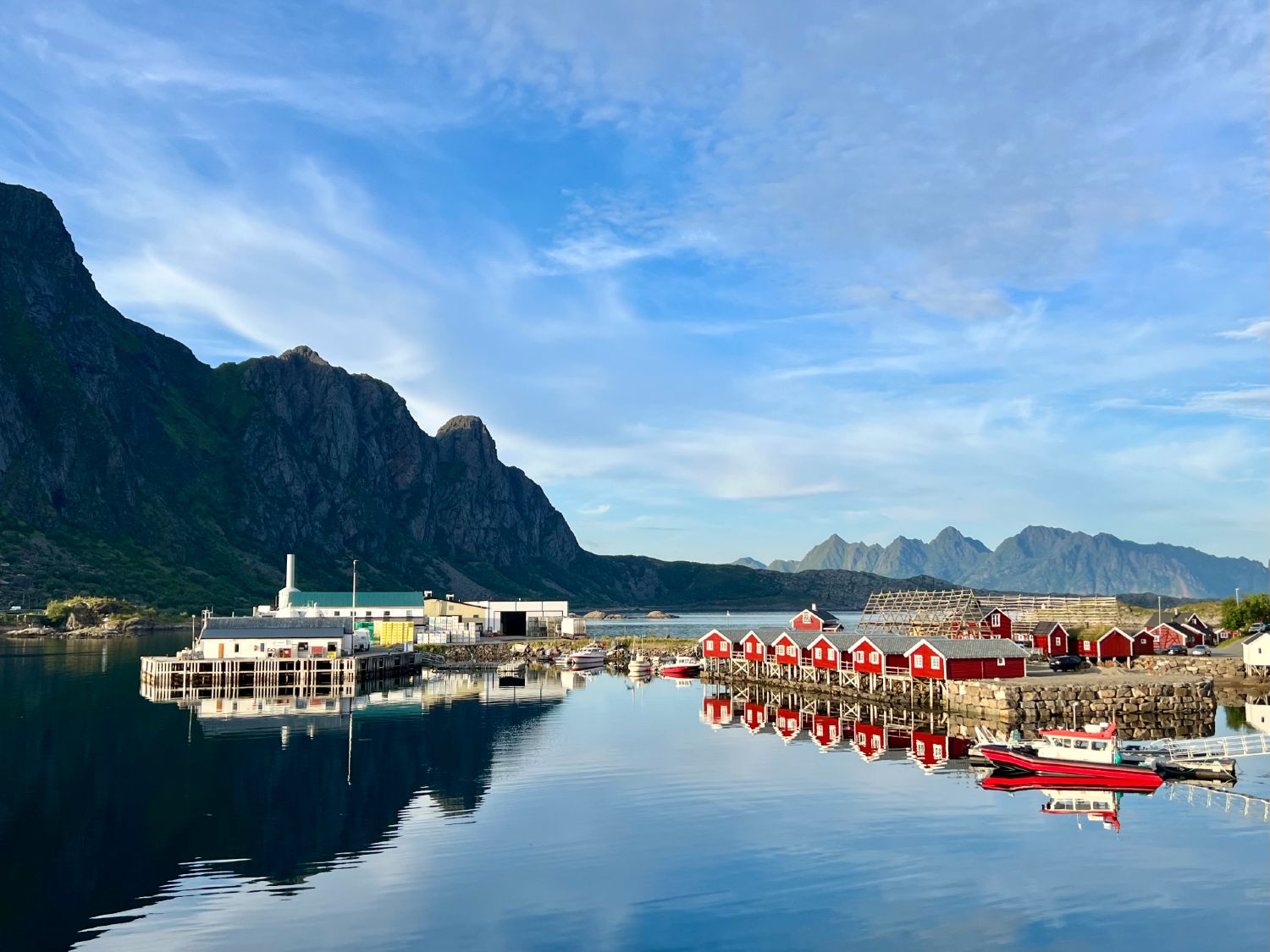
    Our RIB slices through Trollfjorden towards Svolvær, the scenic capital of the Lofoten Islands. Twelve of us instinctively lean left—as if we have some control over the heeling boat. The narrow fjord’s steep-sided, jagged mountains rise dramatically from the sea. The water swirling beneath me is a shade of blue I’ve never seen. Overhead, the sea eagles we met earlier turn back towards Raftsundet strait, realizing their midday snack is officially over. The trolls remain hidden.

    As we get closer to the harbor, a stench hits me like a rogue wave. I look around. My face isn’t the only one scrunching in disgust. Our guide is watching. Is he smirking? The Brit behind me is the first to bite. “What’s that awful smell?” he asks. “Ahhhh,” Emil smiles and exhales slowly, deliberately. “That, my friend, is the smell… of money.”

    Twelve heads turn in unison, baffled.

    Reine

    Where Are The Lofoten Islands?

    I found the Lofoten Islands through my usual source of inspiration—Instagram. Those algorithms are eerily spot on, drawing me into little tiles of mesmerizing mountainscapes and fjords. I needed to know exactly where this magical place was and how soon I could get there. 

    The Lofoten Islands are in Northern Norway, I discovered, just inside the Arctic Circle. 

    Of course they are.

    Factually speaking, the Lofoten Islands are an archipelago of seven main islands bisected by glacial fjords. By the numbers, they are about 100 miles long, over 3 billion years old, and have roughly 25,000 residents. The Midnight Sun reigns from late May to mid-July. Intriguing facts, Wikipedia, but I don’t need them to inspire my trip—Instagram beat you to it.

    Illustration map of Lofoten

    The Scandinavia Travel Boom

    Scandinavia is on the cusp of a travel boom, partially as a reaction to the wildfires and raging heat from which the rest of Europe suffers. Some travelers are looking for more temperate climes. Others are seeking roads, or in this case, fjords less traveled—a response to overtourism plaguing countries like Italy, Spain, and Greece. 

    Nordic countries saw a surge in tourism last year, with Finland, Denmark, Sweden, and Norway reporting a record-breaking number of visitors. In Norway alone, nearly 17 million hotel nights were booked—a 3% increase from the previous year. Those numbers are expected to rise as more intrepid travelers view Scandinavia as the antidote to mainland Europe’s woes. But, the Lofoten Islands are remote even by Scandinavian standards. 

    It’s worth noting the emphasis on destinations yet to grace the covers of Travel+Leisure and Condé Nast Traveler. Travelers want bragging rights, to get to destinations first. If Scandinavia is the next travel hot spot, I want to get there first, too. I book my flights and ferries. Thank you, Meta. I’m on my way. 

    The Fish That Put Lofoten On The Map

    “That smell is stockfish,” Emil continues. “Stockfish is Norway’s most important export—and has been for centuries. To us, the smell of drying cod is considered the smell of money.”

    The Tørrfisk industry dates back to the Viking era. Tørrfisk (aka stockfish, or dried cod) was so lucrative that it lured over 30,000 fishermen to northern Norway each winter. Fishermen who endured the Arctic’s extreme and harrowing conditions to provide for their families back home. 

    Stockfish
    PC: Ruramos

    Once caught, the codfish, with their wiry whiskers and mouths agape, are placed on large pyramid-shaped wooden racks called fiskjehell. Norwegian winters are windy and well below freezing, thus creating a natural preservation system for the fish to dry without rotting.

    Fiskjehells are still used in the Lofoten Islands and can be seen (and detected sight unseen) in many seaside villages—a monument to the dedicated fishermen who endured Lofoten’s long, dark winters. 

    Stockfish’s Place on the Global Table

    The smell of stockfish also reminds us of Lofoten’s importance in commercial fishing. Of all the European nations that import dried cod from Norway, Italy is the largest. Stockfish is the central ingredient in their famous dish, Stoccafisso Accomodato (stockfish stew). It’s also a staple of Nigerian cuisine, often used for stews and soups. 

    Stockfish adorns the menus of Lofoten restaurants, from fine dining at the Kitchen at the End of the World to Svinøya Rorbuer’s humble restaurant, Børsen. Travelers can experience the fish that built Lofoten with dishes like Tørrfisk Royal, cod stew with carrots, egg, butter, and bacon, and stockfish filleted with baked leeks, wild mushrooms, and kale.

    The curious Brit quips, “I don’t see any fish, only empty racks.” Emil is ready. “The fish hang for three to four months,” he explains. “By May, about six million tons of cod hang in hjells, ready to be shipped. But, even when the racks are empty, the smell lingers.” Satisfied, the Brit settles.

    View of Reine with clouds

    The Fisherman’s Wife

    Emil cuts the motor, and the silence is welcome. We’ve been careening around the fjord, feeding sea eagles and troll-hunting for hours. That’s when I see her. Standing poised and strong against the wind on a rocky promontory, she clutches a shawl around her neck with one hand and waves longingly with the other. 

    “That’s Fiskerkona,” Emil says, reading my mind. “The Fisherman’s Wife. She represents the resilience of the women left behind to raise families during their husband’s long absences. Many would never see their spouses again.” This poignant statue quiets the group—even the inquisitive Brit.

    Nusfjord interior

    Turning Tradition into Luxury

    Thousands of fishermen traveled north each winter to hunt for Norway’s prized fish. They lived in rorbuer, traditional stilted, wooden huts. In Norwegian, ‘ror’ means row, and ‘bu’ means small house. Up to 12 fishermen shared each rorbu. Rorbuer were sheltered from the elements and divided into two parts, one for sleeping and one for gear. The ceilings were low, and the windows were small and inefficient. They had basic kitchenettes and uncomfortable beds. But, they provided what mattered most—direct and immediate access to their fishing boats.

    Rorbuer

    These seaside cabins, many restored to their original red and yellow colors, have been retrofitted as tourist accommodations. Some, however, are retrofitted better than others. Rorbuer are an integral part of Lofoten’s history, giving visitors a chance to imagine life within the same four walls as Nordic fishermen, albeit in some cases, on 600-thread-count sheets, with rain showers and Nespresso machines.

    Nusfjord bedroom

    Turning tradition into luxury is hard work. Not as hard as fishing for cod in the Arctic, but hard nonetheless. Although updated with modern conveniences and creature comforts, some rorbuer lack the sophisticated amenities often associated with high-end luxury. Others have found an idyllic balance,  elevating the rorbu by adding soft, plush duvets, Bluetooth speakers, and bespoke toiletries while keeping the cabins’ historical integrity intact.

    That said, rorbuer accommodations are in such high demand that some were fully booked as early as February for this coming summer. These rorbuer create a source of income beyond stockfish—attracting the kind of money that looks, feels, and smells like actual money.

    View of Nusfjord village

    The End Of The Road in the Lofoten Islands

    The Nusfjord Arctic Resort is tucked away at the end of a road in a secluded valley that hovers over the sea. A Small Luxury Hotel of the World, Nusfjord has managed to preserve the look and feel of a typical fishing village so vividly that I could swear I traveled through time.

    Many of Nusfjord’s rorbuer are several hundred years old. During the day, tourists come from near and far to explore the grounds, the general store, the bakery, the smithy, the boatshed, and the cod liver refinery. 

    Black-Legged Kittiwakes

    They dine at the property’s on-site restaurant, Karoline, and gaze at the mountain views. They order pizza from a small wooden shack, grab a cold beer, and sit among the protected Black-Legged Kittiwakes (Krykka) that nest on the cliffs and windowsills. From 9am-5pm, Nusfjord swells with tourism.

    Dock at Nusfjord Hotel

    But come 5:01pm, the property is reserved for guests only. Cue a mass exodus akin to heading west on Montauk Highway after Labor Day Weekend. It’s then that lucky Nusfjord guests peek out from their rorbu windows, making sure the coast is clear. They shuffle out in fuzzy slippers and fluffy robes one by one en route to the sauna.

    Lofoten Island’s Endless Days

    We’re getting closer to Svolvær’s docks. Our sea eagle safari will soon end. This high-speed RIB excursion has been a highlight of my trip. Not only because I saw so many of the promised eagles but also because of Emil’s insights into Lofoten’s history. 

    I look back at the scenery Instagram inspired me to come so far to admire. Hiking peaks like Reinebringen and Djevelporten provide an eagle-eye view of the islands that change with the sun, mist, and fog—each stunning in its own way. The mountains appear hand-painted and are set against layered clouds in a sky that never gets dark. Summer in Lofoten is an ongoing study in beauty. I could spend a lifetime of summers here and never tire of it.

    Svolvaer overview

    The Set-Jetting Travel Trend

    The Lofoten Islands aren’t the only Norwegian destination benefiting from a boost in tourism. Anyone who followed the black comedy Succession will recall the episode in which Shiv and Roman Roy visit Mattson’s homeland. The Roys stay at Juvet Landscape Hotel, a property entirely immersed in nature.

    Juvet is located on the west coast of mainland Norway. It’s a great example of ‘set-jetting,’ the travel trend best described as wealthy Americans spending gobs of money in places like Thailand and Dubrovnik courtesy of TV shows like The White Lotus and Game of Thrones. These days, Juvet is as hard to get into as the Vatican on Easter Sunday. Damn you, Roman.

    Achingly cinematic and designed with the environment as the star, Juvet’s seven minimalistic rooms include airy Birdhouses, glass-walled Landscape rooms, and the writer’s aerie, Scrivener’s Room. At Juvet, luxury is at its most understated, and the only tension lies in the ever-changing scenery.

    Boats at Svinoyer

    Past, Meet Present

    “Come back to Lofoten,” Emil calls out as we disembark. My heart sinks. The possibility of coming back seems unlikely. Who goes to the Arctic Circle twice? Hmmm. Maybe I do.

    The sun is high in the sky. Since it won’t fully set, we have endless hours ahead of us to explore and relax. I peel off my dry suit and take off my goggles and hat. It’s 36 degrees, and I’m freezing. I think of the fishermen. I wouldn’t have made it past Fiskerkona. 

    Nusfjord

    Although Lofoten’s fishing industry remains deeply rooted in history, some things have changed. The boats have been modernized with GPS and sonar radar for tracking schools of fish. Safety has improved with the addition of anti-slip surfaces and hydraulic winches. The fishermen sleep in heated cabins and have cell phones to call their wives (whether they consider that an improvement is unclear.)

    I turn towards Trollfjorden—contemplating those elusive trolls. I no longer detect the intrusive fishy smell. How quickly humans adapt—even to an unpleasant odor like dehydrated fish. Though surely not unpleasant to the residents of the Lofoten Islands—where the scent of dried cod symbolizes history, prosperity, and a tourist industry’s moment in the sun.


    Click here to learn more about what to do, what to see, and where to stay in the Lofoten Islands


  • Taking on the Medina, and More—What To Do In Marrakech

    Taking on the Medina, and More—What To Do In Marrakech

    What To Do In Marrakech, A Guide / 

    Were it up to me, The Caliph’s House by Tahir Shah would be required reading for anyone traveling to Morocco. Without reading this candidly funny novel, I would’ve been confused, baffled, and bewildered during our visit to Marrakech.

    After spontaneously moving his family to Morocco from the UK, Shah buys a home—the Caliph’s House —and begins the arduous task of renovating it. At the same time, he’s attempting to rebuild his family’s lives in a foreign country. They learn all too quickly that nothing in Morocco goes exactly as planned and never in a time frame that makes outward sense.

    Rational and irrational thinking collide in a whimsical and often unbelievable manner. I laughed out loud throughout the book, loving the effervescent and colorful prose.

    Marrakech buildings

    Magical Arrivals

    Shah’s story lingers in my mind as we exit the doors of Marrakech Airport, a piece of jaw-dropping architecture worth a visit in its own right. Our task? To locate our hotel sign among the several hundred Moroccan taxi and limo drivers. I think the logo, an iconic fan, should be pretty easy to spot.

    My husband and I take several loops of the crowd together. Then, we split up and took a few solo loops. No sign. No driver. Eventually, we stand at the center of the crowd, which forms a circle around us—a five-minute lapse. Then a strange thing appears on my left—a very large sign on a very tall stick with a very black fan logo. Our driver has materialized, seemingly out of thin air.

    I ask him where he’s been all this time. With absolute surprise and genuine sincerity, he replies, ‘Madame! But I have been standing right here the whole time!” My husband and I look at each other in disbelief. Then I remembered Shah’s story and relaxed. There’s no point in arguing with him. He’s been here the whole time, of course. We must have overlooked him. So begins our journey in Marrakech.

    Be the first to know when I find a new place to get lost. Just click.

    The souks

    What To Do In Marrakech: Get Lost In The Souks

    I have a list of adjectives that illustrate Marrakech—vibrant, eclectic, bustling, electric. However, the buzzy current of the Berber Empire is much more than what is seen on the surface. So what do we do during our week ahead in this energized city?

    First up is the Medina—the old walled medieval part of town. The Medina is a dense maze of Moroccan capitalism with a photo op at every turn. I learned that the souks (markets) are not solely for souvenir shopping. As I wander the narrow passageways, I see layers of activity.

    I stumble upon an entire alley of shoemakers. Each stall was about as wide as the shoemaker himself. In a series of memorized movements, he hammers, cuts, and then casually tosses the leather soles into a pile of identical soles. Another alley has lantern makers. The artisans punch through thin copper to create delicate pieces as they’ve likely been doing for a century. While it looks like a performance for tourists, it’s simply everyday life.

    Rug shop in the souks Elderly lady selling spices Woman selling spices

    What To Do In Marrakech: Hire A Guide

    We hire a private guide, knowing he will take us to his brother’s uncle’s best friend’s rug shop. His predictability makes me smile. Yet, how would we see market life in full swing without him? The haggling and negotiating. The rug seller’s touristy ceremonial show, with steaming hot mint tea. We’re told to go back the next day without a guide if we find something we’d like to buy. We will likely get a better price since no commissions will need to be paid—an insider tip.

     The ornate Bahia Palace The ornate Bahia Palace colorful light

    Our guide steers us towards beautiful architectural gems, including the ornate Bahia Palace. He secures a reservation at a lively rooftop restaurant and gives us enough sense of local history that we aren’t walking nose-deep in our guidebook. 

    Stalls in the Medina Stalls in the Medina Lantern shop in the Medina Stalls in the Medina

    We buy local argan oil from sellers promising eternal youth and an end to age spots and smell colorful spices waft through the air. Snake charmers fleece us after draping cobras around our necks, refusing to remove them until a suitable price is paid. We love every minute of the chaos (even the snakes) and give props to his entrepreneurial skills. 

    Lunch at Nomad restaurant

    What To Do In Marrakech: Eat Above The Markets

    Restaurant Nomad’s entrance is in the Medina’s dark, narrow corridor. We climb an equally dark, narrow staircase, wondering if this is really where we want to have lunch. We reach a door and then immediately shield our eyes. The sun is high in the sky above us on Nomad’s exposed rooftop patio overlooking the Medina.

    We are handed straw hats to deter the sun and settle into our seats as if on cue. We observe the markets from above and feel fortunate to have secured such a prime spot to eat. The food was classic Moroccan, with mezze platters and yogurts, house-marinated olives, tagines, and traditional briouat (savory puff pastry filled with meat, cheese, lemon, and pepper). A long, leisurely lunch ensues.

    Terrasse des Epices lunch

    Terrasse des Epices

    And while we love Nomad, we enjoy the next day’s rooftop lunch even more. Terrasse des Epices is a hot lunch ticket, with crowds from morning until night. Terrasse des Epices has sheltered alcoves to sit and absorb the convivial scene. The clientele is a mix of families and hipster tourists. A Moroccan DJ from Essaouira is set up in the middle of it all, dancing and having the time of his life.

    Our DJ doesn’t miss a beat and plays new remixes of old classics that inspire even the 40-somethings on the terrace. No one looks like they have any desire to leave. This may be partially because Terrasse des Epices is one of the only restaurants within the Medina walls to serve alcohol. We order a bottle of rosé and stay put for a while.

    Be the first to know when I find a new place to get lost. Just click.

    The Mandarin Oriental Hotel exterior The Mandarin Oriental Hotel pool villa exterior

    Grounds of The Mandarin Oriental

    What To Do In Marrakech: Stay At The Mandarin Oriental

    When traveling a city, we typically spend the morning wandering and sightseeing, have lunch, and then head back to our hotel to lounge for the afternoon. We chose the Mandarin Oriental, 10 minutes from the city center. It’s an enormous and tropical property, and we feel far from the hustle of town. The hotel has 54 stand-alone private villas, most with private pools in walled courtyards.

    The Mandarin Oriental Hotel lobby The Mandarin Oriental Hotel lobby

    The entire property is alive, with rose bushes in full bloom. 100,000 fragrant roses are spread over 20 hectares, and we admire them one afternoon via the hotel’s complimentary bikes. Bougainvillea, golden barrel cacti, climbing vines, and mature olive trees dot the landscape.—an explosion of flora.

    The hotel design is modern Moroccan decor: bold, graphic lines, black and white marble, tall, narrow archways, and shallow inner courtyard pools.

    Pool villa   Pool villa bedroom  Pool villa courtyard Pool villa jacuzzi

    What To Do In Marrakech: Don’t Leave The Room

    Our room feels like a home—but not my home, mind you. It has a living area with a daybed and a bar. A platform bed in the master suite looks squarely onto a long rectangular pool. The oversized bathroom has a personal hammam-style shower and a deep stand-alone tub.

    The outside space also boasts a daybed, an outdoor kitchen, and a beautiful fireplace the staff will light upon request. It’s a challenge to pull ourselves away for dinner. 

    Al Fassia dinner

    What To Do In Marrakech: Dine at Al Fassia

    Another Caliph’s House moment presents itself at dinner. I’d made a few early reservations, and Al Fassia, an all-women-run restaurant, was high on my list. I know there are two locations, so I’m sure to be clear about the location we would like to go. Fifteen minutes later, we are dropped off at Al Fassia.

    It’s a tranquil oasis—lush, romantic gardens and outdoor nooks. We walk in and give our name only to discover, you guessed it, we are at the wrong Al Fassia. And no, this location has no available tables this evening.

    We call another taxi and head to the other Al Fassia. The food is good, but the first Al Fassia would have been a better choice, as it was in a less urban environment—another exercise in patience in the frenetic world of Marrakech.

    Butcher in the Medina The Medina The Medina archways

    What To Do In Marrakech: Shop and Haggle

    The following day, we shop. We aimlessly wander the ancient passageways, picking up souvenirs for our families at home. While waiting for my friend to pay at a nearby stall, I stand against a wall to take in the whirlwind of market life. Perhaps, only because I’m not moving do I notice an interesting shop set further back from the others.

    I walk into a treasure trove of beautifully curated art pieces, ceramics, textiles, furniture, and rugs. Old and new, Moroccan and Persian—it’s a visual explosion. Hakim is the owner, and his warm and friendly manner entertains us as we shop. Hakim prepares tea for us. It has thick bundles of mint leaves overflowing from colorful rattan-wrapped glasses. It’s a welcome respite from the bustle of the souks.


    Click here for a self-guided tour of the souks! The best way to uncover the Medina’s secrets!


    La Porte D’Or shop Mint tea at La Porte D’Or

    A Story of Two Paintings Bought Six Years Apart

    Hakim’s hidden shop is called La Porte d’Or. His clientele includes interior designers, politicians, and celebrities who seek him out from across the globe. 

    My husband and I immediately zero in on a piece of art—a mixed-media piece with old, sepia-tinged pages floating amidst calligraphic Arabic typography. As is expected, we haggle and get to a price we can all live with. Then, I notice another piece by the same artist—the perfect companion to the one we are about to buy. I ask Hakim for the price, and he says it’s not for sale. I smirk. He’s kidding, of course; isn’t everything for sale here? 

    Artwork

    But Hakim holds firm, and we walk out with just one piece of art. For years after, Daniel and I have always wondered about that piece and why he wouldn’t sell it to us. 

    Scrolling Instagram six years later, I notice a friend from New York is in Marrakech on vacation. I DM him a shortlist of must-see spots, including Le Porte D’Or. I joke that if he sees Hakim, to tell him I’ve never forgotten about the artwork he refused to sell. 

    Within the hour, my friend is not only in the shop but has found our long-lost piece of art. After some haggling, a WhatsApp exchange, and a wire transfer, the art we’d fallen in love with in 2018 is bound for DC. I’m again reminded of the whimsy and serendipity of The Caliph’s House. The magic of Marrakech can’t be underestimated.

    The Royal Mansour The Royal Mansour detail The Royal Mansour gardens The Royal Mansour gardens

    What To Do In Marrakech: ‘Enjoy’ A Hammam Experience

    We’re told not to miss a hammam treatment (a traditional Moroccan cleansing and bathing ritual). A friend had recommended traveling to the spa at The Royal Mansour, although most hotel spas offer the hammam treatment.

    If Marrakech is a city of high-density, magnetic, and outrageous color, then the spa at the Royal Mansour is quite positively the total absence of it.

    The Royal Mansour hammam/spa

    I step through a dark, thick, wooden doorway and enter a world of double-height glass cathedral ceilings and white roses—set within a room of white wrought-iron latticework. It’s a stark contrast to the vibrancy of life outside. Then, I’m led to a lounge with cushy daybeds where I await my therapist. 

    The Royal Mansour hammam/spa white roses

    The Royal Treatment

    The treatment itself leaves my skin feeling like a newborn baby. First, I lay on a hot slab of marble where the therapist scrubs off layers of unwanted skin with an abrasive Kessa mitt. Next, warm water is poured (actually thrown) all over me. 

    A massage with various therapeutic oils is next, followed by an eye-popping cold water plunge that brings me back to reality. I’ll admit, it’s an unusual way to get pampered. Yet, I felt shockingly invigorated. The treatment awakens senses I didn’t even know I had.

    Man in the Medina Horse and buggy

    The Magic of Marrakech

    Marrakech is a city of layers, each revealing something unique and mesmerizing. I realize I’ve only just begun to scratch the surface. In hindsight, I wish I’d stopped more often to absorb it. Marrakech was constantly in motion, and I was too often caught in the wave. 

    Ceramics shop Souks detail

    Tahir Shah and his family had a year in Morocco to discover the culture, explore the country, and immerse themselves in the local traditions. We have two weeks. But I thank Shah for preparing us for the time we did have there through humor, candor, and wit. For allowing me to laugh things off that would have otherwise frustrated me.

    Marrakech is a city to unwrap, like a treasure. Perhaps one day, I will have another chance to explore it.

    The Caliph's House

    Book It:

    The Caliph’s House charts a year’s journey of Tahir Shah and his family. They uproot their lives by leaving dreary London for Casablanca’s colorful, captivating world. Funny, candid, and insightful, I couldn’t have enjoyed my trip to Morocco nearly as much if I hadn’t read this memoir first.

    Bonus: Take On The Countryside

    The scenic Atlas Mountains are only an hour outside of Marrakech. What better way to combine a little countryside with our busy city experience? Our next stop? The decadent and low-key  Kasbah Bab Ourika. Follow me there.

    Mandarin Oriental pool view

    (Please note a few affiliate links above for which I may receive a small referral fee. But rest assured, I only highlight products I fully stand behind.)

  • 5 Books About Travel (That Will Inspire Travel)

    5 Books About Travel (That Will Inspire Travel)

    A book about travel has power. A book about travel can take us to Botswana, Bolivia, or Bhutan. It’s literary escapism—an easily accessed portal to another time and place. But most of all, a book about travel, when done well, inspires travel.

    (Please note a few affiliate links below. I may receive a small referral fee should a product be bought through my site but rest assured, I only highlight products I own and use.)


    Nancy Drew Book

    My love of books is old and runs deep. I have vivid memories of reading Nancy Drew, circa 1978, by a sliver of light seeping into my bedroom from the hallway. I’d lay on my green shag carpet by that light and read voraciously—always fearful my mom might appear and send me back to bed. 

    My taste in books has varied over the years. Thrillers and mysteries monopolize my 20s. Chick-lit and romance novels reign over my 30s. Historical and women’s fiction dominated my 40s. These days, I read to escape—to travel the world through ink on paper.

    Travel Inertia

    Inertia is defined as a tendency to do nothing or to remain unchanged. After a few years of watching mind-numbing TV (did anyone else finish Netflix?) and dodging calls from Spam Risk, even I had a case of travel inertia. I overcame it by planning a few trips, to places like Maine, the Catskills, and Corsica. 

    But travel isn’t what it used to be. Flights are increasingly delayed or canceled. Luggage is lost. Five-star service is anything but. The luster of travel is dismally dulled by current conditions.

    I wonder how best to reignite the travel spark. Perhaps I’ll go back to the basics. Books, and especially books about travel, have always transported me. They’ve fueled my wanderlust and given me the means to break away from everyday life. Even if momentarily.

    My treasured tomes, don’t fail me now.

    Coach bag

    Five Books about Travel (That Will Inspire Travel)

    Being a graphic designer for a large part of my adult life gave me a deep appreciation for Garamond, Baskerville, and Times Roman. The legends of literary fonts. I used to kern ligatures with a surgeon’s precision. I’d swoon over book jackets at Barnes and Noble, the ones with an elegant marriage of typography and imagery. My husband would joke I judged books by their covers. He was right.

    There are many books about travel that have encouraged me to pack my bags and get out of town. But these five in particular have been the most influential. Whether because they take me to a part of the world I know little about or a part of the world I’d like to revisit. 

    So, grab a Kindle. Or, if old-school like me, head to a local bookstore or library. (My DC go-to is Politics & Prose). Check out my favorite books about travel. I hope they encourage you to escape reality, one way or another. 


    What’s on my travel wish list? Click here: Get my Wish List Destination Guide FREE.


    A book about travel / Morocco

    Caliph's House book

    The Caliph’s House: A Year in Casablanca, By Tahir Shah

    What’s the gist?

    English travel writer, Tahir Shah, takes a gamble to fulfill a childhood dream by moving his family from London to Casablanca. Their new home is Dar Khalifa, the Caliph’s House. It’s an unmitigated money pit located on the edge of a shantytown. 

    In his unputdownable memoir, Shah attempts the arduous task of rebuilding the Caliph’s House while simultaneously building a life in a foreign country. As he learns all too quickly, nothing in Morocco is simple, straightforward, or goes according to plan.

    For instance, renovations come to a screeching halt once Shah learns his house is filled with jinns (invisible spirits). The rituals used to rid the house of these spirits are just one flawlessly written and animated element of Shah’s outrageous black comedy. A tale of perseverance and grit that also portrays a distinct and evocative sense of place.

    Why this book about travel inspires

    On the advice of a friend, I read The Caliph’s House before our trip to Morocco. Not only did it illustrate the colors, sights, sounds, and even tastes of the country, but it also brought modern-day Morocco to life with self-deprecating and utterly candid humor. Thank you, James.

    Power Quote: “I found myself trapped in an awkward position. … I had a gangster for a neighbor, a house marooned in a shantytown with no title deeds and the weather was getting bad. And I was now being told that I should abandon the house because an invisible spirit was angry with us living there.”

    The Caliph’s House is compelling in ways well beyond jinns and gangsters. Shah’s characters, from gardeners to government officials, are multi-faceted and vibrant from page one. His writing pulls readers into a well-woven Moroccan tapestry of myths and traditions—whether describing a crooked street or a crooked carpenter. Read The Caliph’s House, or redeem some well-earned miles and go live it. Either way, Morocco will not disappoint.

    Shop It:

    The Caliph’s House


    A book about travel / Italy

    Beautiful Ruins Book

    Beautiful Ruins, By Jess Walter

    What’s the gist? 

    From the backlots of Hollywood to the rocky coast of Italy, Beautiful Ruins is a social satire of an almost-love affair spanning decades and continents. The book has been said to portray the real-life love affair between Elizabeth Taylor and Richard Burton after filming Cleopatra, in 1963.

    Beautiful Ruins opens with Hollywood starlet Dee Moray arriving at a quiet Italian coastal village by boat in the early 1960s. She claims to be dying of cancer. Pasquale, a young and starstruck hotel owner, falls in love. So begins a story of tortured love, masked identities, and failure. 

    Why this book about travel inspires

    Artfully written with multiple and parallel storylines, Jess Walter’s descriptions of the Italian Riviera and California are equally captivating. The pristine beaches and brightly-colored hilltop homes of the Cinque Terre come to life alongside his theatrical characters.

    Power Quote: “Porto Vergogna was a tight cluster of a dozen old whitewashed houses, an abandoned chapel, … all huddled like a herd of sleeping goats in a crease in the sheer cliffs. Behind the village, the rocks rose six hundred feet to a wall of black, striated mountains. Below it, the sea settled in a rocky, shrimp-curled cove…”

    Walter’s book is filled with brilliant depictions of romantic coastal hotels and sun-baked yachts. These movie-like scenes and scenery may inspire a journey to this ever-glamorous part of the world. With a sharp sardonic edge and a dramatic plot that builds in intensity, Walter’s novel is escapist fiction at its best.

    Shop It:

    Beautiful Ruins


    A book about travel / The Arctic Circle

    Memoirs of Stockholm Sven Book

    The Memoirs of Stockholm Sven, By Nathaniel Ian Miller

    What’s the gist?

    This extraordinary account of a young Swede who flees Stockholm to seek solitude in the Arctic Circle after a tragic accident leaves him disfigured. 

    Completely original in voice, with endearing, misfit characters, The Memoirs of Stockholm Sven somehow manages to describe a stark, colorless landscape in vivid color. The book weaves a tender web of human suffering and connection while illuminating the perils of living in an isolated and nearly inaccessible place.

    Why this book about travel inspires

    My friend Gretchen recommended Miller’s book before our trip to Finnish Lapland. What better way to be immersed in the vastness of the polar regions than to read a novel set in the Arctic Circle?

    From Stockholm to Svalbard, Miller’s narrative evokes the breathtaking arctic polar tundra with pitch-perfect prose. While living in remote Svalbard, Sven, despite his best efforts not to, befriends a troupe of compelling characters. A Finnish fur trapper, a Scottish geologist, a polar bear, and a devoted canine each play fundamental roles in Sven’s epic adventure. 

    Power Quote: “Tapio sat himself on a large piece of driftwood, so I did the same. A gentle swell rocked the beach iceberg bits against each other. The sun was beginning its hasty swoop to the horizon, and light passed through the ice in unruly refractions. The blue was almost more than I could take.”

    I read about Sven’s endeavors at night by a warm fire with a cup of herbal tea. I try to anticipate the 22 hours of darkness that await us each day in Finland. Miller’s descriptions of the Arctic are so convincing, that I get chilly while reading. Well done, Mr. Miller. I’m patiently waiting for your next book with a heap of woolly blankets.

    Shop It:

    The Memoirs of Stockholm Sven


    What’s on my travel wish list? Click here: Get my Wish List Destination Guide FREE.


    A book about travel / The Amazon

    State of Wonder book

    State of Wonder, by Ann Patchett

    What’s the gist?

    Patchett’s novel, State of Wonder, is set deep in the South American Amazon. Dr. Marina Singh, a pharmacologist, finds herself traveling to Brazil to investigate the strange disappearance of a colleague.

    There, Dr. Singh travels downriver by pontoon, passing tribes that have yet to lay eyes on white people. Tribes that don’t speak a traditional language, but merely use sounds. From murder and mystique to friendship and feminism, this rollercoaster of a novel takes twists and turns as intricate and death-defying as the Amazonian jungle itself.

    Why this book about travel inspires

    At once a story of a personal pilgrimage as well as a page-turning thriller, Patchett is an artist with words. Her canvas is the verdant rainforests of Brazil. State of Wonder conjures up the raw and thrilling emotions that go along with traveling to far-flung locations and being outside of our comfort zone. Her prose ignites wanderlust in the purest sense of the word. 

    Whether describing a microscopic plant cell or a writhing anaconda, her words dive deep into the undergrowth and visually explode off the page. State of Wonder combines suspense and absorbing characters while delivering an unexpected ending.

    Power Quote: “Every drop of rain hit the ground with such force it bounced back up again, giving the earth the appearance of something boiling.”

    Lest you think I’m encouraging a trip that will have you encountering poisonous dart frogs or 8-foot snakes, it’s the sense of place that’s most evocative here. The joy of heading into unchartered territory, whether from a travel perspective, or a literary one.

    Shop It:

    State Of Wonder


    A book about travel / Everywhere

    Less Book

    Less, by Andrew Sean Greer

    What’s the gist?

    Failed, aging novelist, Arthur Less, accepts a series of invitations to literary events around the world to avoid the wedding of a former boyfriend. A brilliant satire that takes Arthur from a mishap in Morocco to a brush with death in Berlin, to being deserted on a desert island. 

    A reminder that what comes around goes around, this tale of human nature hilariously illustrates the perils of running away from our problems. While reading about Arthur’s escapades, I find myself laughing out loud. A lot. Fall in love with our endearing protagonist as he not only loses his luggage but his grasp on reality.

    Why this book about travel inspires

    An imaginative and absorbing tale, Greer takes the reader around the world with fresh humor, self-deprecation, and sharp wit. From the ever-busy streets of New York City, the culinary world of Japan, and the romantic rooftop hotels of Paris. Readers will revel in the details of Arthur’s visit to India, cheer for him in Germany, and despair as he becomes unhinged in Mexico.

    Power Quote: “New York is a city of eight million people, approximately seven million of whom will be furious when they hear you were in town and didn’t meet them for an expensive dinner, five million furious you didn’t visit their new baby, three million furious you didn’t see their new show, one million furious you didn’t call for sex, but only five available to meet you.”

    A touch of Jerry Seinfeld, a sliver of Carrie Bradshaw, and a handful of ‘Just Jack’. Oh, and a million laughs. Less will have you laughing out loud, too.

    Note: There’s now even more Less to love. Greer’s latest book Less is Lost, (Hey, I’m lost too!) is climbing up the bestseller lists as we speak. This time we follow Arthur and his mishaps on a road trip across America. Is there hope for Arthur after 50? I, for one, can’t wait to find out.

    Shop It:

    Less

    NYC with sunlight
    NYC, 2018

    A book about travel is a powerful thing

    The best books about travel are the ones that immerse me in the landscape and culture. The ones that allow me to smell the food and taste the wine. I’m in awe of writing that prepares me for a journey into unknown regions. Whether that be South America, South Dakota, or New South Wales. It’s a different way to explore the world, for sure, but still pretty satisfying.

    I no longer have to read sneakily behind my mom’s back (Mom, I bet you knew all along). I’m a grown-up now. I can read all night if I want to. Although I can’t don’t. Getting old ain’t for sissies, as my dad likes to say.

    A book about travel is powerful beyond its transporting nature. It’s how we learn about other civilizations and people. It’s how we expand our mindset and our vocabularies. Its power is right there on the page. You need only be able to stay awake long enough to absorb it.

    Safe travels.


    What’s on my travel wish list? Click here: Get my Wish List Destination Guide FREE.


  • Uganda, what to see beyond the famous silverback gorillas

    Uganda, what to see beyond the famous silverback gorillas

    What to see, where to stay, and what to do, in Uganda / The famous silverback gorillas are certainly what put Uganda on the map for tourism. And rightly so, as it is the only part of the world where one can see these peaceful, majestic primates. There are none in captivity, so in order to spend any time with them, one must be prepared to travel far. And travel far I did, for a fleeting two hours observing them that I wouldn’t trade for anything.

    Silverbacks

    Yes, two hours. Each gorilla permit afforded me exactly sixty minutes with the silverbacks. So, what is there to do with the other 23 hours of the day? A lot, it turns out. Uganda has much more to offer tourists than the mighty silverbacks.

    Silverback and baby

    But there is far more to see in Uganda beyond the silverback gorillas. There are traditional safaris to admire the famous climbing lions of Ishasha, for example. Or, sighting the elusive shoebill in the Mabamba Swamp. A boat ride to an island of rehabilitated chimpanzees in Lake Victoria.

    Breakfast in Ishasha

    What to do in Uganda: A Wild Frontiers Safari

    Wild Frontiers was our tour operator, the frontrunner for gorilla tracking and safaris in Uganda. They helped us come up with a bespoke itinerary, secured our coveted gorilla tracking permits, and allowed for some flexibility on the ground. Flights, logistics, and accommodations were well organized and generally worked like clockwork. This is Africa, after all.

    sunset

    Our guides, lovely, warm-hearted locals, had studied for years to be able to tell the difference between the sound of a great blue turaco and a green-breasted pitta. Or, to be able to spot an African fish eagle from a kilometer away. They could drive for hours on end and still have the energy the next morning to prepare a pop-up omelet station on the plains.

    Breakfast in Ishasha

    We were in constant awe of the Ugandan guides and their wealth of knowledge about the wildlife, flora, and fauna, of their country.

    What to see in Uganda: Equatorial Entebbe

    Uganda is a landlocked country in eastern Africa. The small city of Entebbe, about 20 miles from the bustling capital of Kampala, is where Uganda’s only international airport resides. Entebbe sits on a peninsula on the northern shore of Uganda’s largest lake, Lake Victoria.

    Ngamba Island Chimpanzee Sanctuary

    We crossed the lake, and directly through the equator, within three hours of arrival, on the way to visit the Ngamba Island Chimpanzee Sanctuary. The lake seemed angry, and our little boat was tossed around violently for nearly an hour. Spray came at us from every angle, the boat pounded the waves. My eyes remained firmly shut to keep nausea at bay. Uganda—unpredictable from the start.

    Chimpanzee

    What to see in Uganda: Hungry, howling chimps

    We arrived at the sanctuary, bedraggled, and soaking wet, and set off to see the 49 orphaned chimpanzees who roam the 40-acre island. That’s in comparison to the single acre allotted to the humans who work there and rehabilitate them. The chimps come to the barrier four times a day for food, and then slowly slink back into the overgrowth until the next feeding.

    Chimpanzees

    Although the feeding ritual was exciting, we were glad we didn’t plan it after our gorilla tracking later that week, as it seemed a much more commercial endeavor. We were happy to see that the orphaned chimps were well cared for, in a safe environment, and had access to medical attention should they need it.

    Boutique Hotel No. 5 Fruit plate

    Where to stay in Uganda: Hotel No. 5

    Our boutique hotel, called No. 5, was hidden in a local neighborhood less than a ten-minute drive from the airport. Here, I was to spend two nights before heading off on my own to Queen Elizabeth National Park. From there, I was to meet up with my friend at our lodging in the Bwindi Impenetrable National Park to start tracking the gorillas.

    Boutique Hotel No. 5

    Each of the ten rooms at No. 5 faced a lush, intimate, courtyard, with overgrown tropical trees and plants. There was a charming pool set below the veranda where we would have meals and pre-dinner drinks while listening to the ongoing birdsong.

    Boutique Hotel No. 5 bedroom

    The rooms were modest, clean, and airy—the gauzy mosquito netting over the beds seemed more for show than necessity but did look quite pretty. Small balconies were a nice touch, a place to sit and listen to the hum of the surroundings. In the early morning, I heard the daily call to prayer as I drifted dreamily in and out of sleep.

     Boutique Hotel No. 5 lunch

    Although the menus and meals were very nice at No. 5, they were surprisingly formal, a bit too heavy, and geared toward foreigners. This became a slightly disappointing theme at the various lodges we stayed at, and if I were to do it again, I would ask for more local Ugandan preparations as menu options.

    Wetlands of Mabamba

    What to see in Uganda: The Mabamba Swamp

    While my friend worked for the few days we were in Entebbe, I took advantage of being alone with a guide and my camera. Wild Frontiers helped organize a boat trip through the wetlands of Mabamba. There, I spontaneously turned into a full-fledged bird geek. Don’t judge.

    Egret Egret Egret

    I saw statuesque egrets, metallic blue malachite kingfishers, and weightless African jacanas, to name a few aviary stand-outs.

    Egret

    The jacanas are often referred to as Jesus birds for the way they appear to walk on water. They have a uniquely evolved prenatal care system, and can often carry multiple babies under their wings at once. I was lucky enough to capture this maternal moment in real-time.

    African jacanas African jacanas African jacanas

    What to see in Uganda: The most famous bird you’ve never heard of

    The prehistoric-looking shoebill, named for its big, clunky bill, is endangered, and numbers only twelve total across the entire 2500-hectare swamp.

    Shoebill

    Having never heard of the shoebill, I wasn’t too bothered about finding it, but as beginners luck would have it, we saw one within the first ten minutes of the four-hour boat ride. Even my guide was thrilled to see this elusive and reclusive specimen and reached for his own camera to capture it among the reedy, wetland grasses. I was told it is one of the top five most sought-after birds to spot in Africa. Bucket list bird: check.

    Shoebill

    The Prettiest, Ugly Bird

    A few fun facts about a bird you also may have never heard of: shoebills can grow as tall as four or five feet when fully grown; they lay only two eggs, and after a year, kill the weaker one; they can remain motionless for extended periods of time stalking their prey. The idiom, ‘beauty is in the eye of the beholder’ came to mind as I thought it was, perhaps, the prettiest, ugly bird I had ever seen.

    Malachite kingfisher

    What to do in Uganda: Get local

    Instead of driving back to Entebbe from the wetlands, my guide suggested we take a car ferry across Lake Victoria. Flashbacks to yesterday’s tumultuous journey stirred in my mind, but in the name of adventure, I decided to go for it. Lake Victoria, thankfully, was much calmer, and I was able to cross with my internal organs completely intact.

     Ugandan kids Ugandan kids

    On the way to the ferry, I caught glimpses of rural Ugandan life: little girls danced in open wooden doorframes flaked with colorful paint; women peeled green bananas for makote (cooked plantains), toddlers shaved sugar cane with pangas (machetes). Mopeds kicked up clouds of red dust along the unpaved roads. Vegetable stands, roaming goats, pigs on leashes, women with bushels of fruit on their heads—an evolving portrait of village life.

    Ugandan kids Ugandan kids

    While waiting at the Nakiwogo ferry dock, I was swarmed by fresh-faced and bright-eyed Ugandan kids. We took a few selfies, and they laughed at seeing themselves on screen. Teens played soccer with empty soda cans, dogs chased their own tails, and mothers fed infants while chatting with friends. That time was a gift. Quietly, I observed the villagers and thought to myself how I’d forgotten how often the simplest things in life are the best.

    Two Friends Restaurant

    Where to eat in Uganda: Two Friends

    Local knowledge, as they say, trumps all, which is how we found Two Friends, a restaurant situated squarely on the banks of Lake Victoria. With a convivial, remote, rustic island vibe, dangling strings of twinkling tea lights, and a menu of freshly caught Lake Victorian fish, Two Friends was a hidden gem.

    Two Friends Restaurant

    Our fish came baked in green banana leaves, served in tin foil, with all of the savory juices to mop up with the rice and veggies. The meal for three, (actually four, as we sent our idling taxi driver his meal, too) and a bottle of wine came to the economical total of $60 USD. It was one of the best meals of the trip, made most memorable by its laid-back and carefree atmosphere.

    Bush plane

    Solo travels

    The next morning, I boarded a bush plane at Entebbe Airport and flew two hours to the Kihihi Airstrip located just outside of Queen Elizabeth National Park. Having never traveled solo before, I was both exhilarated and anxious. Moments after touching down, I met my guide Echy, and any fears I had dissipated. I was reminded of a Ted Talk by Ken Robinson, who advised, ‘Walk towards things that worry you.’ I started to walk.

    gray crowned cranes gray crowned cranes

    The safari begins

    On our first game drive, late that afternoon, Echy discovered a tree with a flock of gray-crowned cranes perched upon it. One by one, these magnificent birds flew effortlessly across the savannah, over the acacia and fig trees, and towards the descending sun.

    gray crowned cranes

    Also known as the crested crane, it is the national bird of Uganda, and its likeness sits proudly on its flag. Due, in part, to poaching, it is now sadly on the endangered species list and numbers less than 20,000 in the country.

    gray crowned cranes

    This majestic bird is distinguished by its head of rigid, golden feathers that look like the crown for which it is named. A large, fire-engine red throat pouch makes it especially easy to recognize.

    Ishasha Wilderness Camp Ishasha Wilderness Camp

    Where to stay in Uganda: Ishasha Wilderness Camp

    Remembering how much I had loved tent life while in Botswana a few years ago, I was excited to get to Ishasha Wilderness Camp, which is located inside Queen Elizabeth National Park, along the Ntungwe River.

    Ishasha Wilderness Camp

    The ten permanent canvas tents are rustic, yet have everything needed to enjoy wilderness life. Each tent had a wide, stone, porch with two chairs facing the lazy river.

    Ishasha Wilderness Camp elephant Vervet monkey

    The porch felt like a front-row IMAX theater seat for BBC’s Blue Planet. A few meandering and thirsty elephants drank from the river just a few hundred yards away. A troop of cheeky vervet monkeys ran circles around my tent, both skittish and curious at the same time, scooping up their rebellious babies in an all too human-like way.

    Ishasha Wilderness Camp Ishasha Wilderness Camp dinner

    The large, thatched-roof common area was ambient, and open-air, to the river. Here, even more, elephants came to share an afternoon sundowner with us.

    Ishasha Wilderness Camp Ishasha Wilderness Camp

    It was also where we had our meals. Being solo, I was paired with another lone traveler named Matthew—a charming headmaster from Botswana and an avid birder. Matthew became my safari partner-in-exploration for the following two days.

    ‘You won’t believe what I saw!’

    One of the best parts of being on safari is coming back to the lodge after a game drive to compare sightings and photos with other guests.

    Wildlife Wildlife

    Our camp had a magnetic board so we could place markers where we had seen various wildlife each day. Depending upon who you were comparing notes with that evening, the stories sometimes became a game of oneupmanship.

    Kob Kob Kob

    What to see in Uganda: Ishasha

    At Ishasha Wilderness Camp, as opposed to No. 5, the mosquito netting was less for show, and more out of need. Yet, as a point of comparison, I have been bitten by more mosquitos while walking my dogs in DC than in my entire ten days in Uganda.

    Sunset

    As is typical at safari camps, I was not allowed to wander back to my tent unsupervised, as the animals roam freely. No argument here. But the loveliest sounds were at night when the animals were awake, and I was tucked warmly under the covers listening to the chorus of wildlife. It was truly a shame when I finally dozed off, as hard as I tried not to, leaving the animal world behind until the morning.

    tree climbing lions tree climbing lions

    What to see in Uganda: Tree-Climbing lions

    Queen Elizabeth National Park’s claim to fame is the tree-climbing lion. They are an unusual phenomenon, as lions are not adapted evolutionarily to scale trees, like leopards, for instance. Queen Elizabeth National Park is one of only two places in the world where these rare lions can be found, the other being southern Tanzania. It is widely thought that the reason for their climbing is to escape not only the pesky flies but the severe temperatures.

    tree climbing lions tree climbing lions

    While lucky enough to spot a few of the beautiful lions, they simply refused to do any of their famed climbing. Content, we watched them lazing on the ground. The male lions of Ishasha are notably dark-maned, making them look even more magnificent and regal.

    Sundowner Sundowner

    What to do in Uganda: Sundowner on the plains

    There is nothing quite like sunset drinks on safari. After hours of being in a vehicle, bumping along dirt paths, it is a chance to embrace stillness and absorb the surrounding sounds. We spent an hour on the edge of a steep rift, overlooking the lush yellow and green valley below. Gin and tonic in hand, I was in my happy place.

    Kobs

    In the distance, elephants roamed, their trunks raised to grab leaves from the trees. Kobs glistened, golden and glorious, in the light. The sun tightened its grip on the landscape, wringing out the last rays of light, and casting vivid colors across the valley.

    Sunset

    As if on cue, the sun hovered behind a spindly tree, which created an eerie, stark silhouette against the blood-red sky.

    Always expect the unexpected

    Every game drive is unique, which is likely why guides never get bored with their jobs. The morning I was to leave Ishasha to meet my friend in Bwindi, was one of those unexpected experiences I should have expected.

    The drive was two hours, including 45 minutes to exit the boundary of Queen Elizabeth National Park. Five minutes or so into our journey, Echy jerked the jeep to a screeching halt. I did a quick scan, there was nothing to see, no animals, no movement.

    Martial Eagle

    He reversed five yards, and off to the right of the jeep, camouflaged in the tall wispy grass, was a martial eagle sitting on the ground, completely still. Echy whispered to us that the eagle was strangling its prey.

    Martial Eagle

    We sat silently. The eagle’s intense, beady, yellow eyes pierced through us like daggers. He was certainly not going to give up his catch on our part. A few minutes later, he flew off to a nearby dead tree to keep watch and protect his kill.

    Martial Eagle Baby kob

    A dead baby kob, (antelope), curled up in a fetal position, lay in his wake. The kob had likely been sleeping while its mom went out to find food, but was discovered by the hungry eagle. A sad, yet realistic portrait, of the animal kingdom. How Echy spotted the eagle while cruising along at 30 mph mystifies me to this day.

    Hyenas

    Final Notes

    I was giddy from the sighting, my first ever real-time kill, so I didn’t notice Echy speaking to the driver of a passing jeep. The other driver mentioned seeing two hyenas out hunting but had unfortunately lost the trail.

    Hyenas Hyenas

    Using what can only be described as ‘Spidey-sense’, Echy looked to the distant sky, saw vultures circling, and had a hunch. He threw the jeep into gear, and lo and behold, quickly found the two hyenas devouring their freshly caught prey—another poor kob.

    Hyenas

    The scene was spellbinding; the light, luminous, and the pond, seafoam blue. The kob was bloody and torn to shreds. We listened to the sound of bones being crushed by the hyena’s unyielding jaws. The vultures tried to close in but were steadily kept at bay. When the hyenas were finished, they knew all too well there would be nothing left.

    There is a world of adventure beyond the silverbacks in Uganda. Thank you, Echy, for showing it to me.

    Be the first to know when I find a new place to get lost

    Click here. Know first.

  • 5 of the best unforgettable and over-the-top travel experiences

    Vacation, as the dictionary states, is ‘an extended period of leisure and recreation, especially one spent away from home or in traveling.’ Most of us are long overdue. So, when that much-needed vacation finally comes, make it an unforgettable travel experience. Read on for some much-needed travel inspiration.


    Travel, whether I like to admit it or not, comes with a certain amount of expectation. I might say, “Oh, I’m happy at any beach, as long as I can relax with a book,” or “I don’t care about the hotel room, I’ll be outside most of the day anyway.” Or even, “The service isn’t that important as long as the food is really good.”

    But, in reality, I care. A lot.

    Relaxing on a beach with soft sand underfoot is lovely, as long as it isn’t facing an off-shore power plant. I would prefer not to stare at a construction site from my hotel room, regardless of how little time I spend in it. And, service does matter, especially when my room key decides not to work at midnight.

    Micato Jeep

    Yes, I have expectations. So, what happens when already high expectations are exceeded? When what I already imagine will be great—is even greater? Those unforgettable moments, while few and far between, are the ones I relive time and again. These are my top five.

    Over-The-Top Travel Experience 5 / Helicopter Sundowner: Amangiri, Utah

    Amangiri is a resort tucked away along the southern border of Utah, where it meets Arizona. As with many Aman properties, Amangiri is small, and a challenge to find, which adds a level of exclusivity that attracts many luxuries, adventure travelers. Their excursions are equally exclusive and unique.

    Amangiri pool

    One such excursion presented to us while there, was the chance to watch the sunset over the Utah desert. That’s not terribly unique, one might think. How about watching the sunset, with a bottle of chilled champagne, from the top of an isolated butte, via helicopter? Now that’s more like it.

    Helicopter excursion

    We spied on the desert from above, the blades of the helicopter sliced the dry air, and made the trip worthwhile from lift-off. The pilot steered us towards Glen Canyon Dam, and then Horseshoe Bend, the iconic shape of the landscape giving credence to its name.

    Mesa view

    From this vantage point, hovering over the deep canyon, I could see the striations of rock that had formed over millions of years.

    View of butte from helicopter

    We landed on a nearby towering butte, the flat top was an ideal place for the pilot to set up our champagne sundowner.

    Mesa views

    The terrain was a sea of gold, the rich mesas, and distant buttes picked up the colors from the sun, and the sky dissolved into moody shades of blue. From our aerie, champagne in hand, and no sound aside from the whirling wind, the world stood still.

    Despite the high price tag of the excursion, I had no regrets. Even years later, it is one of the most unforgettable travel moments in my memory. And while my husband might disagree, who can put a price tag on that?

    Over-The-Top Travel Experience 4 / Sound bath: Blackberry mountain, Tennessee

    More than ever, wellness activities have emerged as daily essentials. Whether a 10-minute morning meditation, a mid-day walk, or a late afternoon restorative yoga session, wellness is more mainstream than ever.

    Wildflowers

    In the past, I had tried a few sound bath experiences from my phone, mainly to help me relax before bed. I was curious to try one in person. So when a girlfriend and I decided to take a trip to Blackberry Mountain, we signed up right away.

    Our instructor’s voice had a lulling cadence. He introduced us to the practice of sound bathing, which has nothing, incidentally, to do with bathing, or water. The room had high ceilings, and was drenched in creamy, warm light. He was surrounded by a multitude of instruments; gongs, rainmakers, and chimes, among them. A lovely setting in which to spend the next 90 minutes.

    Sound bath

    Six of us formed a wide semi-circle on the floor and draped ourselves in soft blankets. The instructor then placed a lightly scented lavender cloth over our eyes. Just five minutes in, and I thought that this was already exceeding my expectations.

    The senses in my body awakened, and I melted into the sounds. The gongs overlapped the chimes. The chimes overlapped the rainmaker, which sounded like waves crashing onto a beach. First softly, then gaining power, before receding again. I fell asleep, I think. Then awoke to tuning forks in G major, chants, and quite a few unnameable sounds. The vibrations of those sounds lifted and settled within me, as I drifted in and out of a dream-like state.

    Towards the end of the sound bath, the group was asked to slowly sit up. I reluctantly followed orders. The gauzy roller shades had been raised, the curtains drawn—had I even noticed them earlier?

    I found myself facing purple mountains— the start of sunset. The ridge was razor sharp, and pink and orange hues were just beginning to appear behind it. I smiled. Then I wondered when I could do the whole thing all over again. One reason, of many, to return to Blackberry Mountain.

    Over-The-Top Travel Experience 3 / Berber Tea ceremony: Atlas Mountains, Morocco

    An hour’s drive, and yet a thousand miles away from bustling Marrakech, are the mesmerizing Atlas Mountains. We were on our way to Kasbah Bab Ourika, a rustic oasis nestled gently in the mountains.

    Kasbah Bab Ourika exterior view

    A holiday at a kasbah feels intimate and secluded, the only sounds coming from the birds whizzing overhead, and the light rustling of leaves. Meals are served al fresco, with miles of the scenic landscape at which to gaze. While we were hard-pressed to leave the grounds, we knew the mountains had much to offer in the way of adventure.

    Hiking the Atlas Mountains and villages

    One misty morning, we set out on a two-hour guided trek toward a Berber village. The Berbers, an ethnic group native to Northern Africa, have a history that dates back to medieval times. The language and culture of the Berbers are still thriving in many parts of Morocco, specifically in the Atlas Mountains.

    Sheep

    En route to the village, we passed a herd of woolly sheep and abandoned homes overrun with fields of yellow wildflowers. There were no roads, only donkey tracks, and the occasional moped.

    Local home

    Our guide brought us to a village home where we were taught the ceremonial process of making Berber mint tea.

    Homemade bread Mint tea ceremony in local village

    The matriarch of the family showed us her technique, which involved a series of constant pouring and re-pouring. First, she placed the tea leaves into the pot and added boiling water. She swirled to warm the pot, and then rinsed the tea leaves. Next, she strained the water, reserving only the leaves.

    Village women

    She then added more hot water and allowed it to steep for a few minutes while we chatted—our guide acting as translator. Lastly, sprigs of mint, and a touch of sugar, were added to the teapot. We were honored and humbled by the chance to take part in a small piece of traditional Berber life. I will likely never have a mint tea experience that compares.

    Over-The-Top Travel Experience 2 / Hammam Spa: The Royal Mansour, Morocco

    A hammam, or Turkish bath, is a centuries-old, traditional, Arabic cleansing and bathing ritual. Modern variations of hammam can be found at hotels, resorts, and spas throughout Northern Africa and the Middle East.

    The Royal Mansour gardens

    Meant to boost the immune system, a hammam treatment uses hot steam to dilate blood vessels, and increase circulation throughout the body. Pores are opened, toxins are released, and the body is immediately refreshed. This sounded intriguing, and unlike any therapeutic treatment, I’d had in the past.

    The Royal Mansour hammam/spa

    I decided to visit the spa at The Royal Mansour Hotel, in Marrakech, to experience the hammam. I was told that their interpretation of it was one of the best in the city. Marrakech was aglow with high-density, prismatic, and outrageous color, but the spa at the Royal Mansour was decidedly the total absence of it.

    The Royal Mansour gardens

    I opened the oversized spa door and entered a world of polar white—a jarring contrast from the green gardens I had just left behind. Vaulted cathedral ceilings, a fountain overflowing with white roses, and pale, pastel couches—all within a room of white, wrought iron, latticework. It was ethereal.

    The Royal Mansour hammam/spa white roses

    Following a short respite on a daybed in the spa’s waiting area, I was summoned by the therapist. She asked me to lie down upon a hot stone platform in a cavernous, marbled, and windowless room. I happily obliged, and put my 21st-century cares behind me, relishing this 8th-century bathing ritual.

    A fragrant steam surrounded me, as the therapist scrubbed off layers of unwanted skin with a special black soap, and an abrasive Kessa mitt. It was harsh, and made my eyes water, but was surprisingly invigorating.

    The Royal Mansour hammam/spa white roses

    Next, she gently poured, and then shockingly threw, warm water across my body, waking me up in an admittedly unexpected way. She proceeded with a full body massage, using therapeutic oils, in an array of intriguing scents.

    Lastly, I was escorted to one last room. Bright light streamed through the window towards an inviting, private, plunge pool. Much to my immediate dismay, I discovered it was actually an ice bath. She asked me to immerse myself in the frigid water. While I was initially reluctant, I knew this eye-popping part of the treatment was meant to invigorate my skin, which after 90 minutes of pampering, felt as silky as a newborn baby’s.

    The Royal Mansour

    Hammam is an experience that is likely not everyone’s cup of tea, given its unconventionality. For me, however, it was all a part of the African adventure. No regrets, Marrakech.

    Over-The-Top Travel Experience 1 / Dinner on the Delta, Botswana

    There are few places in my travels that have moved me as much as Africa. I am a wildlife junkie and love any opportunity to see animals in the wild. It is no surprise that Africa, and Botswana in particular, would take up such significant space in my travel memories.

    Selinda Camp view

    After three days of game drives along the Okavango Delta, we thought we had seen it all. Lions, leopards, hippos, and elephants, filled our days and invaded our dreams.

    Elephants in the fields

    At the end of our last day in Botswana, Foster, our gentle and soft-spoken guide, took us back to our camp so that we could change for dinner. As we climbed out of the dust-covered Land Rover, our safari-weary bodies in need of a hot shower, Foster told us he had one last thing to show us.

    Leopard in tree Botswana

    My interest was piqued, but my body was shattered. In keeping with my ‘no regrets’ attitude, I climbed back into the Rover and rallied. We bumped along the bush for twenty minutes or so, getting farther and farther from camp, (and a hot shower). The sun was just starting to descend.

    We curved around a thicket of trees, startling a few baboons along the way when I spotted something unusual. Not more wildlife, something entirely unexpected.

    Sunset dinner

    Miles from civilization, miles from our camp, in the middle of the African bush, was a full-blown, pop-up dinner. A top-shelf bar was created around an ancient tree. A roaring bonfire mimicked the palette of the setting sun and was surrounded by chairs and blankets. A communal dining table set for twenty, and a lantern-lit pathway towards a fully functioning bathroom.

    Dinner was being prepared by cooks over open fires, and multiple mouth-watering aromas wafted through the air. I fleetingly wondered if the lions would find the smells as enticing as I did. We were awestruck.

    sunset

    The entire staff of our tent camp, plus the other guests, were treated to a fully-catered dinner in the bush. We sat for hours, eating and drinking, sharing and comparing stories of the day. We replayed our magical moments in the delta.

    Hippos in Botswana

    The low trumpets of elephants, and snorting grunts of hippos in the distance, were the musical soundtrack. With no one manning the camp, I wondered if the cheeky, resident, vervet monkeys were having a party. Botswana—I hadn’t even left, but I was already missing it.

    Experience matters

    We live in a world of bells, beeps, whistles, tones, and chimes—mostly coming from phones and screens. Our lives are filled with constant noise which interferes with our ability to relax and have calm.

    The sounds from these five experiences; the chimes of the sound bath, the wind whistling past us on a remote butte, and the trumpeting of distant elephants, were the antithesis of my normal cacophony. I embraced the sounds of these once-in-a-lifetime experiences. Unforgettable.

    Early Access to what’s hot

    Click here. Be the first to know when I find a new unforgettable travel experience!

    Find your next over-the-top travel experience:

    Take a lap of luxurious Lake Como, or just soak up the sun, in Italy.

    Tackle the Tetons of Wyoming this summer, with Amangani as your base.

    Set your sails on Croatia, and the Dalmatian Coast, by private charter.

  • Packing Matters: 5 things I can’t do without

    (Please note a few affiliate links below. I may receive a small referral fee should a product be bought through my site but rest assured, I only highlight products I own and use.)

    When my husband and I were engaged, he bought me an overnight bag from Coach. It was cherry red canvas, with camel-colored leather details. The regal Coach logo was embossed understatedly in the leather. I loved it and asked him where we were headed, assuming he was planning a weekend getaway.

    “This is for our honeymoon,” he replied.

    I looked at him blankly. Our honeymoon was a few months away. Three weeks, destination unknown, a surprise from him to me. I laughed a nervous laugh. “So… this is my carry-on?” I asked. But I already knew the answer.

    Coach bag

    So began the next chapter in my life. One that took me to faraway places to experience different cultures. One that cultivated my packing habits, and challenged the way I saw the practical and the luxurious. Who said that the practical things in life can’t be luxurious? Or, that luxury can’t be practical?

    There are countless lists of tips, tricks, and hacks when it comes to packing and traveling. What follows are my top five. How did a one-time over-packer become so streamlined? It all began with a honeymoon in Africa when I stuffed a three-week wardrobe into a weekend-sized bag.


    Get My Free Wish List Destination Hot Sheet. Just Click.


    Warrior luggage

    5/Eagle Creek Luggage

    We abuse our luggage. Years of planes, trains, and automobiles, prompted me to research ones that would best withstand our relentless mistreatment. A combination of durability, practicality, and yes, style, was in order. Hello, Eagle Creek. Meet your fan for life.

    Why I love it: Our Eagle Creek bags, as you might expect, are battered. I imagine their scuffs and scrapes as badges of honor as I watch them tumble down the ramp of the luggage carousel. Once, when my decade-old carry-on’s zipper broke, Eagle Creek picked it up, fixed it, and sent it back to me. No charge. No proof of purchase.

    Practical or luxurious? More practical than luxurious, the approachable price point defies any preconceived logic that things must be expensive to endure. (Cue my husband’s laughter here). My bags are waiting on standby for a travel reboot. So am I.

    Shop It: Eagle Creek Gear Warrior Luggage


    mejuri pouch

    4/Jewelry Pouch

    Many Christmases ago, my mother-in-law gave me one of my favorite gifts. A silky-soft jewelry pouch. Three zippered compartments for earrings, necklaces, and bracelets, and a buttoned strap to accommodate rings. Simple, classic, functional—a trifecta of travel tributes.

    Why I love it: Since my jewelry is always in my hand luggage, it is important that it takes up as little space as possible, which is why a soft case is essential. I’ve used mine for about 20 years—it is now stained and worn, but still one of my most treasured travel necessities.

    Practical or luxurious? Your choice. A quick Google search reveals dozens of jewelry cases from which to choose and at every price point. Suede, or silk. Canvas, or calf-skin leather. One can find handmade examples on Etsy, modest options on Amazon, and classic, elegant finds on Mejuri.

    Shop It: Travel Jewelry Pouch


    Packing Cubes

    3/Eagle Creek Packing Cubes

    No, this post is not a paid sponsorship with Eagle Creek (although I’m open to the possibility). Yet I would be remiss if I didn’t express how their packing cubes have changed my (travel) life.

    Why I love it: I can compress ten summer dresses (without fear of wrinkles) in what is essentially the size of a small laptop computer. I can stuff one cube with every bathing suit I own. I can bring extra empty cubes to sort the worn from the unworn, the dirty from the clean. You don’t have to be an organizational fanatic like me to understand the benefits of cube packing.

    Practical or luxurious? Practicality at its best. My favorite is the compression cubes. There is something incredibly satisfying about stuffing a cube to capacity and then shrinking it to half its size. Using cubes, especially on those trips where we are packing and unpacking every few days, keeps me organized, but more importantly, sane.

    Shop It: Eagle Creek Packing Cubes


    2/iPhone Lanyard

    While waiting for a bush plane in Uganda a few years ago, I met two women from NYC on a girls’ trip. Each had an iPhone encased in clear plastic dangling from their necks by a simple cord. Why hadn’t I thought of that earlier? Form, function, accessibility. Genius.

    Why I love it: Never since have I had to worry about losing my phone on a hike, fumbling for it in my bag, or wrestle it from my pocket on a moment’s notice—only to miss that fleeting shot. I immediately bought one when I arrived home, and haven’t traveled without it since.

    Practical or luxurious? One could argue both. The luxury of never losing my phone might be a stretch to some, but at $10 from Amazon, it is arguably the most cost-effective, practical luxury on the list. For those who prefer to be branded by a crossbody version, Prada, Celine, and Smythson will cover you—for a price.

    Shop It: Universal iPhone Lanyard


    Smythson

    1/Family Passport Holder

    A true example of luxury for luxury’s sake came in the form of what is one of the most practical travel gifts I’ve received, a Smythson family passport holder. I tend to get flustered on travel days, regardless of my advanced prep, especially at the dreaded immigration desk.

    Why I love it: The family passport holder has been a travel lifeline when I am at my most frazzled. Not only does it organize our family’s mass of passports, but it also has slots for our Global Entry cards, my husband’s green card, local currency, and any other documentation needed for the trip at hand.

    Practical or luxurious? Smythson no longer makes the electric blue leather family passport holder that we own, which fell firmly in the luxury category. However, they have others that are equally handsome, and well-made. As always, Google can provide endless choices at a variety of prices, materials, and sizes. One might only discover the true worth of this valuable piece of travel kit, when breezing through check-in and customs, on that next international trip. You’re welcome.


    Get My Free Wish List Destination Hot Sheet. Just Click.


    Ode to the battered and worn

    While no doubt wheeled luggage is more efficient, if not easier on the shoulders, I still have space in my heart for that red Coach bag. I still have it, and occasionally I use it—as a carry-on.

    Kind of boring, but helpful

    It’s not rocket science, but here are a few things I do to save, and create space when I pack:
    Roll it: I roll everything that can be rolled, that is not in a cube. Most times, I roll, it and then put it in a cube. Rolling keeps clothes from wrinkling and takes up less space. It’s sort of an industry standard, as you will see this tip on almost any uber-packer’s list.
    Use those shoes: I want to bring all of my shoes. I try to whittle down to the most necessary, which can be a struggle, and then I stuff them with anything that won’t wrinkle. Undergarments, socks, adapters, cords, chargers, or workout clothes. You’d be surprised how many socks fit into a size six running shoe.
    Plane clothes: I wear my heaviest, bulkiest items on the flights, which are frigid no matter the destination. That sweater, coat, or boots doesn’t take up space better utilized for that extra pair of shoes. I then plan to wear that same outfit on the way home, so it never has to take up precious luggage space.
    Weight issues: I weigh luggage pre-travel with a handheld luggage scale. For roughly $10, it has saved me hundreds in overweight baggage fees.
    Literary donations: I still read real books, and tend to pack at least two or three when I travel. Many hotels these days have libraries where I can either donate or swap titles, once I have finished reading. I love leaving my books behind, curious about the person who might pick them up next. At the same time, that donation provides a convenient space for any souvenirs I may have collected on the trip.

    Get My Free Wish List Destination Hot Sheet. Just Click.