Tag: explore

  • How To Start A Travel Blog, I Mean, Website

    How To Start A Travel Blog, I Mean, Website

    Starting a travel blog turned out to be a bigger challenge than I thought. From learning the language of SEO and OptinMonster to overcoming fear of failure and embracing vulnerability. My travel website, I am Lost and Foundwas a true labor of love.

    If you ever wondered how I started a travel blog, I mean, website, you are in the right place.


    Thank you, Brené

    Thank you, Brené Brown, part-time TED-Talker, full-time mother, and all-time story collector, for introducing me to my vulnerabilities. Nice to meet you, imposter syndrome. Good morning, fear of failure. Please come out from under the rug; we have some things to discuss.

    For anyone who hasn’t listened to her 2010 TED Talk, The Power of Vulnerability, please stop reading and download it immediately. I’ll wait.

    Brene Brown

    The Power of Vulnerability is one of the most viewed TED Talks ever, and when you listen, you will understand why. Brené’s messages are clear and told with huge doses of dry humor and self-deprecation. She describes the link between courage and vulnerability in an immensely relatable way: “Having the courage to show up when you can’t control the outcome.” 

    In the podcast, Brené spoke to me directly, with her masterful storytelling style, darling Texas drawl, and utterly humble manner. She was irresistibly vulnerable. If she could put herself out there like that, I could, too.

    I had been looking to reinvent myself—to be productive in a way that didn’t involve my kids, my husband, or my dogs. I wanted to create something.

    Bramasole grounds
    Villa Laura, Cortona, Italy

    Just don’t call it a blog

    A few years ago, a friend suggested I start a travel blog. She reminded me of the joy I get from sharing my travel experiences—like recommending a villa under the Tuscan sun, or a family-friendly resort in St Lucia. An off-the-beaten-path restaurant in Buenos Aires, or a hidden beach bar on the Caribbean island of Anegada.

    She went on to explain how my combined loves of photography, books, and wine could live on my blog. Start a travel blog? That sounded interesting.

    Chicken lunch
    The Vines, Mendoza, Argentina

    My brain caught fire—I opened my journal and began writing.

    On a roll, I brainstormed names, content ideas, and imaginative, yet useful, menu links. I dreamed of media trips and bylines in Travel + Leisure magazine.

    Notes

    I refused to call it a travel ‘blog’, which rhymes with ‘blob’, and is totally unappealing, unrefined, and dull. “It’s a travel website!”, I declared, (and will continue to call it that, even though we all know it’s a blob, ummm, blog).

    Then, like every project I had ever started, I stalled, got intimidated, and overwhelmed. What seemed like a great idea a few days ago now feels daunting and unattainable. I was deflated and put my journal away. I did laundry.


    ✨ NEW ✨

    My 10-Step Guide to Starting a Travel Blog—Click Here to Download Now

    Everything you need to start your travel blog today, 28 full-color pages that walk you through the entire process from idea to published posts, without jargon, shortcuts, or guesswork. It’s designed for absolute beginners who want clarity, structure, and a calm, confident way to start.

    BlogCover

    WordPress, Bluehost, and other learning curves

    I can’t recall exactly when or why I reopened my journal. Or, what reignited the creative spark? But it was back, faintly, and I seized it. So, I googled, ‘starting blogs websites blogs’. 

    WP Dashboard

    I overcame three gigantic hurdles: WordPress, GoDaddy, and BlueHost. I spent countless hours writing and sifting through thousands of photos on my desktop. Next, I learned a new language that included words like search engine optimization, backlinks, plug-ins, and Yoast.

    When my WordPress theme glitched, I cried to tech support. I labored over the content, revising and editing, all the while wondering if my parents would be my only readers.

    March 16, 2015, I am Lost and Found went ‘live.’ I had officially put myself out there.

    Yikes.

    Scrapbook cover

    Born to Create

    I have always created things. Clues of the traveler I would become appeared in the form of handmade passports, baggage tags, and boarding-pass-filled scrapbooks. My infatuation with all things British developed early on. In high school, I made more scrapbooks—devoted to boyfriends which I would obsess over like, well, a teenage girl.

    Scrapbook
    Destined to travel, circa 1980

    In my early 20s, I started earning a living from my creativity. Cue my parents’ collective sigh of relief. Initially, I worked as a graphic designer for a strong-minded, bad-ass boss in her all-female firm. She was the first in a long line of smart and powerful women who would shape me and my 20-year career in New York City. 

    Matches

    Eventually, I went from creating corporate identities, direct mail packaging, print advertising, and TV commercials to overseeing creative teams. I was always in awe of creative talent, and to this day still get giddy over a well-designed logo or matchbook.

    Emoji cake

    Creative Parenting

    In my mid-30s, I became a parent and channeled my creativity in other ways. I baked elaborate cakes for my kids’ birthdays, scouring Pinterest for ideas (aka copying) and matching the icing to my favorite Pantone® color. 

    Fire cake

    At 15 and 17, my kids are probably aging out of my homemade cakes. Yet, I’ll keep baking until they demand I put down my spatula or get married—whichever comes first.

    In my late 40s, I discovered coloring—jumping into the adult coloring book craze with wild abandon. (Not to be confused with any other adult craze, mind you). Coloring allows my brain to be in use and checked out at the same time.

    My kaleidoscopic spectrum of fine-tipped markers fills the gaps between fine black lines and satisfies my need to organize. It’s something I can control on days when I feel completely untethered. In short, it keeps me sane.

    Coloring book designs

    If, at first, you don’t succeed

    I can’t count how many ideas I have had over the years that have fizzled out. Some dissipated within a week, while others died a slow death. My initial excitement was inevitably replaced by fear and inertia. 

    For example, I used to craft personalized shadow boxes from vintage printer’s type drawers, as gifts to nieces, nephews, or friends. The theme varied depending on the child’s interests, from a love of baseball or ballet to an obsession with dogs or dinosaurs. 

    I would painstakingly cut little squares of handmade and vintage papers to fit each little cubby. I miss seeing it come together like a puzzle, with colors and patterns forming something much larger. It was back-breaking work, sitting for hours on the floor with my Exact-O knife and straightedge.

    I don’t know why I stopped. One day, I put my tools and pretty papers away. I was done. Yet another hobby that no longer piqued my interest.

    Shadow box

    Semi-Empty Nest Syndrome

    Years ago, when we moved from Tokyo to DC, my kids were still young enough to need me. Cooking well-balanced dinners and making sure we had enough fruit in the house to counteract the size of our junk food drawer was a priority. Laundry was constant, as the kids were messy, and participated in sports that stained clothes in ways I never could eliminate.

    Potomac With Flowers
    Washington DC

    There wasn’t much time for creativity. I was too busy with the day-to-day: soccer car pools, school parents’ nights, and dentist appointments. I was happy. Ish. As happy as any once productive-outside-the-home woman could be. I was content. Until I wasn’t.

    As I neared 50, my kids’ needs didn’t take up as much daily bandwidth. Sure, I needed to go food shopping, get dinner on the table, and do laundry. But I had more time. The school day tacked on sports and games, and they often didn’t arrive home until well past 6pm. Suddenly, my days felt long. 

    The semi-empty nest syndrome I was feeling was not new; it was just new to me. I gave serious thought to what would fulfill me. A new search for meaning. What next? I felt lost.


    ✨ NEW ✨

    My 10-Step Guide to Starting a Travel Blog—Click Here to Download Now

    Everything you need to start your travel blog today, 28 full-color pages that walk you through the entire process from idea to published posts, without jargon, shortcuts, or guesswork. It’s designed for absolute beginners who want clarity, structure, and a calm, confident way to start.

    BlogCover

    Sparking, starting a website

    So I did what any newly-found rudderless person would do. Absolutely nothing. I pretended that it didn’t matter to me, that I was perfectly ok with it. I was fine.

    It was just around then that we booked a last-minute trip to the Caribbean for the New Year. We are not last-minute people, yet somehow always get caught off guard when it comes to the festive season. You’d think it didn’t happen each year at exactly the same time. I’m as baffled as you are.

    Beach views
    Turks and Caicos

    We scored what may have been the last villa in Turks and Caicos. With a pool and beachfront location, we were grateful we found it. There was more cloud coverage than one would want, and Daniel caught a parasite. But it was the year of the East Coast polar vortex, and we were on the beach. No complaints.

    On New Year’s Day, I sat on the beach and rediscovered my desire to start a travel website.

    New Logo

    Starting a Blog. What’s in a name?

    I spent hours thinking of a name, filling pages in my journal with hundreds of clichéd ideas. I googled any viable contenders. Taken.

    Lost and Found popped up like a cartoon thought bubble. It felt good—ethereal, not too specific, open-minded, aspirational. I got excited for the first time—until I googled it. Taken.

    GoDaddy suggested I buy the domain name lostandfound.com for $5,000. Thank you, but no, GoDaddy, I’ll pass. As per usual, when I’m annoyed or discouraged, I complain to my husband. Daniel’s immediate response was, “Call it, I am Lost and Found”.

    I was thrilled, then annoyed again. Why hadn’t I thought of that? I’m the creative one. But I loved it. It was even better than Lost and Found. It is a statement about me, my travels, mand y travel stories. It’s who I am, or more accurately, who I wanted to be.

    I googled it. Then, I bought it.

    In case I forgot to say it, Daniel, thank you.

    I am Lost and Found Website

    If you build it 

    I dug into my library of travel experiences, zeroed in on trips, selected photos, and started building a website. I wanted I am Lost and Found to be a cross-section of luxury and adventure travel. Anecdotal, first-person, and more than anything else, inspirational. As long as I can, I will stay on that path. 

    I am Lost and Found Website

    My family has had the opportunity to live abroad and to expose our kids to different cultures. I’ve visited 48 countries on six continents. For all of that, I am grateful. It is from these adventures and travels that I create content.

    I know that circumstances can change. To paraphrase the ancient adage, that is the only constant thing. Should that happen, I plan to find other ways to stay relevant. I can evolve, and my writing can, too.

    At a villa in Mexico a few years back, a friend suggested I might need to rename my site ‘I am Lost and Broke’ as many of my adventures lean towards the splurge side of travel. Perhaps one day, James, but not quite yet.

    reflecting pool

    Travel Goals

    I am often asked what my goal is for I am Lost and Found. For a while, I had no answer. I touted platitudes: ‘It’s a passion project!’, and ‘I’m just doing it for fun!’. While there is truth in both statements, I knew deep down that I wanted it to succeed and that I had to define what that success would look like.

    I realize my goal is exactly where I started—to inspire others to travel. Would I like to make money by inspiring travel? Yes. Would I like more exposure, more followers, and more subscribers? Yes, yes, yes. Do I want to be sent on media trips to fabulous hotels and get a byline in Travel+Leisure magazine? Yes!

    Swimming with dogs

    Overcoming vulnerability

    Starting a travel website has given me a different sense of purpose, as well as an outlet for creativity. Some of my favorite posts are the ones with a more personal narrative. Like ‘Traveling Around The Room’, written on the cusp of the pandemic. Or, ‘The Best Of Stowe: 10 of Life’s Littlest Luxuries’, my home away from home.

    Cheetah in Botswana
    Botswana

    ‘Botswana is the Magic Kingdom’ was my very first post. Since then, my style and voice have changed (hopefully for the better), yet it might be the post that I am most proud of—the one that put my vulnerabilities out there for anyone to see.

    Brené Brown once said, “Vulnerability is the birthplace of innovation, creativity, and change.” Keep talking, Brené, I’m listening.

    Me with camera in Utah

    60, and counting

    This is my 60th post—sixty posts in six years. I still get anxious when I press ‘Publish’ on WordPress, and never more so than when I pressed it today. But it doesn’t rule me. I started this website with the support of friends, family, and my always-available tech guru, Grant. It was, and is, a constant labor of love. 

    Just don’t call it a blog.


    ✨ NEW ✨

    My 10-Step Guide to Starting a Travel Blog—Click Here to Download Now

    Everything you need to start your travel blog today, 28 full-color pages that walk you through the entire process from idea to published posts, without jargon, shortcuts, or guesswork. It’s designed for absolute beginners who want clarity, structure, and a calm, confident way to start.

    BlogCover

  • The Best Of Mérida: Mexico’s Newest Hot Spot

    The Best Of Mérida: Mexico’s Newest Hot Spot

    “Where’s Mérida?” you wonder, and “Why should I go there?” I’m happy you asked. Mérida, Mexico, is the capital city of the Yucatán State. It’s simple luxuries fly under the radar in terms of typical Mexican tourist destinations—more rustic, fewer bells, fewer whistles, and friendlier on the wallet. Long may that last. Recently, I spent three days uncovering the best of Mérida, Mexico, old school style with a pen and paper. Three days exploring boutiques, boutique hotels, hidden watering holes, and airy rooftop bars.

    Was it enough? Not by a hot Mexican mile. 


    My iPhone lights up. ‘Mérida is 🔥’ It’s Amy, one of my oldest and closest friends. Is she reporting the weather or preparing me for the fabulousness of Mérida? As of two weeks ago, I couldn’t have found Mérida, or the Yucatán, on a map if you gave me a million pesos.

    Yet here I am, booking flights on one computer tab and mapping it out on another. This isn’t me; I don’t fly by the seat of my pants. I get to the airport at least two hours before my scheduled departure time and book restaurants a month out. I prepare for Christmas in August. Planning is my thing.

    Until it isn’t.

    church

    Why Mérida, Mexico?

    Amy and her husband decide to live in Mérida, Mexico, for a month, testing a work-from-anywhere model they hope to repeat if successful. Mérida is the capital of the Yucatán State and is quickly becoming one of the most sought-after destinations in Mexico.

    They offer their extra bedroom and plunge pool as an incentive to visit. Amy says she’s already scouted out the best of Mérida, Mexico—no need to research. I’m sold on the plunge pool.

    night time in merida

    The Best of Mérida, Yucatán, Mexico

    Despite the gaping holes in my knowledge about the location, the language, and nearly everything about Mérida, I can’t wait to get there. My daughter, Ella, seems happy, too. But it’s hard to tell, as her happy face, annoyed face, and indifferent face look so much alike. As ever, I’m optimistic. 

    Mérida, here we come!

    My ‘Best of Mérida’ shortlist follows, fueled by Amy’s insider knowledge and advanced planning. You’d be surprised by what you can experience in three days unless you know Amy. Then you wouldn’t be surprised at all. If I’m a travel planner, Amy’s the Marie Kondo of travel planning. She had our life-changing, magical Mérida itinerary tidied up before I could say muchas gracias.

    When our plane touches down, I know one thing for sure. Amy’s right, Mérida is hot.

    buildings of merida

    Mi casa es su casa, in Mérida

    We grab a taxi and head out. Crumbling concrete casas begging to be brought back to life reside next to those lovingly restored. Some with fresh coats of pastel-colored paint, flickering colonial-era lanterns, and glossy wooden doors. They’ve been returned to their original glory. This juxtaposition of old and new is what makes Mérida especially captivating.  

    Time has taken its toll on the buildings’ bones, not their souls. I imagine the conquistadors of centuries past roaming these very streets. Its history is palpable. Each turned corner reveals a new palette of watery rainbow-washed colors, glimpses of hidden courtyards, taquerias, and colorful plazas.

    Blue door

    The city streets are laid out in a series of perfect right angles. A topographical chessboard of sorts. This layout makes the city accessible to even the most geographically stunted (myself included).

    Their Airbnb is on the edge of the historic old town and has a seafoam green facade with bright white trim and a cerulean blue door. A light breeze takes the edge off the midday heat, and I hear a woman’s voice singing scales from above. Her undulating notes escape a top-floor window like liberated butterflies.

    I quickly discover that music, in one form or another, is woven into the city’s DNA. I’ve only been here 18 minutes, but I know I will love it. 72 hours. The clock is ticking.

    perfumerie

    Best of Mérida, Mexico: Hotels

    I research hotels anyway, for fun. Yes, I think that’s fun. One day, when I bring my husband here, I’ll know exactly where to stay. The planner in me makes a fleeting appearance. A Google search combined with a chance to wander the city in real-time provides a shortlist of possibilities for my next trip to Mérida. Or possibly yours.

    Coqui Coqui Residences

    The five Yucatán-based residences of eternally boutique-chic Coqui Coqui Residences & Spa balance old-world charm with modern amenities. I fantasize about hopping from one swoon-worthy locale to the next.

    Each residence is part chic hotel and part perfumery, with a spritz of tropical glamour. The Mérida location, built in 1903, is an ivory townhouse on a quiet street. It has only one room! I’m dying to see it!

    The saleswoman says it’s occupied. That it’s always occupied, she notes my disappointment yet says the room has not one but two freestanding bathtubs. The epitome of Belle Epoque style, it also has a private rooftop pool and is accessed via a staircase, so elegant that Architectural Digest could devote an entire spread to it. 

    stairway

    I drown my sorrows by devouring several of Coqui Coqui’s decadent chocolates and testing their perfumes. It’s tough to choose a favorite among the Yucatán-inspired fragrances. Should my new signature scent lean towards earthy tobacco or Hawaiian Tropic circa 1985? I choose coconut. This should be the toughest decision I make all day.

    Coqui Coqui’s richly textured ochre-colored walls and black and white marble floors are devastatingly photogenic. Crystal chandeliers drip from double-height ceilings. Velvet poofs, curtains, and gilded, golden-framed mirrors convey an ultra-chic opulence. I slowly meander around this aromatic sanctuary, taking it all in. 

    rosas y chocolate

    Rosas y Xocolate

    Rosas y Xocolate is a duo of the pinkest pink French mansions transformed into a boutique hotel that receives accolades for its style and service, not to mention an award-winning restaurant.

    I step inside to oooh, ahhhh, and recalibrate my body temperature. Did I mention Merida is hot? The tranquil entry is a respite from the buzzy, pedestrian-filled Paseo de Montejo. I continue to meander, which is starting to wear on Ella. She is not a meanderer. Is that her annoyed face or hangry face? I look the other way.

    The interior is dark and moody, a break from the dizzying bright blue skies outside. It’s like walking into a warm chocolate cookie. Or, maybe I’m hungry, too. I notice a wall of wine, oversized modern art displayed on a nearby easel, and a sunny outdoor patio for drinks. Rosas y Xocolate has my essentials covered.

    Each of the 17 rooms is unique, featuring handmade chocolate soaps. Now that’s a hotel product I’d love to steal, I mean buy. Splashes of the hotel’s signature shade of rose abound, whether as an accent wall, a throw pillow, or actual blossoms. Bravo, Rosas y Xocolate.

    Hotel Sevilla

    Located in the oldest part of historic Mérida, just one block from the main square, sits Hotel Sevilla. A restored 19th-century hotel, old and new come together in this magical, spacious, hidden jewel with gardens, sun-drenched patios, and beautiful rooms. This compact boutique hotel oozes Colonial charm, adding a touch of industrial drama to its coveted city location.


    Get My Free Mérida Hot Sheet—Just Click!


    rosas y chocolate

    Hotel Cigno

    A 19th-century mansion turned boutique hotel, this seven-room property on the outskirts of town has a delicate combination of traditional glamour and modern flourishes. Its azul-painted facade is as welcoming as the cenotes themselves. Hotel Cigno offers excursions and dining experiences to make any gringo feel at home in Mérida. The rooms are reasonably priced, with a splash of old and new Mexican design and some with private plunge pools to escape the heat.


    Check Hotel Cigno availability here


    perfumerie

    Best of Mérida, Mexico: Boutiques and Babkas

    Amy and John have been in Mérida, Mexico, for three weeks when Ella and I arrive. This allows them to narrow down the shops and boutiques worth visiting during our limited time. 

    croaiisants

    The following day, we enjoyed a leisurely breakfast at home. Amy presents an array of flaky croissants, including tiramisu, almond-topped, and knotted babkas from Soco, a local artisanal bakery. Soco’s plumped-up pastries could easily compete with boulangeries in Paris.

    Its derelict hole-in-the-wall style belies the doughy gems inside. I visit three times in as many days, pretending that Mexican calories don’t count. Or rather, French-inspired, Mexican-made calories don’t count. You get the idea.

    interior
    PC: Ella Edwards

    Caracol Púrapura, Mérida

    Mexican folk art, handmade jewelry, and ceramics are just a few of the treasures to be unearthed at the intersection of Calles 60 and 53. Caracol Púrapura feels more like a museum than a series of local boutiques. Larger-than-life sculptures fill the cavernous space. 

    Vessels turned from Oaxacan black clay and Huichol beaded bracelets made by Wixárica artisans are displayed alongside paintings, handbags, and intricately designed pottery. These handicrafts preserve the traditions of Mexico while simultaneously supporting the local artists. 

    Taller Maya

    Taller Maya, Mérida

    After more meandering, I pronounce Taller Maya as my favorite boutique. Taller Maya could live as comfortably on Spring Street in Soho as in Mérida. The clean, spare, brightly lit space has unusually high ceilings and an overall breezy feel. I stroll around the store several times, seeing something new and beautiful with each lap.

    Solid marble pedestal bowls, modern wooden furniture, luminous lamps, and hand-woven hammocks only begin to describe the highly curated wares at Taller Maya. I covet it all, down to the handwoven tortilla warmers. A study in neutrals and as welcoming as a Tribeca loft. I would have moved in immediately had they offered.

    church

    Best of Mérida, Mexico: Sights

    Mérida feels real. Perhaps this is the most luxurious thing about it. When so many places in Mexico are tourist-focused to the point of being inauthentic, Mérida nails it without effort. Oh, and it’s incredibly affordable, at least for now.


    First time in Mérida? Click here for an entertaining self-guided walking tour and discover the best of the city!


    Plaza Grande, Mérida

    We explore the city from the main square, Plaza Grande. Its prismatic energy echoes the vibrant buildings and lush grassy knolls. It’s also the home to the magnificent Cathédral of Mérida.

    Constructed from Mayan ruins, the Cathédral of Mérida, aka San Ildefonso Cathédral, sits on the east side of Plaza Grande. It’s an imposing 16th-century backdrop to the lively promenades, street vendors, and historical buildings.

    merida sign

    But, as far as I’m concerned, the multicolored city sign at Plaza Grande is the end-all-be-all tourist attraction. It is the best tourist trap/photo op in Mérida, without question. Even Ella liked it. 

    ‘Welcome to Mérida!’, it shouts, in all colors of the rainbow, ‘We’re so happy you’re here!’. I stopped to take a photograph just as a real-life rainbow appeared behind it. I kid you not. Photo evidence above.

    Paseo Montejo, Mérida

    On Sundays, the Paseo Montejo, Mérida’s wide, tree-lined street, is closed to pedestrians and cyclists only. Locals and tourists stroll the pavement, listen to music, dance, walk dogs, and brunch on verandas. Inspired by the Champs-Élysées and dotted with palatial Beaux-Arts homes, it’s a way to harness the city’s energy while burning off babka-sized calories.

    food

    Best of Mérida, Mexico: Cuisine

    Local Mayan, Caribbean, Spanish, North African, and Middle Eastern cultures influence Yucatán cuisine. No wonder food is the center of Mérida’s universe.

    That we drink and eat our way through the city is an understatement. Ella sums it up well: ‘We didn’t just go for drinks before dinner, we went for drinks at four different places, and then tacos, before dinner.’ Amy and John know how to live. My people.

    Panuchos Yucatecan became my favorite Mexican food despite having never heard of it before. Panuchos are two lightly fried corn tortillas with a thin layer of refried black beans between them. They are topped with chicken, pickled onion, and sliced avocado. Indescribably amazing.

    I vow only to eat them in Mexico, fearing they can’t be re-created elsewhere. I grab my pen and add it to my list: ‘Best of Mérida: panuchos.’


    Interested in a walking Food Tour of Mérida? Click here to learn more!


    El Marlín Azul, Mérida

    With humble beginnings as a food truck in Merida’s industrial zone, El Marlin Azul is now considered one of the best places to eat in the city. I can speak with culinary confidence about the shrimp ceviche. Amy and John had bought some from the store the morning we arrived—our first foray into Yucatán cuisine. I make another vow, and add another entry: ‘Best of Merida: ceviche at El Marlín Azul’.

    michaela

    Restaurant Micaela, Mérida

    Restaurant Micaela’s website claims its food is a tribute to Nana’s cooking, but the vibe is anything but grandmotherly. Micaela’s is a hidden gem in the old town, featuring vivid mural-painted walls, terra cotta tiles, and soft amber lighting. The hustle of its open kitchen further enhances the buzziness. Micaela’s is the kind of place to eat, drink, and linger, which is easy to do when the food is this good.

    We order various appetizers for the table, including Crudo de atún (fresh tuna) and Rellenos de queso Oaxaca, followed by steak, short ribs, and other carnivorous entrées. Micaela’s Nana also notes that cooking is her love language. I hear you, Nana—loud and clear.

    church with rainbow

    Best of Mérida, Mexico: Cocktails and Tacos

    Terraza Picheta is said to have the only terrace overlooking the old city of Mérida, Mexico. When we enter the expansive patio just before sunset, it’s clear they’ve won the Mérida lottery for location. 

    The views are panoramic and dominated by the cathedral in the east. Our rainbow remains a non-stop photo op until I turn around to re-focus my camera on the setting sun.

    One round of drinks and a few appetizers are consumed until the sun is gone. Time for dinner—I think. 

    Not quite. First, we stop for another cocktail and pre-dinner taco at El Lucero, where I fall in love with the never-before-heard-of panucho. Lanterns hang at varying heights from an enormous vaulted and thatched roof. Palm trees line the stone walls. Marc Anthony’s smoky tenor fills the room. 

    Best of Mérida, Mexico: Cocktails, Tacos, and Jenga

    Patio Petanca is the complete opposite of Terraza Picheta. Low-key and hidden to Picheta’s upscale and wide-open. But it still makes the list. Petanca’s graffiti-covered metal door opens up to a game lover’s dream—an outdoor space with two boules courts and piles of games to keep one’s mind sharp throughout happy hour.

    In Merida, boules is known as petanque, and the sandy game area takes up nearly all of Patio Petanca’s modest space. Amy and John order mezcal. I have a beer. No, Mom, no one has taken over my blog, I mean, website. I drink beer. But only in Mexico. 

    A fierce game of Mexican Jenga begins, and Ella eventually topples the tower. Before she can complain, a sudden rainstorm has us fleeing for cover under the thatched bar. There we find, really and truly, the world’s best taco.

    If you don’t believe me, Amy, John, and Ella agree. This is the world’s best taco. Petanca has brought in a guest chef from nearby Pico de Gallo, much like Miami’s LIV would bring in DJ Steve Aoki. Well, not exactly the same way.

    We want more tacos, but are dangerously late for dinner, which shouldn’t matter as none of us are hungry anymore. I open my notebook: ‘Best of Merida: tacos at Patio Petanca with guest chef from Pico de Gallo.’ My list is growing longer by the minute.

    Best of Mérida, Mexico: Live Music

    Live music abounds in Mérida. You only need to walk down the street and follow your ears. Jazz and Blues lovers won’t want to miss a night at Dzalbay Cantina. Pick a night, any night. Because at Dzalbay, there’s never a night without live music. And with its well-tended bar of 30 beers and delectable cocktails, one night won’t be enough.

    Best of Mérida, Mexico: Daytrippin’

    You don’t have to be super adventurous, a good swimmer, or even like water to enjoy the cenotes of the Yucatán. Trust me. Cenotes result from centuries-old, collapsing limestone bedrock that forms underground pools. The Yucatán peninsula has over 7,000 cenotes, some of which are thought to have been created by asteroids. 

    Swimming (or, in my case, wading) in freshwater cenotes is an otherworldly experience. Ancient Mayans believed that cenotes were sacred passages to the underworld. I believe they are a refreshing, ethereal escape from the Mexican sun. Undeniably, they are natural stunners and worth the trip out of town.

    cenotes

    Santa Barbara Cenotes, Mérida

    We visit the Santa Barbara cenotes on a quiet Monday morning, leaving the house at 9am to beat the crowds. Our driver knows exactly where to go, which is reassuring as the directions on the pamphlet have some cenotes-sized holes. ‘Located entrance of Homún. Take the first turning to the right and following road next to police station’. (sic) Hmmm.

    The inexpensive entrance fee covers the bikes and life jackets. Despite my poor aquatic skills, I refuse to wear the life jacket. I get reprimanded three times, one in each of the cenotes. Cascabel, Chacsikín, and Xooch are within a mile of one another—each is more beautiful than the next.


    Skip the lines! Click here to get tickets for Merida’s famous cenotes!


    At Cascabel, we descend a precarious set of wooden steps toward a secret pool of water. Drippy cave sounds plink and plonk, and well-placed underwater lighting makes the setting even more surreal. There are a few other visitors, but not many. Amy and Ella swim the loop in the cave. I don’t. We hop back on our bikes and head to the other cenotes.

    The entrance to the Xooch’ cenote is through a moss-covered arch at the bottom of a steep stone stairway. It theatrically opens to a freshwater pool with a wide-open Simpson-blue sky lighting it from above.

    cenotes

    Trees hover precipitously on the crater’s edge, their long roots dangling toward the water’s surface. It feels very Jurassic Park circa 1993, and I half expect to see a pterodactyl swoop overhead. Instead, we see equally prehistoric-looking iguanas.

    We float and enjoy the sounds of nature. For a full fifteen minutes, we have Xooch completely to ourselves. Well, almost. One particularly angry iguana gives me the side-eye from his perch on the cave wall. Gringos, he must be thinking in his pea-sized brain, vámanos!

    ruins

    Mayapan Ruins, Mérida

    Chichen Itza Ruins are one of Mexico’s most famous Mayan sites, and for good reason. However, some lesser-known sites are equally enticing for those who want ruins for themselves. Mayapan is one of those places, and with a $2.40 entrance fee, there is very little reason not to go. Intrepid guests are free to climb the ancient ruins at their own risk, naturally.

    Mayapan is 25 miles from Mérida, in a pueblo called Tecoh. It’s said that Mayapan may have been the last Mayan city to be built and inhabited. The central pyramid is named the Castle of Kukulcan, and I climb its crumbling steps easily, proud of my speed and fearlessness.

    Upon reaching the top, panic replaces pride, and my knees buckle. My husband’s voice echoes in my head, ‘Going up is optional. Coming down is mandatory.’ I hate it when he says that. It takes me three times as long to return to Earth. It isn’t pretty, speedy, or fearless. Humbled and sweaty, we head back to Mérida.

    Celestún Beach

    The sleepy fishing village of Celestún is about an hour or so west of Mérida. With its pristine white sandy beaches lined with coconut trees, you might think that’s plenty of motivation to attract visitors. But this sprawling natural wetland has much more to offer. In addition to being home to over 400 migratory birds, the most famous of which are the stunning pink flamingos, it also has a hidden gem—Baldiosera spring.

    Baldiosera Spring is a hidden gem in the Yucatan, reminiscent of a cenote nestled amidst the mangroves. Visitors can access this idyllic spot via boat along the river’s estuaries—a magical addition to any Mérida itinerary.


    Click here for a tour of the Ria Celestún Biosphere Reserve to see the resident pink flamingos


    mayan ruins

    Mérida is 🔥

    The unassuming luxuries of the Yucatán and Mérida are found behind crumbling facades, upon makeshift stages, and within subterranean pools of water. At first glance, it appears to be an uncomplicated life. After three days of compiling my ‘Best of Mérida’ shortlist, I realize just how much Yucatán history there is here, below the surface, as deep as the cenotes themselves.

    To add a little fuel to the fire, consider this. Three days in Mérida, Mexico, will cost less than one at a swanky hotel in Punta Mita. Is budget luxury a thing? It all depends on our definitions of luxury. I have room for both in my travels.

    ‘Why visit Mérida?’ Because it’s hot. It is in temperature for sure, but even more so as a destination to visit before the rest of the world finds it. Hopefully, this snapshot of one of Mexico’s most understated, richly colored cities sparks Marie Kondo-esque joy.

    If not, there’s always Cancun.


    Discover Mérida’s Hidden Gems with my E-Guide!
    Click here!

    Merida Guide

    First time in Mérida? Click here for an entertaining self-guided walking tour!


    Interactive Mérida, Yucatán map with my hot spots

    Map courtesy of Wanderlog, an itinerary planner on iOS and Android

    Mérida FAQs

    Where exactly is Mérida? Tucked into Mexico’s Yucatán Peninsula, Mérida is about 35 km from the Gulf and has its own international airport, Manuel Crescencio Rejón International. You can also fly into Cancún International Airport and drive three to four hours west, watching the jungle quietly take over the landscape.

    When’s the best time to visit? November through March is Mérida’s sweet spot: balmy days, low humidity, and breezy nights that make you want to linger in a courtyard with a mezcal cocktail in hand. Summer brings the heat and humidity, and June through October is the rainy season—though storms here are more cameo appearances than all-day affairs.

    Why does everyone love Mérida? Because it’s a city with soul. Colorful facades, Mayan roots, colonial charm, world-class food, and a pace that encourages you to slow down. Stroll Paseo de Montejo, dip into nearby cenotes, listen to live music in the plazas after dark, and you’ll get it. 

    Is Mérida expensive? Mérida is refreshingly gentle on the wallet. Boutique hotels and chic Airbnbs abound without requiring a trust fund. Tacos are divine and cheap, taxis are easy, and splurges, like tasting menus and rooftop cocktails, won’t leave you wincing when the bill comes.

    What can’t I miss? A sunset walk down Paseo de Montejo • A dip in the cool turquoise waters of Cenote X’batun or Cenote San Ignacio • Sunday markets on the Plaza Grande (with churros that could change lives) • A history fix at the Gran Museo del Mundo Maya • A day trip to Uxmal or Chichén Itzá because standing beneath a 1,000-year-old pyramid never gets old.


    Does working as a digital nomad based in Mexico (or anywhere else) appeal? Look no further than JOOBLE and start packing.


    (Please note a few affiliate links above for which I may receive a small referral fee. But rest assured, I only highlight products I fully stand behind.)

  • These Remote Norwegian Islands Have An Unusual Smell. It’s Money.

    These Remote Norwegian Islands Have An Unusual Smell. It’s Money.

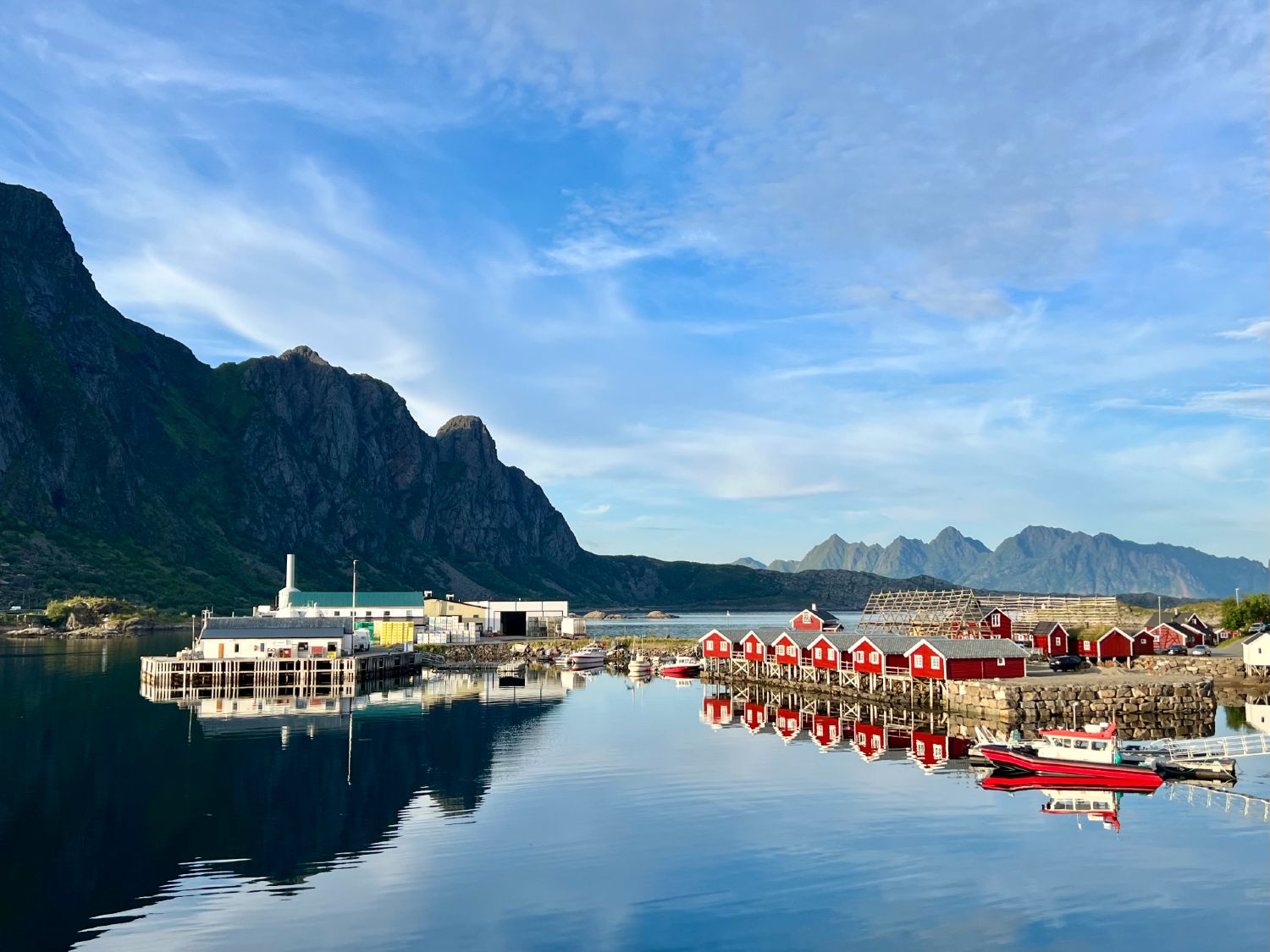
    Our RIB slices through Trollfjorden towards Svolvær, the scenic capital of the Lofoten Islands. Twelve of us instinctively lean left—as if we have some control over the heeling boat. The narrow fjord’s steep-sided, jagged mountains rise dramatically from the sea. The water swirling beneath me is a shade of blue I’ve never seen. Overhead, the sea eagles we met earlier turn back towards Raftsundet strait, realizing their midday snack is officially over. The trolls remain hidden.

    As we get closer to the harbor, a stench hits me like a rogue wave. I look around. My face isn’t the only one scrunching in disgust. Our guide is watching. Is he smirking? The Brit behind me is the first to bite. “What’s that awful smell?” he asks. “Ahhhh,” Emil smiles and exhales slowly, deliberately. “That, my friend, is the smell… of money.”

    Twelve heads turn in unison, baffled.

    Reine

    Where Are The Lofoten Islands?

    I found the Lofoten Islands through my usual source of inspiration—Instagram. Those algorithms are eerily spot on, drawing me into little tiles of mesmerizing mountainscapes and fjords. I needed to know exactly where this magical place was and how soon I could get there. 

    The Lofoten Islands are in Northern Norway, I discovered, just inside the Arctic Circle. 

    Of course they are.

    Factually speaking, the Lofoten Islands are an archipelago of seven main islands bisected by glacial fjords. By the numbers, they are about 100 miles long, over 3 billion years old, and have roughly 25,000 residents. The Midnight Sun reigns from late May to mid-July. Intriguing facts, Wikipedia, but I don’t need them to inspire my trip—Instagram beat you to it.

    Illustration map of Lofoten

    The Scandinavia Travel Boom

    Scandinavia is on the cusp of a travel boom, partially as a reaction to the wildfires and raging heat from which the rest of Europe suffers. Some travelers are looking for more temperate climes. Others are seeking roads, or in this case, fjords less traveled—a response to overtourism plaguing countries like Italy, Spain, and Greece. 

    Nordic countries saw a surge in tourism last year, with Finland, Denmark, Sweden, and Norway reporting a record-breaking number of visitors. In Norway alone, nearly 17 million hotel nights were booked—a 3% increase from the previous year. Those numbers are expected to rise as more intrepid travelers view Scandinavia as the antidote to mainland Europe’s woes. But, the Lofoten Islands are remote even by Scandinavian standards. 

    It’s worth noting the emphasis on destinations yet to grace the covers of Travel+Leisure and Condé Nast Traveler. Travelers want bragging rights, to get to destinations first. If Scandinavia is the next travel hot spot, I want to get there first, too. I book my flights and ferries. Thank you, Meta. I’m on my way. 

    The Fish That Put Lofoten On The Map

    “That smell is stockfish,” Emil continues. “Stockfish is Norway’s most important export—and has been for centuries. To us, the smell of drying cod is considered the smell of money.”

    The Tørrfisk industry dates back to the Viking era. Tørrfisk (aka stockfish, or dried cod) was so lucrative that it lured over 30,000 fishermen to northern Norway each winter. Fishermen who endured the Arctic’s extreme and harrowing conditions to provide for their families back home. 

    Stockfish
    PC: Ruramos

    Once caught, the codfish, with their wiry whiskers and mouths agape, are placed on large pyramid-shaped wooden racks called fiskjehell. Norwegian winters are windy and well below freezing, thus creating a natural preservation system for the fish to dry without rotting.

    Fiskjehells are still used in the Lofoten Islands and can be seen (and detected sight unseen) in many seaside villages—a monument to the dedicated fishermen who endured Lofoten’s long, dark winters. 

    Stockfish’s Place on the Global Table

    The smell of stockfish also reminds us of Lofoten’s importance in commercial fishing. Of all the European nations that import dried cod from Norway, Italy is the largest. Stockfish is the central ingredient in their famous dish, Stoccafisso Accomodato (stockfish stew). It’s also a staple of Nigerian cuisine, often used for stews and soups. 

    Stockfish adorns the menus of Lofoten restaurants, from fine dining at the Kitchen at the End of the World to Svinøya Rorbuer’s humble restaurant, Børsen. Travelers can experience the fish that built Lofoten with dishes like Tørrfisk Royal, cod stew with carrots, egg, butter, and bacon, and stockfish filleted with baked leeks, wild mushrooms, and kale.

    The curious Brit quips, “I don’t see any fish, only empty racks.” Emil is ready. “The fish hang for three to four months,” he explains. “By May, about six million tons of cod hang in hjells, ready to be shipped. But, even when the racks are empty, the smell lingers.” Satisfied, the Brit settles.

    View of Reine with clouds

    The Fisherman’s Wife

    Emil cuts the motor, and the silence is welcome. We’ve been careening around the fjord, feeding sea eagles and troll-hunting for hours. That’s when I see her. Standing poised and strong against the wind on a rocky promontory, she clutches a shawl around her neck with one hand and waves longingly with the other. 

    “That’s Fiskerkona,” Emil says, reading my mind. “The Fisherman’s Wife. She represents the resilience of the women left behind to raise families during their husband’s long absences. Many would never see their spouses again.” This poignant statue quiets the group—even the inquisitive Brit.

    Nusfjord interior

    Turning Tradition into Luxury

    Thousands of fishermen traveled north each winter to hunt for Norway’s prized fish. They lived in rorbuer, traditional stilted, wooden huts. In Norwegian, ‘ror’ means row, and ‘bu’ means small house. Up to 12 fishermen shared each rorbu. Rorbuer were sheltered from the elements and divided into two parts, one for sleeping and one for gear. The ceilings were low, and the windows were small and inefficient. They had basic kitchenettes and uncomfortable beds. But, they provided what mattered most—direct and immediate access to their fishing boats.

    Rorbuer

    These seaside cabins, many restored to their original red and yellow colors, have been retrofitted as tourist accommodations. Some, however, are retrofitted better than others. Rorbuer are an integral part of Lofoten’s history, giving visitors a chance to imagine life within the same four walls as Nordic fishermen, albeit in some cases, on 600-thread-count sheets, with rain showers and Nespresso machines.

    Nusfjord bedroom

    Turning tradition into luxury is hard work. Not as hard as fishing for cod in the Arctic, but hard nonetheless. Although updated with modern conveniences and creature comforts, some rorbuer lack the sophisticated amenities often associated with high-end luxury. Others have found an idyllic balance,  elevating the rorbu by adding soft, plush duvets, Bluetooth speakers, and bespoke toiletries while keeping the cabins’ historical integrity intact.

    That said, rorbuer accommodations are in such high demand that some were fully booked as early as February for this coming summer. These rorbuer create a source of income beyond stockfish—attracting the kind of money that looks, feels, and smells like actual money.

    View of Nusfjord village

    The End Of The Road in the Lofoten Islands

    The Nusfjord Arctic Resort is tucked away at the end of a road in a secluded valley that hovers over the sea. A Small Luxury Hotel of the World, Nusfjord has managed to preserve the look and feel of a typical fishing village so vividly that I could swear I traveled through time.

    Many of Nusfjord’s rorbuer are several hundred years old. During the day, tourists come from near and far to explore the grounds, the general store, the bakery, the smithy, the boatshed, and the cod liver refinery. 

    Black-Legged Kittiwakes

    They dine at the property’s on-site restaurant, Karoline, and gaze at the mountain views. They order pizza from a small wooden shack, grab a cold beer, and sit among the protected Black-Legged Kittiwakes (Krykka) that nest on the cliffs and windowsills. From 9am-5pm, Nusfjord swells with tourism.

    Dock at Nusfjord Hotel

    But come 5:01pm, the property is reserved for guests only. Cue a mass exodus akin to heading west on Montauk Highway after Labor Day Weekend. It’s then that lucky Nusfjord guests peek out from their rorbu windows, making sure the coast is clear. They shuffle out in fuzzy slippers and fluffy robes one by one en route to the sauna.

    Lofoten Island’s Endless Days

    We’re getting closer to Svolvær’s docks. Our sea eagle safari will soon end. This high-speed RIB excursion has been a highlight of my trip. Not only because I saw so many of the promised eagles but also because of Emil’s insights into Lofoten’s history. 

    I look back at the scenery Instagram inspired me to come so far to admire. Hiking peaks like Reinebringen and Djevelporten provide an eagle-eye view of the islands that change with the sun, mist, and fog—each stunning in its own way. The mountains appear hand-painted and are set against layered clouds in a sky that never gets dark. Summer in Lofoten is an ongoing study in beauty. I could spend a lifetime of summers here and never tire of it.

    Svolvaer overview

    The Set-Jetting Travel Trend

    The Lofoten Islands aren’t the only Norwegian destination benefiting from a boost in tourism. Anyone who followed the black comedy Succession will recall the episode in which Shiv and Roman Roy visit Mattson’s homeland. The Roys stay at Juvet Landscape Hotel, a property entirely immersed in nature.

    Juvet is located on the west coast of mainland Norway. It’s a great example of ‘set-jetting,’ the travel trend best described as wealthy Americans spending gobs of money in places like Thailand and Dubrovnik courtesy of TV shows like The White Lotus and Game of Thrones. These days, Juvet is as hard to get into as the Vatican on Easter Sunday. Damn you, Roman.

    Achingly cinematic and designed with the environment as the star, Juvet’s seven minimalistic rooms include airy Birdhouses, glass-walled Landscape rooms, and the writer’s aerie, Scrivener’s Room. At Juvet, luxury is at its most understated, and the only tension lies in the ever-changing scenery.

    Boats at Svinoyer

    Past, Meet Present

    “Come back to Lofoten,” Emil calls out as we disembark. My heart sinks. The possibility of coming back seems unlikely. Who goes to the Arctic Circle twice? Hmmm. Maybe I do.

    The sun is high in the sky. Since it won’t fully set, we have endless hours ahead of us to explore and relax. I peel off my dry suit and take off my goggles and hat. It’s 36 degrees, and I’m freezing. I think of the fishermen. I wouldn’t have made it past Fiskerkona. 

    Nusfjord

    Although Lofoten’s fishing industry remains deeply rooted in history, some things have changed. The boats have been modernized with GPS and sonar radar for tracking schools of fish. Safety has improved with the addition of anti-slip surfaces and hydraulic winches. The fishermen sleep in heated cabins and have cell phones to call their wives (whether they consider that an improvement is unclear.)

    I turn towards Trollfjorden—contemplating those elusive trolls. I no longer detect the intrusive fishy smell. How quickly humans adapt—even to an unpleasant odor like dehydrated fish. Though surely not unpleasant to the residents of the Lofoten Islands—where the scent of dried cod symbolizes history, prosperity, and a tourist industry’s moment in the sun.


    Click here to learn more about what to do, what to see, and where to stay in the Lofoten Islands


  • 5 Things To Do In Vienna That Will Make You Fall In Love

    5 Things To Do In Vienna That Will Make You Fall In Love

    It’s pretty easy to fall in love with Vienna, that magical ‘City of Dreams’ in Austria. And it’s not because of the vast amount of things to do in Vienna—the palaces, gardens, or world-class food. It’s about the harmony of the city. The symphonic undercurrent of Vienna captivates locals and tourists alike. There are so many things to do in Vienna that have been written about time and again. Here are five highlights that made me fall for Austria’s enchanting capital city.


    Flowers in Vienna

    I’ve come to Vienna for one thing—to see my daughter, Ella. She’s been abroad for four months and this is the longest I’ve gone without seeing her. We decide to meet in Vienna. Because why not Vienna? If Billy Joel says it’s waiting for me, who am I to disagree?

    Ella and I create a shared Google doc. Hahahahaha. Ella creates a shared Google doc. That way, we can add ideas to our week-long itinerary from opposite sides of the Atlantic. I add restaurants and she adds bars. I add palaces and she adds pastry shops. When we are face to face, we have enough things to do in Vienna to please us both. 

    Don’t tell Ella, but I could care less about the sights, restaurants, or pastry shops. I’ve come to Vienna for just one thing.


    Click here for my Free Vienna Hot Sheet


    Cafe Sacher

    Things to do in Vienna

    Yet, we need to eat. No one wants to travel with a hangry teenager. In my food research, I noticed a Viennese ‘must-eat’ appears time and again: the Sacher Torte. I don’t know what a Sacher Torte is. Does everyone else know? Surely Billy Joel does. 

    We also need to fill our days. Nothing says mother/daughter meltdown like too much idle time. I buy a Lonely Planet guidebook (yes, guidebooks still exist) and start reading. I’m not sure I know what I’m looking for, but I’ll know it when I see it.

    Belvedere palace

    It turns out Vienna is a goldmine of a European city. Gustav Klimt notwithstanding, the city is practically paved in gold. Clean, wide streets, stately architecture, ornate cathedrals, and vibrant gardens abound. Finding things to fill our days (and our stomachs) won’t be an issue. 

    Having been responsible for Ella’s travel upbringing, our travel styles are similar. We like a slow morning fueled by caffeine followed by some sort of activity. Strolling an artsy neighborhood, touring a palace, or sampling cheese at an outdoor market. ‘Activity’ is a decidedly loose term. Then we like to eat lunch, have more caffeine, and head back to the hotel for downtime before our evening activity—a kick-ass dinner.

    Knowing Ella’s travel style makes our reunion much easier, and much more fun. Ella and I go deep and wide in Vienna, covering lots of ground in a week. What follows are five highlights.

    St STephans exterior

    5 / Things to do in Vienna: Go underground

    Speaking of going deep, figuratively and literally, we stumble upon St. Stephen’s Cathedral. Stephansdom, as it’s also called, is a church with a haunting past. Above ground, the cathedral is a visual masterpiece that soars high above Vienna in its Gothic grandeur. With 230,000 multi-colored glazed tiles decorating its remarkable roof, it’s likely the city’s most iconic piece of architecture.

    Yet, below ground is a different world. A ghostly one. Beneath the cathedral lies a mass grave for the thousands of Austrians who succumbed to the Bubonic plague in the 1700s. Outdoor cemeteries were closed due to illness, and the only place for the dead to be buried was underground. 


    Click to book St. Stephen’s Cathedral right here!


    St Stephans interior

    St. Stephen’s Catacombs, if you love ancient history

    We tour the catacombs, sinking deeper into the church and thus into Austrian history. Then we walk beside the weathered stone sarcophagi of emperors, dukes, archdiocese, their wives, and children. Deeper into the catacombs, we peer into cavities of ancient walls and see piles upon piles of bones. Tall urns filled with the organs of the Habsburgs family are on prominent display. Being dismembered and dispersed was considered a post-life privilege. I would’ve opted out of that royal perk.

    Ella and I love the dark, eerie catacombs. The air is thick with antiquity, and the effect is like a storm passing through our senses. We soon hear the church bells toll above us and are transported back to real-time. We resurface, exit the cathedral, and shield our eyes from the sun overhead. It’s noon—time for cake.


    Click here for my Free Vienna Hot Sheet


    Demel cafe

    4 / Things to do in Vienna: Eat cake

    I may have never heard of a Sacher Torte, but I will become its BFF by the week’s end. If anything binds me and Ella, it’s butter, flour, and sugar. I schedule my next dental cleaning and research the best places to have one. 

    The Sacher Torte is a Viennese cake conceived due to an unfortunate event. Unfortunately, that is, for the official court pastry chef of Prince Klemens von Metternich. In 1832, the pastry chef fell ill just as his services were sought to prepare a one-of-a-kind dessert for royal guests. Enter backup pastry chef, 16-year-old Franz Sacher. Tasked with creating a masterpiece in record time, Sacher whips up an extraordinary chocolate cake. Before you can say Weiner Schnitzel, the official pastry chef, is out of a job.

    As any baker knows, the key to confection perfection is using the highest quality ingredients. The original Sacher Torte’s ingredients are deceptively minimal: flour, sugar, eggs, chocolate, butter, and apricot jam. 

    After the cake is baked, it’s sliced in half, and a thin coating of warm apricot jam is spread on each layer. It’s then reassembled and topped with a chocolate glaze. Traditionally, the Sacher Torte is served with a dollop of unsweetened whipped cream on the side.

    Demel cafe

    Five Sacher Tortes, please

    Ella and I have Sacher Tortes at five cafés in as many days, including the one named after the original—Café Sacher. We’re all about paying homage to Vienna’s famous cake. To say we make sacrifices is an epicurean understatement. One wedge contains 53g of carbs, 18g of fat, and 398 calories. When I arrive home my jeans don’t fit, my dogs fat-shame me, and my dentist is categorically disappointed.

    On a lighter note, Ella is easy to travel with and rarely gets annoyed. Unless she’s hungry, or too full. Or if people are walking too slowly in front of us. Or, too fast behind us. If she hears bells gonging (which happens often). Or if I don’t know where I’m going (which also happens often). 

    Other than that, she’s a total joy. 

    Pancakes at Demel

    Demel, if you love fancy cafés

    A café within walking distance to Stephansdom, Demel has been in the cake business since 1786. Demel Café is textbook fancy with its gold touches and monogrammed napkins. What better place to sample our final torte of the week? But, when we see the other baked goods on display, we get greedy and decide to go beyond the torte.

    While we wait our turn to enter Demel, we notice another line forming to our left. Fancy Demel has a take-out window? We learn it’s a line for kaiserschmarrn, a savory dish I can best describe as scrambled pancakes. Think of your favorite parts of homemade pancakes—the drippy parts. Then lump them all on a plate with powdered sugar and serve with plum preserves. Now, it’s clear why kaiserschmarrn needs its own take-out lane.

    Demel earns the distinction of serving us our favorite Sacher Torte. The wedge is so precisely cut that it looks like it’s been sliced by a surgeon. The balance of tangy apricot jam to rich chocolate is heavenly. The cake itself is dense but not dry. While hard to crack, the whipped cream offsets the bittersweet chocolate shell. 

    This is the moment I realize my daughter is a metaphor for the Sacher Torte. Dense, layered, tangy, and bittersweet with a shell that’s hard to crack. I don’t tell her this of course. And by the time she reads it, I’ll be thousands of miles away.

    STEIRERECK Restaurant exterior

    3 / Things to do in Vienna: Dine like royalty

    The Sacher Torte may have been created by an angst-ridden teenager for kings and queens, but we didn’t need titles to dine at the world’s 12th-best restaurant. Steirereck is the first restaurant I’ve visited that boasts an ‘urban-rural’ setting. This riverside dining utopia lies in the heart of the city yet also in the heart of leafy Stadtpark. Originally built in 1904, a more recent mirror-clad addition makes the restaurant look like an apparition of nature. 

    The interior of Steirereck is minimal, with warm wooden tones and abundant space between the round, white-linen-topped tables. In a brilliant design move, each table is set within a semi-curved wooden slatted wall which conveys the illusion of privacy. But, just a touch of privacy. We all like to people-watch while we eat, don’t we? The curved walls are separated by floor-to-ceiling windows so diners feel connected to the outdoors.


    STEIRERECK Restaurant interior

    Steirereck, if you love destination dining

    I make a reservation at Restaurant Steirereck the moment Ella agrees to meet in Vienna. Before I even book my flight. Before I even tell my husband I’m going to Vienna.

    San Pellegrino describes the tasting menu as having ‘rare breeds, unfashionable fish species, and near-extinct fruits and vegetables’. Ummmm, is that little write-up supposed to be tempting? I shake off my reservation reservations and put my faith in Saint, I mean, San Pellegrino.

    Ella and I enjoy every dish, Even the unfashionable catfish, which is served with beans and calamansi. I have no idea what calamansi is, but my guess is near-extinct fruit.

    There was a time I couldn’t imagine taking Ella to a multi-course dining experience like this. Her first 17 years, to be precise. Until then, Ella swore she would never eat fish. Swore she would never eat sushi. At 19, she now eats everything from squiggly calamari to tuna tartare. I don’t dare say I told you so. But inside I’m smiling with the kind of satisfaction only the parent of a stubborn teenager can understand.

    Other highlights of our 7-course, wine-paired dinner are seasonal asparagus with poppy seed, apricot, and lamb’s lettuce. Piglet’s tail with Swiss chard, shiso, and black currant. We learn that Viennese cuisine is the only one in the world named after a city. Bravo, Vienna, for the well-deserved culinary accolade.


    Click here for my Free Vienna Hot Sheet


    Schloss Schonbrunn

    2 / Things to do in Vienna: Go Baroque

    Bravo, indeed. There appears to be no end to Vienna’s allure. An inherently walkable city, our step counters reach never-before-seen numbers by the end of each day. However, if there’s one Vienna sight worth walking over 20,000 steps for, it’s Schönbrunn Palace.

    The former summer palace of the Habsburg monarchs, Schloss Schönbrunn, corners the market on empirical decadence and luxury. Built in the 17th century and named a UNESCO World Heritage Sight in 1996, there is perhaps no better example of Baroque architecture in Europe than Schönbrunn Palace.

    Gloriette Vienna

    Schönbrunn Palace, if you love imperial life

    What was originally built as an imperial hunting lodge for Crown Prince Josef in the 7th century later became the glittering focus of court life when it was replaced with a chateau for Dowager Empress Eleonora Gonzaga. Today, visitors can tour the buttery yellow Schönbrunn Palace, its opulent staterooms, and lavish fountain-filled gardens. 

    We get much more than we expect at Schönbrunn Palace. I expect to be wowed by the private apartments of Franz Josef and his wife, Sisi, with their elaborately decorated walls, intricate parquet floors, and extensive art collections. I expect to drool over the well-kept gardens. I don’t expect the grounds’ sheer size, the added architectural marvel, The Gloriette, the children’s zoo, the rosarium, or the enclosed botanical and desert gardens.

    Ella and I returned to the Orangerie for a classical music performance the next evening. If there’s one top ten sights to craft an entire day’s itinerary, it’s Schloss Schönbrunn.


    Skip the Line! Click here to get Schonbrunn Palace tickets in advance


    Picture at Chapel Bar

    1 / Things to do in Vienna: Uncover Clandestine Cocktails

    I can always count on Ella to be on the pulse of what’s trending and TikTok-ing. No matter how hard I try, I’ll never have access to her adolescent algorithms. My Instagram feed is populated with accounts called @tillytheblacklab, @mytherapistsays, and @momsbehavingbadly. Her social platforms are filled with hidden bars and clubs around the world. She told me about one such place, a speakeasy called The Chapel Bar, and asked if I wanted to try to find it.

    The Chapel Bar, if you love absolving your sins in alcohol

    The Chapel Bar is a highlight of our trip. Part of me doesn’t want to spoil the hunt for those who may end up in search of this hidden spot. The other part wants to spill all the details. The Chapel Bar makes you work for your cocktail. Suspend your disbelief. It’s worth finding.

    A touch of biblical theater adorns the cocktail menu at The Chapel Bar. Think sins, plagues, and 80s Top 40 hits with drinks like ‘A Snake in Paradise—Adam Always Blames Eve’, which combines Bacardi Anejo Cuatro Rum, cloudy apple juice, lime, and Old Judge Falernum. And the ‘Phil Collins—I can feel it coming in the air tonight, Oh Lord’ concoction made with Bombay Sapphire London Dry Gin, elderflower liqueur, pink grapefruit, and club soda.

    The artistry of the drinks lives up to the wild descriptions. Ella’s drink is enclosed within a mini-birdcage and we see someone sipping from what looks like a red Christian Louboutin stiletto. Although it was pretty dark, it could’ve been a Jimmy Choo. Whoever is responsible for creating these clandestine cocktails, I need to meet you. You are my creative god.


    First time in Vienna? Discover the best of Vienna (including Sacher Tortes, of course) with this self-guided walking tour of the city!


    Baroque interior

    Falling for Vienna

    Vienna is a city that inspires harmony. Whether it’s the delicate balance of apricot and chocolate in a celebrated cake or nymphs floating above in a magnificent palace mural. An under-the-radar cocktail bar or the combination of unfashionable ingredients served at a world-class restaurant.

    It may have taken me half a century to get to Vienna, but as Mr. Joel promised, it was waiting for me. Vienna is waiting for you, too. Just don’t forget to sample a Sacher Torte or two while there. Your dentist will forgive you.


    Check out Vienna’s most luxurious hotel here. It’s my top pick.


    Click here for my Free Vienna Hot Sheet (including shhhhhh, The Chapel Bar)


    Interactive Vienna Map with All Of My Favorite Spots

    (Please note a few affiliate links above for which I may receive a small referral fee. But rest assured, I only highlight products I fully stand behind.)

  • Stowe in Summer: 10 of the Best Ways to get Local

    Stowe in Summer: 10 of the Best Ways to get Local

    A few summers ago, my husband and I decided to head north. To live village life, country life, and a less rushed life in the mountains of Stowe. My parents’ house was empty, and it seemed an ideal way to escape the oppressive DC heat—a way to break the monotony that had gradually manifested over the past few months.

    Swimming with dogs

    We packed up only the most essential items: our kids, our dogs, a few hundred Nespresso capsules, and cornhole. As it turned out, our essentials don’t fit in one car, so we took two and began our 10-hour caravan to New England. We’ve been living in Stowe for over a month now, and while our kids may do feel slightly differently, it was the decision of the year for me and Daniel. I’ve learned a lot about living a simple life. For one, I’ve discovered that while big luxuries are great, little luxuries are even greater.

    Dogs in pond

    I’ve compiled a list of the things that Stowe and village life have given me—a mix of the tangible and intangible. A list of things I hadn’t thought much about but now seem overwhelmingly luxurious. My list is by no means complete and is seen through my tiny, rose-colored lens. I am excited for this list to grow as we spend more time in New England. But for now, and in no particular order, are the 10 things I have learned to appreciate, love, and (dare I say?) consider true luxuries about Stowe living.


    Click here for my free Stowe Summer Hot Sheet


    Church steeple

    THE BEST OF STOWE #1: THE RECREATION PATH

    Looping gently around the town of Stowe and covering 5.3 scenic miles is the much-loved Rec Path. The path is beautifully maintained and easily accessible. One natural starting point is directly behind the Stowe Community Church, the soaring centerpiece of the village. However, there are countless places to enter and exit the serpentine route.

    Sixteen meticulously kept wooden bridges appear intermittently, crying out for photo ops as they arch over clear, stone-filled streams. The low rumble of bikes that pass over the wooden slats would alert me to their oncoming presence. Tots on tricycles would whiz past me, their parents racing to catch up. Bikers, walkers, and runners share the meandering path, which bends and curves around and behind the town’s main streets.

    Wooden arched bridges

    Lovely, hidden picnic spots dot the water’s edge, and I often hear kids splashing and squealing by the banks. A picturesque way to burn calories, the Rec Path has just the right balance of shade and sun, streams and fields, and cows and gardens to keep me entertained for a few hours.

    Often, we bike to the back garden of Idletyme Brewing Co., a local restaurant, and enjoy a well-earned drink to cool off. It has an idyllic location on Mountain Road and the Rec Path. Fried pickles tempt me, which is no surprise if you read ahead to little luxury #3. Oversized, soft pretzels come hanging on a stand with various dipping sauces. Daniel always orders a flight of local IPAs from the tap.

    THE BEST OF STOWE #2: THE QUIET PATH

    If the Rec Path doesn’t conjure up a Norman Rockwell portrait, the Quiet Path certainly does. Built as a low-impact extension of the Rec Path, the mown grass pathways keep the Quiet Path true to its name.

    The 1.8-mile panoramic route hugs the perimeter of tall, rapidly-growing cornfields and a burbling stream filled with beaver dams that my dogs always seem to destroy inadvertently. Alpine views are within sight, as is the steeple of the community church in the distance at specific points along the way.

    Foot traffic only, whether four-legged or two, is allowed, and I found it amusing to read that dogs need to be under voice or leash control. Voice control is certainly not guaranteed with my two willful dogs, but luckily, I have yet to be reprimanded.

    radishes

    THE BEST OF STOWE #3: THE FARMERS’ MARKET

    Sunday mornings quickly became something to look forward to when every day was beginning to feel like a Sunday. What was once a small smattering of vendors has since blossomed into a destination unto itself—the Stowe Farmers’ Market. A gathering of local vegetable producers, cheese vendors, ice cream makers, handmade crafts, and a variety of ethnic food stalls, the market offers different tastes and treats for the widely differing taste buds in my family.

    My favorite food stall is Green Mountain Potstickers. Homemade dough that is just the right consistency, and balanced with the optimal amount of fillings—like edamame, scallions, chives, and tofu, for starters. Their scallion pancakes easily compete with those I’d had long ago in Beijing, as do the cold sesame noodle salads topped with julienne-sliced veggies.

    Dumplings

    The list of vendors and artisans at the Stowe Farmer’s Market has grown since the summer of COVID. Some of my favorites include Two Sons Bakehouse, Sage Farm Goat Dairy, and Stephanie Grace Ceramics. I don’t know how someone could pass by her stall without wanting to buy one of her magnificent porcelain creations. I certainly couldn’t.

    Stephanie Grace ceramics

    The market is open from 10am-2pm from May through October. Go for lunch and be sure to grab a picnic table in the shade.


    Click Here For My Free Stowe Summer Hot Sheet


    Sage Goat Farm

    THE BEST OF STOWE #4: SAGE FARM

    I discovered that one of the Farmers’ Market vendors is just up the road from our house. Sage Farm Goat Dairy is a picture-perfect, Insta-ready, and family-run goat farm located on Upper West Hill Road. The weathered gray barn/farm store sits neatly next to a field of wildflowers and a tattered wooden fence. A small sign invites customers to walk in. The store is unattended and provides an honesty box alongside the refrigerated case of small-batch artisanal goat cheeses and fresh eggs.

    Chickens peck noisily at the ground; some days, we spotted the goats roaming the fields. They have a bucolic spot, those lucky alpine goats. By the smug look on their long faces, I’m guessing that they know it.

    Maria's Garden

    THE BEST OF STOWE #5: FROM MARIA’S GARDEN

    A pretty, gray, clapboard house sits at the top of Cape Cod Road; the charming roadside flower stand called From Maria’s Garden. Mason jar-filled wildflowers are presented daily, as are hand-cut bouquets and potted plants. A price list and honesty jar sit nearby, and she recently let me know that she has had the honor system in place since 1987—honesty—a popular Stowe theme.

    As her website notes, Maria escaped the corporate life in NYC to live a simpler one in Vermont. She is a certified floral designer. Aside from her daily roadside flowers, she designs for weddings and events. 

    Every time I drive past, I am tempted to buy, and during our first few weeks in Stowe, I did just that. The homespun feeling that radiates from the colorful property is magnetic, and I have often seen Maria’s husband, shears in hand, cutting for the day’s arrangements.

    Lately, noticing the variety of wildflowers that are blooming in our own backyard, I’ve started to create my own masterpieces. Although I think I need a little help. I wonder if Maria is available for lessons?

    Village main street

    THE BEST OF STOWE #6: STOWE VILLAGE

    The village of Stowe has a storybook setting, just the right amount of charm, quaint shops, ice cream parlors, and lively (modern definition: ‘socially distant’ lively) restaurants to wander and explore. Stowe village is slow-paced, an inherent part of its charm.

    My son and I bike to breakfast some mornings, passing acres of cornfields and barns, and sit outside at his favorite, Café on Main. We eavesdrop on the locals gossiping over their coffees and Stowe Reporters. Little shops hide behind big shops. Stowe has many lovely historic homes to gawk over; photographing them became another daily pastime.

    The Historic Old Depot houses one of my favorite Stowe treasures, Bear Pond Books. Perhaps because it was ‘born’ the same year I was, 1970. Or that it’s a 2nd generation, family-owned, independent bookstore that’s still going strong despite the rise of Amazon. In 35 years, I’ve never visited Stowe without getting lost in the aisles of Bear Pond.

    Jennifer Hale, the owner, and her staff handpick the books. Her sweet pup, Tucker, curls up on a bed behind the register. I wonder if he, too, has a say in the book choices, as there are a lot of canine-related tomes. It feels highly curated, warm, and inviting, even on the coldest winter days. I rarely leave empty-handed. 

    A notable Stowe fact is that neon signs are strictly forbidden. Yet another way that Stowe can maintain its charm. Until I found myself in a non-neon environment, I realized how much of my life is neon-filled. Its absence has been refreshing.

    hikers on cliff

    THE BEST OF STOWE #7: STOWE TRAILS

    The countless hiking and mountain biking trails could take up a post of their own. Suffice it to say that hiking has become one of my go-to activities over the years, and Stowe has more mountains, gorges, notches, summits, and waterfalls than I have time to tackle.

    One morning, Daniel and I hiked to Sterling Pond. A steep, natural rock staircase welcomed us to the 2-mile climb and got my legs fired up faster than I was prepared for. Dense foliage, streams, and wet rocks gave way to tall pines, signaling that the summit was close. Moss-covered stones, fallen tree trunks, wild mushrooms, and a plush carpet of ferns covered the mountain floor. The reward for our efforts was a glorious, serene pond, which, to me, should be called a lake. Whatever it is called, it was a beautiful sight after an arduous climb.

    Man hiking long trail

    Our next morning of hiking started with a steep, 4.5-mile switchback drive to the top of the Toll Road, followed by an hour-long open vista hike (The Long Trail) to the ‘chin’ of Mt Mansfield. There, we were rewarded with blue skies and 360-degree views of the area. We looked down over the grass-covered winter ski runs and gazed out towards the distant layers of overlapping mountains. My favorite kind of hike—one that both starts and ends at the top. Views rule.

    While hiking back towards the car, we passed a man with a butterfly net, who we learned was actually searching for dragonflies. Although not just any dragonfly—he was on a mission to spot a  particularly elusive species. Since then, I’ve taken note of the dragonflies I see every day at the pond after not having given them any thought before.


    Click Here for My Free Stowe Summer Hot Sheet


    butterfly monarch

    THE BEST OF STOWE #8: WILDLIFE, VERMONT-STYLE

    Who needs Africa to experience wildlife? In Stowe, I’ve seen beavers, frogs, hummingbirds, dragonflies, chipmunks, cows, gophers, snakes, horses, and even a pair of berry-eating bears. While not the traditional ‘big five,’ wildlife is fascinating regardless of size.

    One early morning in July, my walk revealed a world of beaver dams, vivid clusters of fiery tiger lilies, dilapidated barns, and grazing cows. Even if I chose the same route to walk each day, I would inevitably spot something I hadn’t seen the day before, which was due, in part, to the ever-changing light, weather conditions, and bovine behavior.

    I stopped mid-run one day to take a photo of a cornfield and found myself at a stand-off with a suspicious gopher. While stretching, later on, I caught a Monarch butterfly feasting on a flower. I never stop in my DC life. In Stowe, I stop and, in doing so, am rewarded with the littlest, most beautiful sights.

    Pond reflection at night

    THE BEST OF STOWE #9: AL FRESCO DINING

    Being such a popular, all-season travel destination, it isn’t surprising that Stowe has restaurants and cafés to suit just about everyone. Having had years of local eating under my belt (literally and figuratively), I came to town armed with a few faves.

    The Bistro at Ten Acres has been perched at the junction of Luce Hill Road and Barrows Road for as long as I can remember and has always been my parents’ favorite. We sat outside for dinner, watching a particularly remarkable sunset one night, and wondered what it would be like to cash it all in and make the simple life of Stowe a permanent one.

    Even outdoors, the Bistro at Ten Acres feels intimate. A musician played guitar, just far enough from the patio so that we could still have a conversation. The dry summer air made the night memorable, as did my lovely spring pesto over homemade linguini.

    At 91 Main Street, California-inspired Plate became a new favorite. The owners, originally from LA, have been in Stowe for years. Their menu is described as being able to satisfy meat lovers and hard-core vegans. I’m not vegan, but I gravitated toward the vegan dishes when we visited. I thought the vegan crab cake starter was a menu highlight, as was the Tofu Ramen and Plate’s interpretation of a veggie burger. The wine list was incredibly well-thought-out, and I’d be lying if I said that didn’t somehow factor into our return throughout the month.

    Sweeping views of corn

    THE BEST OF STOWE #10: MOUNTAIN SCENERY

    Bucolic pastoral scenes that appear to be lifted from the canvas of a Wyeth abound. Wispy streaks of yellow grasses and lavender wildflowers lay against green pastures and distant blue skies. This led to an epiphanic moment.

    After having spent days wondering why the sunsets seem to be more colorful in Vermont or the clouds more defined, I finally realized that it had nothing to do with the sun or the clouds at all. It’s the scenery against which the sunsets set and the cloud formations sit above that make it more spectacular. The sky can be gorgeous anywhere, like over the NJ Turnpike, for instance, but it wouldn’t look quite as pretty. (No offense, NJ). It’s the surrounding scene that makes it extraordinary.

    The late afternoon thunderstorms that pass through mountainous Stowe instantly turn on all of the primary colors of the landscape. At times, we’ve been able to see both the incoming storm and the blue sky at exactly the same time. The dark clouds would inevitably swallow up the sky, and then bright blue would once again emerge.

    After one particularly fast and furious morning storm, I witnessed a full rainbow that was so bright that it glowed.

    kids in pond

    SUMMER ISN’T OVER, YET

    Tomorrow, I head back to DC. Our house in Vermont has felt like another world, and the change of scenery has been healthy on many levels. I’ve realized that I can define luxury in more ways than I had thought. Luxury is personal. It’s spotting a photo-worthy pond, buying pickles at a farmers’ market, or goat cheese from a barn with an honesty box.

    How do you define luxury? It’s worth finding out.


    Click here for my free Stowe summer hot sheet


    Interactive Map of My Favorite Stowe Places

    Trip map created using Wanderlog, for making itineraries on iOS and Android

  • 5 of the Best Caribbean Beach Bars

    5 of the Best Caribbean Beach Bars

    My top five favorite Caribbean beach bars and restaurants are personal. They’re based on my memories of food, wine, people, and views. My top five list might change over time, but these are the Caribbean beach bars and beach clubs that keep my travel memories alive and kicking.

    Eden Rock

    My Top Five Caribbean Beach Bars

    When assessing the best beach bars, suffice it to say that I have a few baseline requirements. A vibe that naturally pairs with the island’s culture is one. Combining tourists and locals adds authenticity and credibility, and festive air helps. The food (if served) is at a culinary level that matches the establishment’s look and atmosphere. And lastly, a USP (Unique Selling Point) that makes me yearn to go back months after the holiday has ended. 

    Except for Anegada, I’ve been fortunate enough to visit the following Caribbean beach clubs and bars more than once. That qualifies me as an expert in my own experiences, that is. Next time you find yourself in the Caribbean (and let’s all agree that we hope that time is soon), let me know if you concur. Or better yet, tell me about your favorite Caribbean bars and restaurants.


    Click Here For My Free Caribbean Beach Bar Hot Sheet


    Best Caribbean Beach bars: 5 / Basil’s Bar, Mustique

    Island Vibe: Celebrity Secret Hideaway

    Basil’s is a Caribbean beach bar and restaurant leisurely perched on the edge of Britannia Bay in Mustique. It attempts to camouflage the island’s undercover glamour. Lush and verdant, Mustique has only two hotels and two restaurants. Its beauty is hiding in plain sight among the breezy Windward Islands. 

    Why I like Basil’s: Chill, open-air, Basil’s woos villa owners, villa renters, reclusive celebrities, and yachties alike, with a combination of casual food (like perfectly seasoned grilled lobsters), a low-key atmosphere, and spectacular sea views.

    I’ll admit, though, that I have little memory of the food because the setting is the star, day, and night. Mega-yachts and sublime sailboats were anchored in the distance, which created another layer to this Caribbean bar’s swoon-worthy backdrop.

    USP: I like to settle into the indoor/outdoor living spaces and nooks or park myself on one of the wooden stools overlooking the tranquil Caribbean Sea.

    Worth mentioning: Live Music/DJ Nights/Basil’s Boutique/Accessible by car or boat

    Best Caribbean Beach bars: 4 / Catherine’s Café, Antigua

    Island Vibe: Casual European Beach

    To say Catherine’s is a Caribbean beach club that is comfortable in her own skin is an understatement. Open-air, louver-shuttered, sea-breezy Catherine’s Café on the island of Antigua lazes under warm, butter-yellow Veuve Cliquot umbrellas.

    Why I like Catherine’s: Catherine’s barefoot casual Caribbean beach bar feels like Europe. I see naked toddlers running amok with their half-naked mums chasing them. It boasts a French-inspired menu and a well-thought-out wine list.

    I can’t forget our effervescent bartender, Damien, who kept us in good spirits. Neem trees enshroud the hidden location. It practically begs one to spend an afternoon there—which is exactly what we did.

    USP: The cozy and intimate beach area adjacent to the bar offers lovely bay views in a secluded setting.

    Worth mentioning: Live Music/Cheese Course/G+T Menu/Bakery/Boutique/Accessible by car or boat

    Best Caribbean Beach bars: 3 / The Rum Bar, Cooper Island

    Island Vibe: Desert-Island Barefoot Beach Shack

    Our sailboat grabbed one of the last available moorings in Manchioneel Bay, off the shores of Cooper Island. I felt like a survivor about to crawl onto a deserted beach. The people lazing on the wooden decks of the Rum Bar were scrappy and barefooted, semi-drunk, and happily marooned. It was as if we had found a hidden outpost, a tiny island jewel box, where a lucky few were escaping the outside world. Idyllic. 

    Why I like The Rum Bar: Cooper Island has an authenticity that is somewhat unique to the British Virgin Islands, which are often heavy with tourists and can sometimes feel manufactured.

    A clear sign that the Rum Bar, part of the modest Cooper Island Beach Club, is all it’s cracked up to be was that we noticed yacht crews hanging at the bar—the real-life version of ‘Below Deck.’ If the Rum Bar was where they chose to spend their limited free time, we knew we were on to something good. It‘s definitely a Caribbean beach bar worth exploring.

    USP: The remote and rickety beach shack-chic setting that, true to its name, houses 280 different rums.

    Worth mentioning: Bakery/Barista/Accessible only by boat/Arrive early to get one of the 30 coveted moorings


    Click Here For My Free Caribbean Beach Bar Hot Sheet


    Best Caribbean Beach bars: 2 / Anegada, Cow Wreck Beach Bar

    Island Vibe: Utterly Remote Castaway

    Seventeen nautical miles from Virgin Gorda sits the pancake flat, remote island of Anegada. The name Anegada means ‘drowned island.’ At only 28 feet tall at its highest elevation, it could not feel farther away from civilization. That’s exactly what makes this Caribbean beach bar and restaurant so enchanting.

    Why do they call it Cow Wreck Beach, I wondered? In 1929, a 380-foot-long steel freighter called The Rocus was heading from Trinidad to Baltimore. The Rocus’s cargo was filled with cow bones that would later be ground into fertilizer.

    Unfortunately, The Rocus made an unexpected and devastatingly final stop when she collided with Anegada’s treacherous Horseshoe Reef. Since the wreck, the ocean floor has remained eerily scattered with cow bones. As for the freighter, it’s still lodged on its starboard side just beneath the water’s surface. It hasn’t budged an inch since 1929.

    Why I like Cow Wreck: There are thousands of sea urchin shells in every size and all the varying degrees of white that the sun can bleach. The sea is a color that one would immediately assume is an Instagram filter. The open-air beach bar has peeling paint, plastic chairs, and dive-y, no-frills decor. 

    USP: A Caribbean beach bar that is this challenging to get to only adds to its allure.

    Worth mentioning: Wreck Punch/Lobster/Bar games/Accessible only by boat or ferry

    Nikki Beach exterior

    Best Caribbean Beach bars: 1 / St. Barths, Nikki Beach

    Island Vibe: Over-the-top beach club party

    There’s nowhere else in the Caribbean quite like St. Barths. Authentic French through and through, the words St. Barths conjure up Lifestyles of the Rich and Famous glamour. Nikki Beach is ideally situated to soak up the island’s eternally sun-filled vibes.

    Imagine the days when Greta Garbo and other Hollywood stars walked these very shores. Now imagine Beyonce and Jay-Z at the table beside you. Nikki Beach gradually turns up the volume throughout their two Sunday seatings. You will never want the party to end.

    Sushi boat at Nikki Beach

    Why I like Nikki Beach: Dance on the tables with wild abandon whether you are 8, 18, or 88. The upbeat party on the beach is for everyone. Order one of the famous sushi boats to go along with your 2016 Chassagne-Montrachet. Go wild and pair vintage Dom Perignon with an ounce or two of caviar. The sky is the limit here in every way. No one goes home hungry or thirsty without a beachy glow after a day at Nikki Beach.

    USP: Glam, glam, and more glam. Part Caribbean beach club and part beach bar, it offers killer views of St. Jean’s Bay and incredible people-watching for hours on end.

    Worth mentioning: Reservations are a must/Live DJ/Special occasion splurge

    Dream job: If becoming a bartender abroad is your life goal, look no further than JOOBLE for inspiration.


    Click Here For My Free Caribbean Beach Bar Hot Sheet


    (Please note a few affiliate links above for which I may receive a small referral fee. But rest assured, I only highlight products I fully stand behind.)

  • How to get to Antarctica—the most extreme place on Earth

    How to get to Antarctica—the most extreme place on Earth

    My Antarctic travels reveal more than the differences between Weddell and Leopard seals. Or how Gentoo penguins care for their young. My Antarctic travels reveal the power of the wind. And how much of an iceberg we really see floating above the water’s surface. Antarctica evokes awe. I discovered anything can happen in Antarctica—which is exactly the way it should be. Wondering how I got to Antarctica? Bundle up—you’re in the right place.


    Whale under kayak

    A humpback whale breaks the water’s inky surface. Remains of barnacles, those ubiquitous ocean hitchhikers, appear on its bulbous body. Thirty feet from my sea kayak, I see its dorsal fin and tail disappear into the sea as if caught in slow motion. An iceberg provides a striking background to its dripping fluke. It takes a deep dive, and I nervously wonder where and when it will resurface. 

    I’m in Antarctica, the most extreme place on Earth. A humpback whale is swimming directly beneath me. Justifiably, I’m a little nervous, but mainly, I feel at peace. 

    Mountain scenery

    The idea of Antarctica 

    I can’t recall what inspired my Antarctic travels. But it will surely have to do with a combination of three things I crave: adventure, wildlife, and a desire to go places before everyone else.

    I asked Rick, my 78-year-old stepfather, if he’d like to join me. The conversation goes something like this: “Rick, do you want to go to Ant—” 

    “YES!”

    I could well have been asking Rick to go to Antwerp. Rick is up for anything, which is one of the reasons I ask him. He doesn’t bat an eye. Antarctica, Antwerp, Antigua. He’s in.


    Click here to get my free wish list destinations hot sheet!


    Ultramarine with zodiac

    Antarctic Travels: Quark’s Ultramarine

    There are two ways to get to Antarctica—by airplane or by ship. Ships typically depart from the southernmost tip of Argentina, from a city named Ushuaia. I choose Quark Expeditions’ ultra-modern Ultramarine. Quark has decades of experience in polar travel. Their two-year-old Ultramarine has a maximum capacity of 199 guests. It’s purpose-built for polar travel and is purely expedition-based. These two factors weigh heavily in my decision.

    Purpose-built means the ship was designed from scratch to handle polar conditions. Expedition-based means the trip is all about wildlife, excursions, and the environment: no cringe-y nightly shows or formal dinners. 

    Penguin with boat

    Base Camp

    The Ultramarine is the equivalent of a mountain climber’s base camp. It has everything we need to stay safe, keep warm, and be well-fed on our daily adventures. For instance, Deck 2 has two ready rooms where each guest has a personal cubby for outdoor gear, life-saving equipment, and muck boots. Deck 2 is designed to fast-launch twenty Zodiac boats that shuttle intrepid explorers around the sea with the speed and precision of a military operation.

    Gentoo penguin

    Deck 5 is where the main restaurant, Balena, is located. Balena’s ever-changing menu has options from fresh tuna to filet mignon. It also has a daily ice cream station where the chef recreates my childhood fave—the Chipwich. There is no all-day buffet, but I can promise that no one on the Ultramarine goes hungry.

    Sauna

    Deck 8 has two twin-engine helicopters for flight-seeing, heli-trekking, and heli-landings. Deck 7 has features designed for self-care—a sauna with floor-to-ceiling windows and the aptly named Tundra spa. Bistro 487 and the Panorama Lounge are also on Deck 7—with spaces designed for maximum relaxation between excursions.

    Leopard Seals

    Antarctic Eco-Matters

    Quark Expeditions has a strong sustainability and eco-conscious mindset. They care about the planet and show it. A few examples include the lack of single-use plastic on board the Ultramarine. Instead, guests are given two soft water bladders that can be refilled at stations throughout the ship. The boat is practically paperless. Computer displays on each deck outline the day’s events, and an onboard phone app provides instant access to information. 

    Our muck boots are disinfected after each polar landing so as not to spread avian flu. For the same reason, we aren’t allowed to kneel or place equipment on the continent during excursions. The crazy (I mean, adventurous) explorers who sign up to sleep one night on the continent are only allowed to take a sleeping bag. No food. No drinks. And no tents. They are told not to pee on the continent, either. How this played out is anyone’s guess.

    Quark has its eco-mindset firmly set. It also has a team of expedition guides I want to be when I grow up.

    Iceberg with zodiac

    Explorers Wanted

    Our Expedition Leader is named Abbey. Along with the Captain, she’s in charge of, well—everything. Abbey wakes us from our polar slumber each morning via the PA system. Each evening, she (and the team) presents a recap of the day’s events and a briefing for the following day’s Antarctic travels. 

    Abbey’s sentences often begin with ‘If conditions allow…’ or ‘We are hoping to…’. This isn’t because Abbey is ill-informed. It’s because, from day to day, no one but Mother Nature knows quite what the Antarctic has in store. If this doesn’t pique your interest, perhaps Antarctica is best visited from your couch with David Attenborough and the BBC.

    For example, the day we are due to explore Hidden Bay, Mother Nature decides to deny us entry by creating winds the Ultramarine can’t battle. A humbling moment like this makes each day a true adventure in Antarctica. It also makes it difficult to be Abbey.

    Visitors on the continent

    Antarctic Travels: The Ultramarine Dream Team

    The Expedition Team is a multifaceted group of explorers. Fabrice is Ultramarine’s ornithology presenter. He is also a biologist, a children’s picture book author, and a skillful Zodiac driver. Michelle is the onboard photography guide. She is also a trained field guide and fluent in Spanish, French, Catalan, and the Queen’s English—a bonus for many European and South American passengers.

    Ross is a 26-year-old British historian. He treats polar history with the gusto of a Broadway performer on opening night. History was my least favorite subject in school (sorry, Ross), yet I’m riveted by every talk he gives. I go to the lounge early for a front-row seat to his Shackleton presentation. I’m not the only one. Ross has a talent for storytelling that goes well beyond his years.

    The expertise and unity of the crew, expedition team, expedition leader, and captain (140 people strong) are critical to the journey’s success. When I spend ten hours in my cabin on lockdown due to a category of wind just shy of hurricane strength, I want to know that my fate is in the hands of experts. That way I can best enjoy my pan-seared Dover sole with lemon and couscous while watching The Secret Life of Walter Mitty on my flat-screen TV without a trace of anxiety.

    Room/Cabin

    Cabin Fever

    My room is big—only marginally smaller than my first studio apartment in NYC, and with more closet space. The modern bathroom has an oversized mirrored vanity, a walk-in shower, and heated floors that are perfect for drying wet gloves or hats overnight. While built-in bottles of shampoo, conditioner, and body wash containers align with the no single-use plastic model, it also means nothing is falling off the shower ledge as we cruise through Antarctic waters.

    Cabin 325 has a large picture window facing the sea nearly at sea level. I’m on Deck 3, the lowest deck for cabins, and I like the view more than I anticipated. I sit in the deep window frame with a pillow each night to watch the sea for whales and the sky for birds. I count wandering albatrosses, storm petrels, and Antarctic prions as the sun sets. January is summer in Antarctica, so it stays light well after I’ve gone to bed.

    This window is a backstage pass to Antarctica’s glory. I don’t even need to leave my room to experience it.

    Ultramarine boat

    The Drake Passage, Part One

    The Drake Passage is infamous. These words conjure up age-old explorers, choppy, turbulent waters, epic winds, and crashing waves. In the factual sense, the Drake Passage is the shortest route from civilization to Antarctica. It’s 620 miles wide and over 11,000 feet deep, with water passing through it at up to 200 million cubic yards per second. I’m not one for numbers, but that sounds pretty intense. In the abstract sense, the Drake Passage is one of the planet’s most thrilling and exclusive adventures.

    I lift my gaze towards the open sea as we leave the safety of the Beagle Channel. Who knows what awaits—which is another part of the adventure of Antarctic travel. Waves gently roll for hundreds of miles with nothing to break their undulating stride. Our two-day passage proves to be eerily calm—an extreme often called the Drake Lake. Guests toast the sea gods with another cocktail. And another.

    None of us think about the fact that we will have to come back. It’s just as well.


    Click here to get my free wish list destinations hot sheet!


    View from boat

    Outside, it’s Antarctica

    It’s 630am. I race to my cabin window. A world of polar white greets me. I stumble as I get dressed. I grab my binoculars, camera, and heated vest. It may be early, but the rattle and hum of the ship are palpable. The combined energy of 136 toddlers waking up on Christmas morning. I’m afraid if I waste even one moment, Antarctica might disappear.

    Solo penguin

    We have arrived at Hughes Bay, which lies along the west coast of the Antarctic Peninsula. It’s 26 miles long and may or may not have been the site of Antarctica’s first mainland landing in 1821. None of this means anything to me right now. I’m taking my first polar breaths and catching the first polar breezes on my cheeks. I’m awe-struck by the first windswept, snow-covered landscapes of Antarctica.

    Sixty seconds elapse before I see a glossy humpback whale leisurely swimming off the ship’s bow. I’m stunned into silence. I’m not alone.

    Mountain scenery

    Antarctica is otherworldly

    How can one render the vastness and otherworldliness of Antarctica? A photographer can capture it on film, but depth of field limitations are a hindrance. An artist can draw it but is bound by the edges of the canvas. I’m visual by nature, tied permanently to my camera. But try as I might; the only way I can describe it is through sound.

    I hear the rhythm of waves propelling and releasing icebergs, whales trumpeting, and wind whistling. I hear the ice cracking, the deafening echo of ice shelves calving, and distant avalanches roaring: the ship keels and creaks. 

    I close my eyes—humbled and ever-so-slightly afraid. It dawns on me just how far I am from home, my kids, and my husband. At 7am, Abbey’s voice rings across the ship. It’s time to get breakfast and suit up for the Zodiacs. 

    Antarctica, we have arrived.

    Milky blue icebergs

    Antarctic Travels: A typical day is never typical

    “Tern!” shouts Fabrice, with the enthusiasm other guides use when spotting whales. Fabrice is all about the birds. Our Zodiac group looks up in unison to see a snow-white Antarctic Tern glide overhead. It looks like it’s wearing a black cap and red lipstick. Anyone who ignores birds in Antarctica is missing out. 

    Helicopter

    A typical day in Antarctica is never typical. The two daily excursions that await us may be by Zodiac, sea kayak, stand-up paddle, or helicopter. The excursions take anywhere from 2-4 hours, depending upon how sidetracked the guides get chasing spy-hopping whales or a raft of penguins. This leaves little room for downtime. We eat, have coffee, suit up, and get back out on the water. This is not a leisure cruise, mind you.

    Ice from above

    Above and below the surface of Antarctica

    Each of the 136 passengers on the Ultramarine is invited to take a 15-minute heli-flight. Having two helicopters on board is a perk exclusive to the ship. The opportunity to see Antarctica from above is a total thrill. By the end of the expedition, I’ll have racked up multiple vantage points from which I experience it. Above sea level, at sea level, and below sea level. (The below-sea-level experience is fleeting, not to mention numbing.)

    Orca

    One evening, Abbey alerts us to a trio of orcas off the ship’s starboard side. Their dorsal fins and tell-tale black and white torpedo-shaped bodies bring a hush over the crowd. At 10pm, the sun is still high in the sky. A rose-tinted light is cast over the snowy mountain range and is mirrored on the rippling water. 

    One day, we spot a Weddell Seal dozing on a teetering tabular iceberg. He yawns and scratches his long, dove-gray whiskered face. He raises a fin in acknowledgment. We respond with a hundred continuous SLR clicks. Photoshoot complete, he returns to his nap. Anything can happen in Antarctica, and everyone wants to capture it.

    Sea Kayaking group

    Sea Kayaking, For The Win

    Rick and I are two of only sixteen passengers in the sea kayaking program. We sign up for it the day we put down our deposit and count ourselves lucky for having secured a coveted spot. I’m not exaggerating when I say 120 passengers are jealous of us each day we put on our dry suits.

    “How different can it be from the Zodiacs?” you may wonder. In a word, very. Kayaks are stealthy, quiet, provide legitimate exercise, and are solo (or tandem) endeavors. In a kayak, we are even closer to the sea, the ice, and the wildlife.

    Sea Kayaking tandem

    We kayak through small, bergy bits (a technical term I learned from our fearless guides, DT and Sarah) and larger growlers. DT tells us we only see about 10% of an iceberg above the water’s surface. I have an a-ha moment about the idiom, ‘That’s just the tip of the iceberg…’ I’m guessing most people don’t have to go to Antarctica to learn.

    Rick with camera

    Taking our time on our Antarctic Travels

    I watch the sun eke its way through dense, gray cloud cover—savoring the landscape while Rick paddles. In case you’re concerned about Rick’s welfare, this arrangement has been pre-organized. Rick paddles and I take pictures. That’s the deal. Plus, he’s an excellent kayaker. He went to sleepaway camp for 30 years.

    Despite Camp Chickawah’s tutelage, DT has to adjust Rick’s foot pedals in the middle of the sea. Twice. I channel inner peace and exhale. DT is surprisingly patient—a big Aussie that none of us wants to disappoint. So if DT isn’t in a rush, neither am I. Pedals locked in place, we catch up to the rest of the kayakers.

    Whale tail

    A sharp breath escapes from a humpback’s blowhole. Before I can blink, the whale is before us, nearly upon us, and then underneath us. One hundred Ultramarine guests on land with binoculars are oozing with jealousy. Anything can happen in Antarctica, as every day continues to prove.

    Penguins on rock

    A collection of penguins

    I geek out on collective nouns for animals. Don’t judge. For instance, a group of puffins is called a circus, and a group of jaguars is called a shadow. Imagine my delight in learning the collective nouns of penguins! Bear with me, you’ll love this. 

    The collective nouns of penguins are determined by where they are and what they are doing! Colonies of penguins are the most commonly known term for a group of penguins, but huddles and rookeries are others. Walking penguins are called a ‘waddle’ and swimming penguins are called a ‘raft’. Am I the only one who loves this stuff? Fabrice?

    Baby penguin

    We see three of the four penguins living in Antarctica: Gentoo, Adélie, and Chinstrap. In January, the Emperor Penguins are further inland. I push away my disappointment and enjoy the 100,000 penguins at hand. Or, should I say, at my feet.

    Penguin Highway

    The Penguin Highways of Antarctica

    Our Zodiac landings allow us to walk alongside and observe these fascinating creatures. Penguins are the only animals on Earth that look cuter as adults than as babies. Our two hours on Danco Island are an introduction to penguin life I’ll never forget. And that’s not only because it smells so bad.

    Gentoo penguin

    On Danco’s rocky shoreline, Gentoo penguins waddle as far as the eye can see. They build nests by brazenly stealing their neighbor’s rocks. Then, they squawk at the same neighbor who steals the rocks back. They create convenient paths along the steep mountains to waddle up and belly-slide down—penguin highways. Our guides tell us that penguins always have the right of way. No one argues.

    Gentoos have orange bills, a white triangular patch on their otherwise black heads, and are inherently curious. We are asked to stay 15 feet from them, but every time I turn around, I find one staring up at me quizzically.

    Chinstrap

    On another penguin landing, we observe (and by observe, I mean take 4000 photos of) the slightly smaller Chinstraps. Chinstraps are defined by a black stripe that runs across their throat. Four million breeding pairs of these feisty little penguins exist throughout the Antarctic. We see most of them.

    Two penguins

    The Adélie Penguins are the smallest (and cutest!) of the Antarctic penguin species. Adélies have a white ring around their eyes and a mostly feather-covered bill. Nothing sums up cuteness like a waddle of Adélies balancing on a rocking iceberg before they take the polar plunge. There you go—a fine intro to Antarctic penguins. You’re welcome.

    Raft of penguins

    Antarctic Travels are about one thing

    In Antarctica, it’s all about the wildlife, but it’s also all about the ice and the landscape. Let’s agree that it’s all intertwined. I allow for transcendental moments every day. I’m spoiled by them.

    Today, we see a raft of penguins! Today, we watch an enormous ice shelf topple dramatically into the sea! Today, we pass through the narrow Lemaire Passage! Today, we see orcas hunt a humpback! Today I purposely throw myself into the ocean! Antarctica is a world of hyperbole! I can’t use enough exclamation points to make my point!

    Adelies on ice

    Click here to get my free wish list destinations hot sheet!


    Icebergs

    The Drake Passage, Part Two

    It’s immediately clear our return crossing will not be another Drake Lake. For a start, Abbey announces we’re heading back a ‘touch’ earlier than planned. At dinner, plates rattle, and waiters weave around unstable guests. There are far fewer diners in the restaurant than usual—a telling sign.

    Despite deteriorating conditions, those who can party on. We have drinks at the bar and eventually head off to count Gentoo penguins in our sleep. Throughout the night, the waves and wind increase in severity.

    By 9am, it’s obvious we’re in for a wild ride. I’m struggling a little to get to the Panorama Lounge for a much-needed shot of caffeine when Abbey pipes up over the PA system. “For everyone’s safety, we will be on cabin lockdown for the next ten hours. But fear not, all is well!”, she says energetically. “Room service will be coming around shortly.”

    Satisfied with my marching orders, I get into my cushy robe and enjoy a movie marathon that involves a Sir Edmund Hillary documentary (but I hate history, Ross!) and The Life Of Pi. I look out the window at what I later learn are 30-foot waves. The wind strength moves the needle to 11 on the Beaufort Wind Scale. A scale that maxes out at (what I also later learned) is 12. We are one notch shy of hurricane-strength winds. In Antarctica, anything can happen. I remind myself that this is what I signed up for. I hope Rick did, too.

    Lemaire Channel

    Surviving The Drake Shake

    Do some passengers despise the passage? Definitely. Do some get sick? Ummmm yes. But do we all agree it’s a right of (Drake) passage? Well, I haven’t taken a formal poll, but yes, let’s agree!

    Eventually, we round Cape Horn and the waters still. We’re allowed to leave the cabins. Feeling like released hostages, we toast the sea gods (yet again) and behave like we’ve weathered something big.

    Indeed, we have.

    Sunset in Antarctica

    Processing Antarctica

    I visit my sister a few days after my Antarctic travels. When I wake up at 630am, it’s still dark outside. The sun slowly rises as I head north. Puffy clouds in the distance take me back to the whipped cream peaks of Antarctica. The currents beneath the Delaware Memorial Bridge remind me of kayaking with Rick.

    I see a bird swoop overhead and think, “Tern!” channeling my inner Fabrice. But alas, it’s a turkey vulture circling roadkill over the NJ Turnpike.

    Over the next two hours, my mind processes the vast, otherwordly continent I left behind. I recall the passengers I befriended and the crew from whom I learned so much. I think of the sky, mountains, and sea. The seals and penguins.

    And, of course, the whales.

    I’m home. Far from the most extreme place on Earth, but brimming with endless reminders of an awe-inspiring journey. In Antarctica, anything can happen. And that’s fine with me.

    Humpback whale tail

    Check out more reviews of Quark Expeditions here!


    Note: I may receive a small fee for any affiliate links above. But rest assured, I only recommend expeditions I have personally experienced.

  • How To Experience the Low Country at Palmetto Bluff

    Montage Palmetto Bluff is a well-preserved river town, complete with Low Country marshlands, a bird sanctuary, and centuries-old live oaks on the May River in South Carolina. Striking the right blend of highly-curated activities, creative dining options, and varied accommodations, Palmetto Bluff has everything it takes to experience a little Low Country living.


    Not long ago, I read an article that sought to quantify the value of ‘things’ versus ‘experiences.’ The writer argued that happiness associated with things (jewelry, cars, electronics) is relatively short-lived compared to experiences (trips, dinners, outdoor adventures), where happiness lasts far longer.

    Village houses

    Interestingly, it didn’t matter whether the experience itself was considered ‘good’ or ‘bad’. For instance, let’s say it rained the entire week we spent in Thailand (true). Or, maybe I accidentally booked a hotel in the wrong town on the Amalfi Coast (also true). The memories attached to those experiences are thought to give longer-lasting joy and make for funnier, more engaging stories. True. True. In other words, the laughter lives on.

    Family planning with Palmetto Bluff

    If there was ever a time to make new memories, that time is now. Some of us have young kids at home, remote learning. Some of us have our college students home for the near future. Perhaps this is an opportunity to capitalize on a weird historical moment and add a few adventures to the family books.

    Last October, my family visited Palmetto Bluff in South Carolina. My husband, my kids, my parents (all four of them), my sister, her husband, and their kids. It was our first time in the Low Country. I didn’t fully grasp the importance of our reunion at the time. Those memories are even more poignant, as we haven’t been together since.

    The time to start planning future family gatherings is right now. Hotels and airlines are more forgiving with change fees and cancellation policies. Wheels are in motion to make travel safer in the pandemic climate. Wheels are in actual motion across the country, as road trips have become the most popular method of transport. Travel wants us back. Our extended families miss us. Let’s go.

    What is the Low Country?

    I’m from the northeast. I know mountain life. I know lake life and city life. What I don’t know is Southern life. What does Low Country even mean, I wondered? I headed to Merriam-Webster. Low Country is ‘the low-lying region along the Atlantic coasts of South Carolina and Georgia.’ A bit dry, Mr. Merriam, but informative.

    Marshlands view

    I googled deeper—all the way to page two—the ‘Google graveyard.’ From a cultural perspective, Low Country combines the influences of Southern, Native American, European, Caribbean, and African roots. It is known for its sub-tropical climate, which produces intricate marshlands thick with native birds and reptiles. Now, this was starting to sound more interesting.

    Palmetto Bluff fills a Tall Order

    Finding a scenic, conveniently located destination accommodating a large group aged 11 to 77 was no easy feat. We were searching for a place with multiple dining choices and a variety of cuisines to please the wide-ranging tastebuds of our crew.

    Kayak view from treehouses

    It needed to be on the East Coast and have mild enough weather in mid-October to maximize time outdoors. We wanted a place that offered activities to suit all fitness levels.

    Finally, it needed to be self-contained so we could have the freedom to explore yet still feel together. A tall order, indeed. As we soon discovered, it was nothing that Palmetto Bluff couldn’t handle.


    Click here for my Wish List Destination Hot Sheet—it’s Free


    Cue Palmetto Bluff

    Palmetto Bluff is extraordinarily beautiful, in a way that is somewhat unreal and weirdly perfect. Like, The Truman Show, type of perfect. The landscape is nature-filled, inundated with various flora and fauna, including massive live oaks.

    Main house with flowers

    These ancient oaks drip with silvery gray beards of Spanish moss that glisten with the morning dew. Later in the afternoon, the elongated shadows from the descending sun added to the utter majesty of the trees.

    At times, it seemed as if a ringmaster was shouting orders from behind closed doors. ‘Cue the alligator!’ ‘Now, the egrets!’ Ducklings, start waddling!’ Where exactly was he hiding?

    The character of the Low Country was constantly seen, felt, tasted, and heard at Palmetto Bluff. Over five leisurely days, my family settled into a lulling sensory download—slow, Low Country life.

    Palmetto Bluff’s Village Home 33

    Montage Palmetto Bluff has 200 rooms and 35 private residences, which vary in size and style, ranging from traditional hotel rooms and one-bedroom river cottages to three, four, and five-bedroom village homes.

    Village Home 33 exterior

    Our family took over a Victorian-inspired, five-bedroom, elegantly-appointed home. Village Home 33 overlooked one of the many low-arching bridges that unite and define the property. Renting a home versus individual rooms allowed our family to have space to be together and space to be apart. Village Home 33 became our family’s home base, with many common areas inside and out.

    Colorful porch swing

    Meticulously kept gardens led to the entrance, flanked by two welcoming front porches. A swinging outdoor daybed with pillows in patriotic colors beckoned. I immediately knew that I was going to have trouble leaving the porch.

    Living room detail

    The house’s style was quasi-traditional, Restoration Hardware meets Southern Living Magazine. It had a modern, open-plan kitchen, multiple dining areas, a living room filled with books and games, and a 50-inch flat-screen television.

    The master bath felt spa-like, with layers of natural colors, intricately designed, tiled walls, and a deep, soaking tub. No creature comfort was spared.

    Bedroom pillow detail

    Location rules

    They say location is everything. Village Home 33 was within walking distance of the property’s River House, where an intimate yet lively bar awaited. Here, too, was the destination for nightly s’mores. Two oversized stone fire pits crackled with fire just as the sun disappeared from view. Nearby, a rolling cart was heaped with various flavored marshmallows and milk chocolate bars. An indulgence for any age, indeed.

    S'mores pit at night

    The home was also close to the Canoe Club, a thoughtfully created dining space with a clubby, warm, low-lit atmosphere.

    Canoe Club restaurant

    Buffalo’s, also nearby, was the scene of our hearty Sunday brunch, southern biscuits and all.

    Buffalo's with church in background

    Cole’s, a restaurant set in neighboring Moreland Village, overlooked the tranquil marshlands. A fun, casual dining space, its unique selling point was its state-of-the-art bowling alley. We spent a few post-dinner hours attempting strikes and spares with the kids. The sounds of pins getting knocked down and re-racked brought me back to my teenage years.

    Worth noting—the house or room number is the way to pay for everything at Palmetto Bluff. Yes, everything. It is the local currency. This includes the stores in the village, the restaurants, the markets, and all activities. We discovered that the kids having access to that tidbit of information proved costly upon checkout.


    Click here for my Wish List Destination Hot Sheet—it’s Free


    What’s next at Palmetto Bluff?

    Fire-engine red kayaks were waiting to be launched at the docks behind the perfectly constructed village. The tranquil, interconnected inlets and ponds weaved their way around Palmetto Bluff, allowing us to see various birds, pass underneath low-slung bridges, and look for sunbathing alligators on the grassy banks.

    Kayaking under bridge

    Great Blue Herons swooped surprisingly close overhead, trying to catch fish that occasionally jumped from the water. It was one of the many vantage points from which to explore Palmetto Bluff and my personal favorite. A close second was by bike, which was available to rent upon arrival. We kept our group of twelve bikes in the driveway for our stay—a family peloton.

    As if daring us to be bored, Palmetto Bluff offered more activities and adventures than we could experience in five days. Little did Palmetto Bluff know that boredom was a welcome treat for me. However, Palmetto Bluff was a playground waiting to be explored and conquered for the kids.

    Tubing with kids

    My stepdad played pickleball against every grandchild. One morning, we scoured the marshlands by boat. Later, the kids went tubing at breakneck speed on the placid water, their high-pitched squeals trailing behind them.

    On another day, our crew tried our luck at clay pigeon shooting, an activity that captured the imagination of the 11-year-old and the 77-year-old alike.

    We were hard-pressed to find downtime between the adult pool, the kid’s pool, the s’mores pits, the treehouses, tennis, bowling, and archery. Yet, we did, in the form of reading on the porch or cocktails at the nearby River House. Taking long walks through the village lanes and along the piers that jutted out over the May River. We found time. Or, maybe time found us.

    Sounds of simpler times

    It was a trip that harkened back to simpler times. I certainly couldn’t have been fully aware then that this trip would provide memories for me to pull out of my mind’s archives when I needed a lift in mood. The homespun village undertones were sewn into the landscape of Palmetto Bluff.

    Bridge with moss

    I remember us poking fun at the low snore of my stepfather as he dozed on the porch each afternoon. And I can still hear the banter of siblings and cousins as they created TikToks in the living room. I listened to the sounds of my son and nephew peeling down the street on their bikes.

    I heard laughter from the kitchen, the pop of a wine cork, and the telltale pings and pongs of a backyard tournament. When added up, all of these unremarkable sounds told a much more remarkable story.

    Another porch photo

    They were the sounds of memories being made, and it was novel to listen to them without life’s usual distractions.

    And that is how you experience the Low Country, y’all.

    Ready to head to the Lowcountry? Check For Availability Here!


    Note: I may receive a small fee for any affiliate links above, but rest assured, I only highlight places I recommend from personal experience.

  • I wouldn’t go there if I were you (Why where we choose to travel matters)

    I wouldn’t go there if I were you (Why where we choose to travel matters)

    The landline rings. I immediately know it’s my mother calling. From the way she says ‘hello’ I know something else—that I’m not going to like the conversation. I’m tempted to feign a poor connection and hang up. 

    ‘A woman was kidnapped in Uganda’, my mother says, her voice measured, with frantic undertones. ‘At gunpoint’, she continues, ‘alone, while on safari.’

    ‘I’m not going to Uganda for four months, Mom’, I say, my voice measured, with annoyed undertones.

    ‘And, I’m 49 years old. I’m a grown-up.’

    ‘She was 35’, my mom replies.

    I hang up.

    The phone rings again. It’s my dad.


    I’m measured by nature. So much so that my baking skills are flawless. You can’t improvise a chocolate soufflé no matter what The Great British Bake Off would have us believe. I’m a recipe follower. A rule follower. I color inside the lines. 

    So while it’s true the unfortunate kidnapping in Uganda happened only a few months before I’m due to go. And also true I’m traveling solo to Queen Elizabeth National Park, the very park she was kidnapped from, I do what I do best—I measure.

    As departure day looms, I research as if my life depends upon it. Ultimately, I deem Uganda safe. Safer, I’ll add, than my current hometown. I tell my parents that lightning never strikes the same place twice.

    They don’t buy that, either.

    Landscape

    Where we choose to travel matters. Some of us choose to cage dive with sharks off the coast of South Africa for a high-adrenaline thrill. Others choose to restore coral reefs in Australia in order to help save the planet’s fragile ecosystems.

    Our adventure mindsets are decidedly different and have individual arcs—from dangerous to safe, worthless to worthwhile. I think of the center of this arc as my comfort zone. The times I step out of my comfort zone are rewarding beyond measure. Uganda is one such time. But there are others.


    GET MY TOP FIVE WISH LIST DESTINATION HOT SHEET FREE. JUST CLICK.


    Preconceptions aside

    Checking in with my good friend Merriam-Webster, I note the synonyms for ‘preconceived’. They include biased, bigoted, influenced, prejudiced, and opinionated. Preconception sure does come with a lot of heavy baggage.

    Over the years, I’ve been ‘encouraged’ to rethink travel plans. That encouragement may have been due to a particular country’s current state of civil unrest. Or, because the terrain is considered treacherous. Or, simply because it just doesn’t seem fun. Most of the time it’s due to preconceived notions about our destination. Notions that I’m keen to dispel.

    The unsolicited advice is well-intended, I know. Yet, in the end, we are masters of our own domains. Or in this case, travel itineraries. Sorry, mom.

    Scenery with woman

    You’ll get kidnapped in Uganda

    I possess a healthy fear of traveling to Uganda. I rarely travel solo. The last time I traveled alone was in 1994 when my then-boyfriend and I broke up and I booked a spontaneous flight to St. Thomas to cry. 

    My salty tears drip into plastic goblets of overpriced, oaky, California chardonnay. A few days later, two friends track me down to save me from myself (and to suggest a cold Carib, instead).

    Any fears I carry with me from DC to Uganda dissipate upon arrival. Reality versus preconception. The gap is deep and wide.

    I’m due to meet up with a friend in Bwindi National Park later on, which leaves me solo in the southern Ishasha sector of Queen Elizabeth National Park. I spend three nights at a remote tent camp alongside the Ntungwe river, where the sounds of wildlife begin to fill the warm African air just as I am heading to bed. 

    The savannah after dark is a universe unto its own. It is one of the only place I would rather be awake while everyone else is asleep. One night, I hear an elephant’s enormous body graze the side of my canvas tent. I note the natural tempo of his slow-paced, padded steps.

    My heart thumps so loudly that I’m sure he can hear it. In the dead of night, the chorus of animal life is nearly spiritual. Not much later, I feel the roar of a lion as much as I hear it. I try my best to stay awake, not wanting to miss a growl.

    tree climbing lions

    The famous tree-climbing lions are part of the reason I choose to visit Uganda. The Ishasha sector of Queen Elizabeth National Park is the only place in the world to see them. Lions that climb acacia trees to find shelter from the heat, take a well-earned nap, or spy on helpless prey. Another reason is to observe the Silverback gorillas, a species that can’t be found in any zoos or game parks.

    Ugandan kids

    Finding Gold, in Africa

    Yet, there are reasons beyond wildlife that make this trip remarkable. It’s the people. Not only the people who live and work in the destinations we are traveling to (bartenders, guides, trackers, and school kids) but the other adventure-seekers we meet along the way. 

    Whether that be the women I meet in seats 2B and 2C en route to Ishasha, the birders with whom I cross the Mabamba Swamp, or the digital nomad punching keys on the bar stool beside me. It’s all about the animals, in Uganda. But, it’s also all about the people.

    Wetlands of Mabamba

    The bush plane I take from Ishasha to Kihihi seats four people. Across the aisle sits a tall, elegant man with inquisitive eyes and an endearing smile. We chit-chat (an activity I love) while waiting for wheels-up. My husband is not a chit-chatter, so when I’m alone I chit-chat like there’s no tomorrow.

    I learn that although he currently lives in Milan, he’s originally from the small African nation of Burundi. I ask him about Burundi and why he is visiting Uganda. We exchange stories of our game drives and animal sightings. We compare kills in detail and count ourselves lucky for having seen one. He tells me about his twins and that he works for Nike.

    “Have you been to the United States?”, I ask.

    “Once”, he responds, “to Atlanta, back in 1996.”

    I feel creaky, rusty cogs turn slowly in my mind. My Trivial Pursuit general knowledge resurfaces and I imagine inserting a red wedge into a little, plastic wheel. 

    “Wait. Did you go to the Olympics?”

    Bashfully, he tells me he was in fact, in the Olympics. My jaw hits the tray table. I’m about to ask more but just then the engine sputters to life at a decibel level that renders speech useless. Stray zebras clear the runway. We’re off.

    Later, when I’m reunited with Wi-Fi, I google my humble seatmate, (you wouldn’t?). His name is Vénuste Niyongabo. I learned he trained to compete in the 1500-meter race for the ’96 Olympics. He was considered the clear favorite, but at the last minute forfeited his space to a teammate who hadn’t been able to compete in ’88 or ’92. Vénuste entered the 5000-meter race instead, one he hadn’t trained for. In his final lap, Vénuste went on to win an unexpected Olympic gold. 

    The only Olympic gold medal winner for Burundi. Ever.

    Silverbacks

    Where I choose to travel matters. I choose Uganda and expect to observe climbing lions and track Silverbacks. I don’t expect a chance encounter with an Olympic Gold medalist on a four-seater Cessna. As valuable a memory as any other I collect while in Uganda. Maybe the most valuable. Human connection trumps all.

    Oh, and no one gets kidnapped in Uganda that week. I check.


    GET MY TOP FIVE WISH LIST DESTINATION HOT SHEET FREE. JUST CLICK.


    Plaza life

    Drugs are everywhere in Colombia

    You’re going to Colombia? Haven’t you seen Narcos? Ahhh, if I had a peso for every time I heard that one. To those stuck in the Netflix version of Colombia, circa 1980, I ask you to join me in the present day.

    I visit Cartagena because I’d like to be dazzled by a Spanish colonial city in a Gabriel García Márquez kind of way. Magical Realism is a part of Colombia’s allure, at least in the literary sense. My expectations are unreasonably high. I picture men levitating in the streets and musical notes dancing in mid-air. I conjure up the aroma of deep-fried yucca from street vendors and imagine the echo of clomping horse hooves on cobbled streets.

    I read One Hundred Years of Solitude for the third time, in anticipation.

    Street vendors

    Many things are sold on the electrically-charged street corners of Cartagena, but as far as I see, none of them are drugs. The street corners I pass sell pineapples, papayas, and wedges of juicy watermelon. Messy perhaps, but not illegal, merchandise.

    The palenqueras are the glorious fruit sellers of Cartagena. Their bright clothing and broad smiles are colorfully woven into the fabric of the city. At one time, these iconic women carried baskets of fruit upon their heads from their Palanque village to the city center. Today, they find a shady patch of the street or plaza to offer their bounty of produce to tourists. 

    colombian men

    The World Cup: USA v. Colombia

    One day we walk to Getsemaní, a neighborhood just beyond the fortified walls of the old city. It’s gritty, raw, and all about street life. We stumble upon the chipped mustard-yellow walls of the Town Hall on Plaza de la Trinidad. The colors of Cartagena are kaleidoscopic—a harmonious match to the zeal of the city.

    We see young Colombian kids playing a game of pick-up soccer. They run as fast and effortlessly in torn flip-flops and battered Crocs as most American kids can in Nike Airs. Premier League jerseys hang loosely off their lanky frames. A group of men is stooping nearby, their faces weathered and grooved like an old LP. I take a mental photo. I still have it.

    My son is nine years old. Without warning, he dives headfirst into the game. My husband, daughter, and I sit on a bench nearby—front-row seats to an impromptu World Cup match. 

    Local pick up soccer game

    The kids don’t bat an eye at the American newcomer and absorb him into the game like an old friend. They don’t have language in common, but somehow figure out who is playing which position and who is on which team. Sport has a language all its own. 

    Goalposts are marked with soda cans. Yet, the game matters in ways beyond scoring. My son takes a shot on goal and misses. The game resets. A lesson in Latin American football, my husband muses on the sidelines. A lesson in a lot of things, I can’t help but think.

    Trees in the light

    Finnish Lapland doesn’t sound like fun

    “You do realize there are only a few hours of daylight in Finland during winter?”, chirps a nosy woman seated on my left. She is way too close to my screen, I think, as I scoot further down the banquette at my local coffee shop.

    Yes, I discover that little factoid while researching our post-Christmas trip to Finnish Lapland. A holiday of near-perpetual darkness isn’t for everyone. I’m hoping it’s for us.

    I want to tell her “if we all traveled to the same place, the Dominican Republic would sink to the bottom of the sea. So, while I appreciate your concern that we might not have fun in Finland, let me say one thing—I’m a grown-up. I can go where I want.”

    I don’t say any of that. But I want to.

    Finland turns out to be one of the funnest vacations we have as a family. I use ‘funnest’ deliberately here. I know it isn’t a real word—I have Grammarly.

    Northern Lights

    The main reason I want to go to Finland is to see the Northern Lights, which I hear is all but guaranteed in Finnish Lapland. Naturally, I don’t tell my family this. Instead, I google all the ways to have fun in the Arctic Circle in December. There are 35,800,000 results. Phew.

    I get the guaranteed aurora borealis on our first night in Lapland. Ticking that box early means I can fully embrace the other 35,799,000 fun things I’ve promised my family we can do. Among many fun activities, the funnest (again, for emphasis) takes the form of 17 yelping huskies pulling us on small metal sleds at breakneck speed at dusk (aka noon). 

    Toni, the dog whisperer of Finland, is our guide. He has an ease and lightness about him that belies his 20-something years. Before departing into the wilderness, Toni gives us vital instructions on how to maneuver the dogs. None of which I can hear. The dogs are barking so loudly they shake the snow off the trees.

    Once the dogs get mushing, the landscape deafens. It’s like someone muted Finland by remote control. The beauty of the landscape is enhanced by the centuries-old silence of dogsledding. 

    Dog sledding at noon

    Toni guides us over frozen lakes and under tall pines. The sky renders shades of lavender and pink. Then almost imperceptibly, those colors transform into magenta and orange. A setting from a fairy tale, the low-angled winter sun casts long shadows on the snow, which is far from snow white. It is purple-white, pink-white, and blue-white. Benjamin Moore could learn a thing or two about color in Finland.

    Night-filled days are fun, but tiring. After seven nights in the Arctic, I’m excited to get home for some vitamin D and to watch White Fang. The memory of Toni and his unwavering command over our pack of huskies will be hard to forget.


    GET MY TOP FIVE WISH LIST DESTINATION HOT SHEET FREE. JUST CLICK.


    Do you know about that terrifying runway in Bhutan?

    By the numbers, Paro, Bhutan’s only international airport, has incredible stats. Only 17 pilots are qualified to land there. The runway is a skimpy 6500 feet long and surrounded by steep 18,000-foot snow-covered Himalayan peaks. Airplanes need to carve a 45-degree angle around these dramatic peaks moments before touchdown. Oh, and flights are only allowed to land during the day, in good weather conditions, and when a full moon is rising.

    The full moon part is a joke. The rest is no joke.

    We go to Bhutan to celebrate my 40th birthday, despite the statistics people have kindly sent us regarding plane crashes. ‘Bhutan is the happiest place on earth!’, I read. If I have to turn 40, then I’m going to do it in the happiest place on earth, dammit.

    Tigers Nest

    Leopards, tigers, and dragons. Oh my.

    The Kingdom of Bhutan is known as the ‘Land of the Thunder Dragon’. One of its most famous sights is called The Tiger’s Nest. The Himalayan foothills are home to the elusive clouded leopard. Leopards, tigers, and dragons? Whoa. Bhutan is setting a high bar.

    The crowned jewel of Bhutan is the Tiger’s Nest (Paro Taktsang), an ancient monastery that hangs precariously off of a 10,000-foot cliff. The Tiger’s Nest is a sacred space built on a cave site where Indian gurus meditated in the 8th century. The cluster of temples that are perched there now was built in 1692. The Tiger’s Nest is why I choose to visit Bhutan—to absorb a small part of its immense spirituality. To get there, I will push myself physically and mentally.

    Pema, our Bhutanese guide, personifies the happiness index I have heard so much about. His dimpled smile radiates as he tells us the history of his country. He talks about his favorite Bhutanese dishes, his wife, and his kids. I again remember why I travel is as much about the people as it is about the destination.

    Prayer Flags

    The hike is rigorous, which we expect. Red, yellow, and blue prayer flags flap—primary colors fraying from years of wind and rain. An enormous prayer wheel meets us along the way and I attempt to channel the surrounding aura. Mountain peaks, craggy rocks, and cloudless, bright blue skies. I am looking for a sign—a way to connect, however unrealistic that is.

    From a physical point of view, I’m well within my comfort zone—the center of my personal arc. The terrain is tough to climb, but not impossible. Yet, from a spiritual viewpoint, I’m out of my depths. I’m eager to embrace it, but it’s a challenge. 

    Eventually, we enter a clearing—a break from the blue pine forest. I see the Tiger’s Nest directly across the valley, hanging onto a sheer rock face exactly where I expect it to be. I imagine the tigress in her lair as well as the generations of people who have trekked here before me. We have 700 steps to descend and another 250 to ascend before we reach our goal. Slightly out of breath, I stop to look up.

    Above me, I see a fully-formed 360-degree rainbow circling the sun. I’ll say that one more time for impact—a rainbow circling the sun.

    This phenomenon, I later discover, is a sun halo. It occurs when sunlight refracts millions of hexagonal ice crystals. Those crystals then become suspended in the atmosphere to cause an otherworldly ring around the sun. 

    I didn’t even know sun halos existed. I have yet to see one since. Maybe this is the goal? A sun halo—my forever connection to Bhutan. Who doesn’t believe in signs?

    Sun Halo

    Travel matters

    In Cartagena, I expect to be immersed in a magical, yet real, world of art, culture, and food. I don’t expect to watch an impromptu pick-up soccer game on a gritty Colombian plaza.

    In Finland, I expect to glimpse electric green brushstrokes of charged particles crossing a black sky—not to be immersed in the age-old sport of dogsledding within a world of white.

    In Bhutan, the Tiger’s Nest is my intended goal. Yet, it’s overshadowed, quite literally, by an ethereal atmospheric phenomenon.

    And in Uganda? In Uganda, I track mighty Silverbacks and see rare climbing lions. So-called ‘once-in-a-lifetime experiences.’ But, then I meet Vénuste Niyongabo—a man who brings home gold to the poorest country in the world.

    Why do I travel?

    One of my favorite authors says it best:

    “After all, we travel for the same reason we read: to remind ourselves of the existence, and also the inexplicability, of other lives, to recognize ourselves within that which is foreign to us. We are one person when we begin a trip, or a book or an article; we are another person when we conclude it. Another person, but also the same-we take the journey to see ourselves.” —Hanya Yanagihara

    Where I choose to travel matters. I take the journey to see myself. Although what I discover isn’t always what I expect, I wouldn’t have it any other way. The risks of my choices are mine to bear. I’ll take those risks because I value the rewards that accompany them.

    And also, because I’m a grown-up, dammit.


    GET MY TOP FIVE WISH LIST DESTINATION HOT SHEET FREE. JUST CLICK.


  • The Claremont Hotel is Acadia National Park’s  Hidden Gem

    The Claremont Hotel is Acadia National Park’s Hidden Gem

    The Claremont Hotel and Acadia National Park are a Maine tour de force. The recently redesigned Claremont Hotel has upped the ante on guest experiences in an unparalleled setting. So, if a glass of wine on a wraparound porch facing sunset-tinged mountains excites you, look no further than The Claremont Hotel. And, if hiking mountains to 360-degree panoramic vistas excites you, look no further than Acadia National Park. Read on to discover why The Claremont Hotel, just outside Acadia National Park, is a waterside gem.


    Acadia National Park is a national treasure. After decades of overlooking beauty in my own backyard, I discover our national parks. Is it weird that my discovery overlaps Obama’s Netflix series, Our Great National Parks? Or can we all agree that he and I are kindred spirits? “Yes, we can!”

    In the summer of 2020, when our overseas travel plans were so rudely interrupted, we decided to visit Utah’s Canyonlands and Arches National Parks. These desert parks were so deserted that I had no one to ask, ‘Where are you from?’. Or, ‘What brings you here?’. Questions all but guaranteed to embarrass my kids and husband. 

    Arches and Canyonlands encouraged us to fall back in love—with the USA.

    So when a friend asked if I could join her on a girl’s trip, complete with a stay at The Claremont Hotel, including daily adventures to Bar Harbor, Mount Desert Island, and Acadia National Park, I didn’t hesitate to say, “Yes! Yes, I can!”

    Sunset over Claremont

    The Claremont Hotel + Acadia = Adventure + Luxury

    Finding the optimal balance between adventure and luxury on a holiday is personal math. Some seek a 75/25 or 60/40 balance between the two. I strive for 50/50. Hmmm, does that sound like I’m satisfied with 50% of each? I’d like 100% each. So, I’m striving for a 100/100 balance. Is that even a thing? I hate math. You get the point.

    Claremont estate

    The Claremont Hotel on Mount Desert Island is the consummate compliment to an adventure in Maine’s Acadia National Park. My sought-after 100/100. Unfortunately, I can’t take credit for finding this waterside escape on the edge of Somes Sound. What I can do is pass it along with reasons why it makes a heavenly home base for an Acadia National Park trip.

    For me, passing on nuggets of inspiration so that others may enjoy it is what travel is all about. That’s certainly why this website exists. It’s no fun being the only one to know about a sensational travel destination like Acadia National Park or a hot place like the Claremont Hotel. Well, sometimes it’s fun. As long as I get there first.

    Claremont porch

    The Claremont Hotel, first impressions

    Our car weaves up and around rolling hills and through scenic towns like Bar Harbor. I see Mount Desert Island in the distance. I see handcrafted signs that cheer, ‘Welcome To Maine! The Way Life Should Be!’ I’ll be the judge of that, I think cynically.

    When we pull into The Claremont Hotel’s long driveway I can’t help but take a moment’s pause. A soft landing for my eyes and ears. In front of me stands a grand, lily-white, three-story home set against a cornflower blue sky. I hear the lulling melody of seagulls overhead.

    Claremont porch

    Fuchsia geraniums and forest green ivy cascade over window boxes. A carpet of short, manicured grass lead my gaze toward the mirror-calm sound. Mountains rise majestically in the distance. I pause a little longer, resisting the urge to snap, tag, and post.

    I feel like I’m home. I’ve yet to step onto the full wraparound porch or into the Claremont Hotel itself. I’ve been here less than five minutes and I’m already disappointed I’ll eventually have to leave. I know a treasure when I see one.

    The Claremont Hotel, The Captain’s Choice

    The Claremont Hotel is a historic and impeccably maintained six-acre property on Southwest Harbor, near Acadia National Park. It was built as a summer destination for wealthy families to escape the oppressive summer heat of the northeast. Its location near Bar Harbor was hand-picked by a retired sea captain named Jesse Pease. Capt. Jesse knew a treasure when he saw one, too. 

    Claremont porch

    Built in 1883, the Claremont Hotel was family-run until 1908 when it was sold to a local doctor. In 2020, it was bought by hospitality guru and real estate developer, Tim Harrington. Mr. Harrington is also the man behind other magnificent Maine properties like Hidden Pond and Tides Beach Club.


    Click here. Get My FREE Wish List Hot Sheet.


    The Claremont Hotel: Sights and Scents

    Upon entering the hotel, I first notice a tall, white ceramic dog sitting regally on a window ledge. Instead of facing inwards toward the room, this stoic Doberman is facing out, admiring the lavish grounds, just like me. 

    The next thing I notice isn’t visible. It’s sandalwood—the Claremont Hotel’s signature scent. Signature scents are all the rage these days. I saunter past the Doberman, knowing full well I’m being lured into the gift shop against my will. Now, every time I enter my living room in DC I’m reminded that I’m no longer at the beautiful Claremont Hotel. Pavlov’s theory was no joke. 

    The Claremont Hotel’s main house has common spaces that ignite my love of interior design and all things pretty. To say I swoon is an understatement. Patterns I’d expect to clash, instead harmonize. Palettes that I’ve always disliked, I suddenly love. Sister Parish paper wraps the walls. It’s textile nirvana—as if the DC Design Center exploded and thousands of colorful fabric samples were forced to find new soul mates.

    living room at claremeont

    Each piece of furniture feels collected rather than bought. Every coffee table book appears well-read and well-loved. The room has an ever-burning fireplace and a games table where I spy guests actually gaming. And I don’t mean Xbox. It’s so accommodating and peaceful, that I’m tempted to sink into a chair and stay there indefinitely.

    But I don’t. There’s so much to explore both indoors and out at The Claremont Hotel. I only have three days. Time is of the essence. 

    bedroom

    The Claremont Hotel: A room, cottage, or house, with a view

    I’d normally gravitate towards a cottage or house when at a property like the Claremont Hotel. But I wouldn’t have traded my intimate and bright guest room in the main house of this gorgeous Acadia hotel for any other that week. This being a girls’ trip, I have a room to myself—a rare event, indeed. I don’t take it for granted.

    The main house has three and a half floors and 24 guest rooms. The rooms facing the front of the Claremont Hotel have the before-mentioned window boxes. The rooms facing Somes sound receive the morning sun. Beds have piles of cushy pillows propped up against William Morris fabric-covered headboards. Fabric-covered headboards are propped up against patterned-covered walls. Patterns rule at The Claremont. I’m tempted to stay in my room all day to admire them.

    But I don’t. Acadia National Park is calling. And my friend is antsy to get going. She’s a very fast walker. The last time we hiked together was in Uganda tracking the Silverback Gorillas. I’m hoping she slows her pace this time. These views don’t weigh 600 lbs and move.

    ocean views

    Acadia calls

    Lest I forget the reason for our trip—three days of taxing trails, peaks, and panoramas in Acadia National Park. At nearly 50,000 acres, the park includes natural coastlines with rocky headlands, exposed granite rock faces, and U-shaped valleys. It has biodiverse wetlands, stone beaches, and pine forests. Pretty impressive stats, Acadia. I’m putting on my hiking boots now. Be patient!

    Acadia National Park is home to Cadillac Mountain, the tallest mountain on America’s eastern seaboard. Tack on 158 miles of hiking trails, 27 miles of motorized roads, and 45 miles of pedestrian-only carriage roads, and I easily calculate, (even with my miserable math skills), that I don’t have enough time here.

    Built between 1913 and 1940, the historic carriage road network was a gift from philanthropist and oil tycoon John D. Rockefeller. Sixteen low-arched granite bridges connect the pebble-lined paths. Mr. Rockefeller, an avid horseman, was adamant the park be non-motorized. I hope his horses appreciated the gesture. 

    vistas of sound

    Off-Season Rules

    We visit Maine in mid-May, which is considered off-season. My friend warns us that Mother Nature isn’t always kind to Maine in May and tells us to prepare for cold and rain. Ever the rule follower, I do just that, despite the weather forecast that continues to predict sunnier and warmer climes than the destination I’m coming from.

    Over the next three days, I’m ridiculed for my over-preparedness. Go ahead and laugh. Had we gotten lost, I would have been the only one with a baggie of trail mix and a Stroopwafel. 


    Click Here. Get My Personal Wish List Guide, Free.


    staircase of rocks

    The Ladders and Loops of Acadia National Park

    This brings me to our Acadia park hikes. As advertised, the 3.3-mile Ladder Trail Loop that leads to the summit of Dorr Mountain includes a series of ladders to help scale the rock faces. I liken the Ladder Trail to an open-air StairMaster.

    Any part of the trail that is not a ladder is a steep granite step. I curse the person who made these steps. I curse the person who invented ladders. My quads curse me. But then we get to the summit and all is forgiven. 

    The following morning, we tackle St. Saveur and Acadia Mountains. A 3.9-mile loop with two glorious mountain peaks. The trail meanders around lichen and moss-covered boulders. Gnarled, ancient tree trunks appear rooted in the rocks themselves.

    flowers

    The pines have clusters of lavender buds against green needles. Wild purple Rhodora emerges en masse and frames the distant views. Little kelly green ferns unfurl. Later, I recognize these very colors sewn into the fabrics at The Claremont. Mother Nature’s palette never disappoints.

    The trail takes us above the conifer tree line for a rewarding water-filled view. More than once we get turned around and retrace our steps to find the trail markers. No one mentions my stash of Stroopwafels, but I know they are jealous.

    vistas of sound

    Stop and smell the blueberries

    Maine may be known for blueberries, but in mid-May, we are out of luck. I’m willing to sacrifice the plump blueberries to the bears in order to have the trails to ourselves. 

    Acadia National Park, however, thrives in ways well beyond flowering and fruiting shrubs. Evergreen pitch pines and colorful native woodland flora abound. At the water’s edge, I peer into mini eco-systems living within the tidal pools. While we don’t see much wildlife, I’m told there are otters, deer, red foxes, and of course, bears, if you look hard enough. 

    Claremont pool view

    The Claremont Hotel: Porchin’

    We survive the hike, the ladders, the granite StairMaster, and the bears. Time to bask in our accomplishments. Back at the Claremont Hotel, a hot shower beckons, followed by a front-row seat on an evergreen rattan porch rocker with a glass of wine. The rest of my day will be rosé-tinted and food-centric.

    The porch. It’s undoubtedly the best outdoor spot at The Claremont Hotel. In the foreground, there is a welcoming heated pool, with pink and white striped umbrellas that summon up scenes from Dirty Dancing. (Ugh. I forgot to avoid all cultural references that reveal my age.)

    The pool is surrounded by an intricate pattern of lattice-cut grass. At the Claremont Hotel, even the lawn has patterns. In the distance, there are mountains to daydream about climbing. On the porch, there are green blankets in a basket to take the edge off the crisp air. I savor the soothing built-in beauty of the hotel while reflecting on our day. I reflect on Patrick Swayze. My 100/100 balance of luxury and adventure is realized.

    Harry's bar

    Meet Harry and Fern

    I’d be remiss if I didn’t introduce Harry and Fern. Two ways to enjoy dining and drinking at the Claremont Hotel. What a coincidence that these happen to be my two favorite post-hike activities.

    The Claremont Hotel’s main restaurant, Little Fern, isn’t little, but somehow still feels cozy. Kudos to the interior design team for the homey touches. Built-in bookcases, a fireplace, soft banquettes, an entire wall of windows, and a large bar that has us making friends at first sip.

    cocktail

    I order a cocktail that matches the ever-present hot pink geraniums. I’m nothing if not matchy-matchy. Ask anyone. Even my dogs match.

    The food is good, although the portions are too large, even for hungry post-hikers like us. My risotto entrée could have fed the city of Milan. By the next night, we decide to share, which is more fun anyway. Perfetto!

    Harry's bar

    The Claremont Hotels’ clubby, chummy Harry’s Bar is the kind of place to snuggle into with a tumbler of bourbon at an antique chessboard. I don’t drink bourbon or play chess, but Harry’s Bar makes me feel like I should. I imagine Harry’s is best visited on nights when the porch is too cold, but that said, I’d be hard-pressed to pass up having a drink there despite the weather.

    Swarthy sea captains peer down on us from oil paintings above. I hope Cpt. Jesse doesn’t mind the bar is named after some yahoo named Harry.

    lake views

    A fine balance 

    I do the math again and get the same outcome. The combo of The Claremont Hotel and a visit to Acadia National Park strikes an ideal balance between luxury and adventure. You need not be an artist, designer, or photographer to appreciate the natural beauty of both. The colors rooted in Acadia and Mount Desert Island are mirrored at the Claremont—gem tones like emeralds, sapphires, and pink tourmaline abound. 

    A national treasure is defined as ‘something that is greatly valued by the people of a country.’ With its all-encompassing natural beauty, Acadia National Park certainly fits the definition. Combine Acadia National Park with a stay at the Claremont Hotel and they become a treasured pair. “Maine! The way life should be!” Can we agree on that, Barack? 

    “Yes, we can!”


    Click here to read more reviews of the Claremont Hotel!